How to Build a Personal Brand on Social Media

A personal brand on social media is just the reputation you build by consistently showing up with a clear point of view. Pick one audience, one topic area, 3–4 content pillars, and a schedule you can actually keep. Do that for 90 days across LinkedIn, X, or Threads and you'll have something most people never build.
You don't need 100K followers to have a personal brand. You need a small, specific audience that knows what you stand for and remembers you when they need what you do.
The problem is that most advice on personal branding is either vague ("be authentic!") or overwhelming ("post 7 times a day on every platform"). This guide skips both. Below is the framework we recommend to the creators, founders, and operators using Postory to build brands from zero — positioning, platform choice, content pillars, cadence, and the mistakes you can avoid before they cost you six months.
What Is a Personal Brand on Social Media?
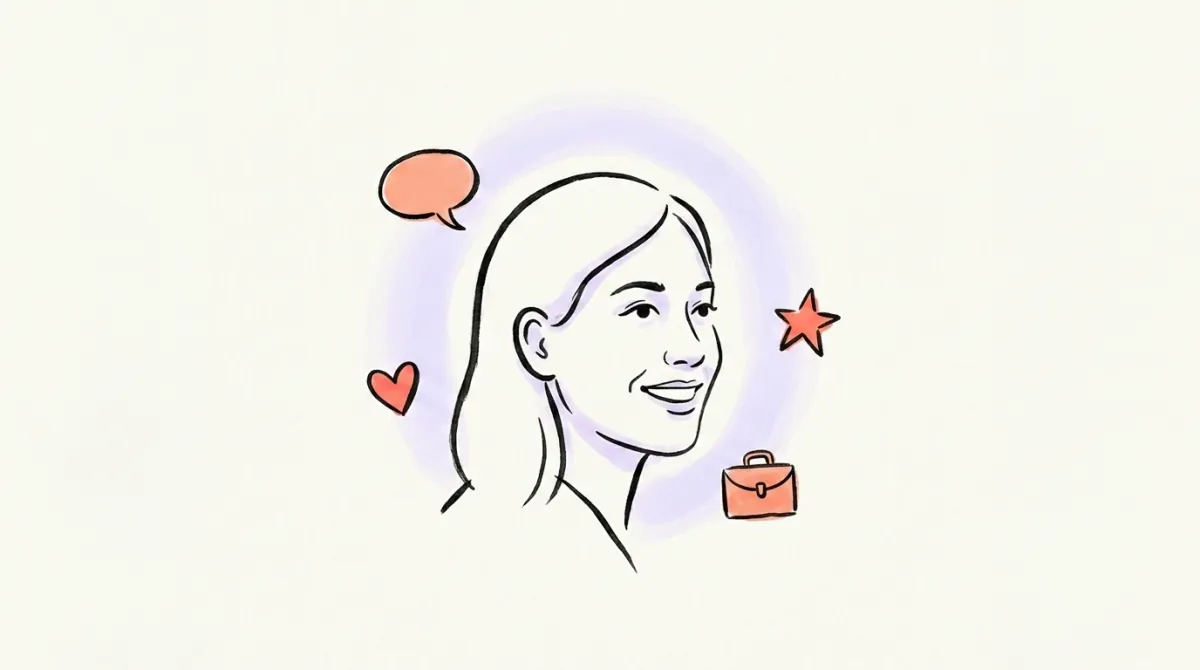
A personal brand on social media is the specific reputation you build online through the topics you talk about, the opinions you hold, and the way you show up consistently over time. It's not a logo, a color palette, or a polished bio — it's the answer to two questions: what are you known for? and who trusts you because of it? Strong personal brands have a clear niche, a recognizable voice, and a pattern of value that audiences can predict. That predictability is what turns casual viewers into followers, and followers into customers, employers, or collaborators. A personal brand is also different from a business brand: it's anchored to you as a human, travels with you across jobs and platforms, and compounds over time — which is why creators, solo founders, freelancers, and executives all benefit from building one, even when they already have a company brand behind them.
The payoff is real and measurable. According to Wave Connect's 2026 personal branding report, personal branding increases job opportunities by roughly 70%, and 75% of recruiters check social profiles before hiring. For creators and founders, InfluenceFlow's 2026 LinkedIn guide reports that an active personal brand attracts 47% more inbound opportunities. The math is lopsided: a few hours a week of focused content can replace entire outbound pipelines.
How Do You Choose Your Personal Brand Positioning?
Personal brand positioning is the intersection of three things: who you're talking to, what you help them do, and what makes your take different from everyone else covering the same topic. Most people skip this step and jump straight to posting — which is why their feeds feel like a random assortment of motivational quotes and industry news. A clear position sounds like a single sentence: "I help B2B SaaS founders write LinkedIn posts that convert — without sounding like every other founder on LinkedIn." That sentence tells your audience whether to follow you in under five seconds, which is the only attention budget you actually get. Good positioning also makes every downstream decision easier: what to post, what to skip, which comments to reply to, which invitations to accept. Without it, you'll spend months second-guessing every draft and wondering why nothing lands.
AI that learns your voice
Posts that actually sound like you
Postory's AI writes drafts in your voice — not generic AI mush — so you publish faster and still sound human.
To find yours, answer three questions before you post another word:
- Who specifically? Not "professionals" — "early-stage SaaS founders," "freelance designers," "in-house marketers at 10–50 person companies."
- What transformation? What do they want that you can help with? Pick one outcome, not five.
- What's your angle? Your opinion, experience, framework, or contrarian take. This is what makes you you and not a ChatGPT summary of the topic.
Write this sentence down. Every post should either prove it, expand on it, or reinforce it. If it doesn't, cut it.
Vanessa Lau breaks this down well — specifically the distinction between "building a social media account" and "building a personal brand" (it's a much bigger gap than most people realize):
Which Platform Should You Build Your Brand On?
The best platform for your personal brand is the one where your audience actively scrolls and where your content format matches your strengths. For most people building a brand in 2026, that means LinkedIn, X/Twitter, or Threads — each with a different vibe and a different game to win. Buffer's 2026 engagement study of 52M posts shows carousels lead with 6.90% median engagement, single images at 4.44%, and short-form video at 3.31% — so format matters, but so does platform-market fit. Picking one platform and going deep beats spreading thin across five. You can always expand later once you've built a repeatable engine on one. The right platform is almost always the one where a) your target audience already spends time and b) the format (short text, long text, video, carousel) plays to how you naturally communicate.
Here's a quick map:
- LinkedIn — B2B, career, SaaS, professional services, thought leadership. Long-form text and carousels win. Audience is logged in with intent to learn.
- X/Twitter — Tech, startups, developers, journalism, sharp opinions. Short posts, threads, and real-time commentary. Faster cadence, smaller posts, higher volume.
- Threads — Conversational, cultural, creator-led. Still early enough that consistent posters can grow fast. Mix of X-style and Instagram-style audiences.
- Instagram / TikTok — Consumer, lifestyle, visual niches. Higher production bar, video-heavy.
Pick one as your home base for the first 90 days. Your second platform becomes a repurposing destination — not a second full-time job. That repurposing step is what Postory's multi-platform publishing is built for: one post, adapted and shipped to X, Threads and Bluesky — the LinkedIn version you still publish on LinkedIn.
What Are the Content Pillars of a Strong Personal Brand?
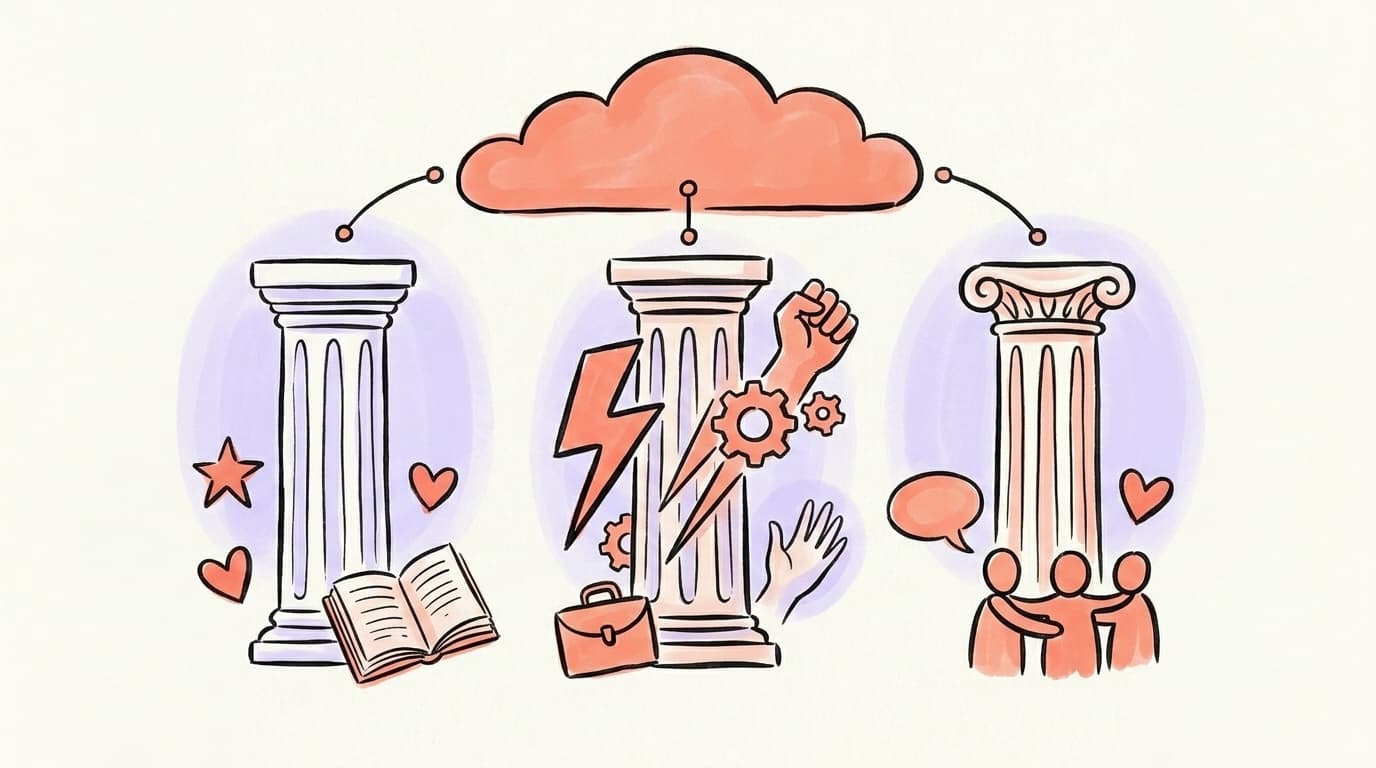
Content pillars are 3–4 recurring topic buckets that every post falls into, so your feed feels like a cohesive show instead of a diary. Without pillars, you'll either run out of ideas in week two or drift so wide that nobody knows what they're following you for. The goal is a rotation the algorithm recognizes and the audience expects. Most successful personal brands use a version of the same four-pillar mix: teach something useful, share a personal story, take a clear stance, and invite engagement. Across your pillars, Supergrow's 2026 LinkedIn branding playbook recommends rotating between these four formats — educational, personal, opinion, and engagement — and the data backs it up. Think of pillars as the "show lineup" — the audience tunes in knowing they'll get a predictable mix, which is exactly the predictability that builds trust and keeps retention high.
The 4-pillar framework that works for 90% of creators:
- Educational (40%) — How-tos, frameworks, tips. This is your SEO for humans. It's what gets saved and shared.
- Personal / Story (25%) — Lessons, failures, behind-the-scenes. This is what builds trust — people follow humans, not category experts.
- Opinion / Take (20%) — Clear stance on industry topics. This is what makes you memorable and distinguishable from the feed.
- Engagement (15%) — Questions, polls, "what do you think?" posts. This is what trains the algorithm and builds community.
Don't overthink the exact ratios. The point is rotation. If three posts in a row are all educational tips, you're teaching but not connecting. If three in a row are personal stories, you're connecting but not useful. Mix them.
How Often Should You Post to Build a Personal Brand?
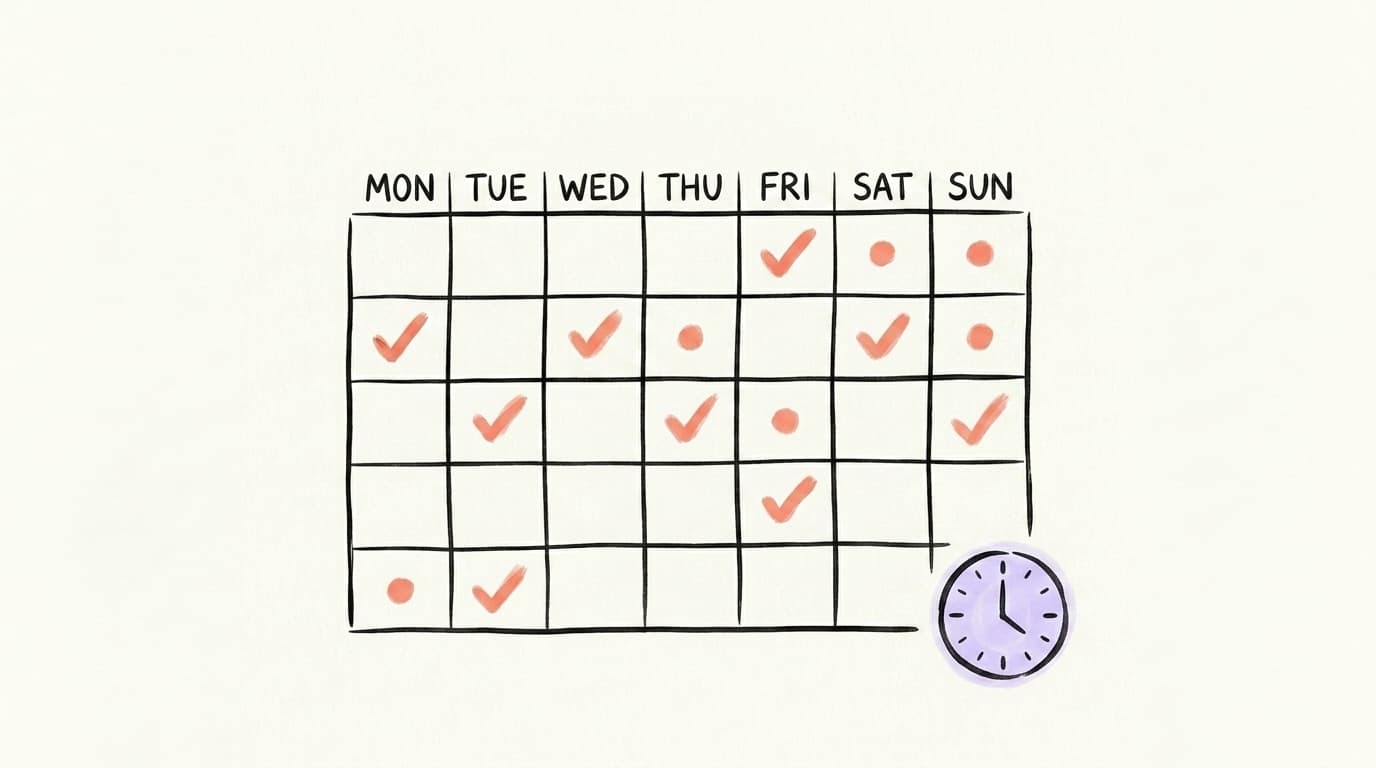
For building a personal brand in 2026, the minimum effective frequency is 3–5 posts per week on your primary platform, consistently, for at least 90 days before you expect compounding results. Consistency beats volume — 3 posts a week every week for 6 months will build a stronger brand than 20 posts in one burst followed by radio silence. According to Wave Connect's 2026 data, 91% of top LinkedIn creators post every 1–3 days, and complete, active profiles get roughly 40× more opportunities than dormant ones. The algorithms on every major platform reward predictable posting patterns — not because they love you, but because predictable posters keep users on the app. Pick a cadence you can honestly sustain through a busy week, not an ideal one you'll quit by month two.
A cadence that actually works long-term:
- LinkedIn: 3–5 long-form posts per week, plus comments on 5–10 posts a day in your niche
- X/Twitter: 1–3 posts per day, plus 1 longer thread per week
- Threads: 3–7 posts per day (the platform is chatty; treat it more like X than LinkedIn)
The key is a schedule you can keep on your worst week, not your best. If Mondays are rough, don't schedule your flagship post for Monday. Batch 1–2 hours on a weekend to draft a week's worth of posts, then queue them.
What Personal Branding Mistakes Should You Avoid?
The biggest mistake in personal branding is trying to be everything to everyone — posting about leadership on Monday, productivity on Tuesday, AI on Wednesday, and your dog on Thursday. Without a clear niche, the algorithm can't categorize you and the audience can't recommend you. The second biggest is inconsistency: launching hard, posting 10 times in week one, then disappearing for three weeks. Personal brands are compound interest — gaps reset the clock. The third is polish-over-substance: obsessing over your profile banner, headline, and color palette while posting mid-tier content that wouldn't stand out either way. Nobody ever followed someone because of a great banner.
Specific traps to sidestep:
- Copying a "viral format" without your own angle. Copycats flatten engagement over time.
- Automating generic DMs or comments. LinkedMate's 2026 LinkedIn guide notes that the spray-and-pray era is actively killing accounts — LinkedIn is penalizing it.
- Deleting posts that didn't perform. The algorithm learns from all your content, not just winners. Deleting breaks its model of you.
- Optimizing for likes instead of conversations. Comments and DMs drive business outcomes. Likes are vanity.
- Ignoring comments on your own posts. Buffer's data found creators who reply to comments outperform those who don't on every platform studied.
What Tools Help You Build a Personal Brand Faster?
Tools won't build your brand for you, but the right stack cuts the friction that kills consistency. You need four capabilities: ideation (what to post), writing (getting the draft done), publishing (actually shipping), and analytics (knowing what worked). For most solo creators, this can be one or two tools — more than that and you'll spend more time managing the stack than creating. The honest test is: does this tool shave 15+ minutes off my weekly content workflow? If no, drop it. The goal is to reduce every point of friction between "I have an idea" and "it's live on three platforms" — because every point of friction is a place where you'll quit on a bad week.
What the minimum viable stack looks like in 2026:
- Writing + AI assist: Postory's AI post writing turns a rough idea or an article link into platform-ready posts for X, Threads, and Bluesky — trained on your voice, not generic output.
- Multi-platform publishing: Postory's scheduler lets you write once and ship to X, Threads, and Bluesky at the best time for each, without copy-pasting.
- Analytics: LinkedIn, X, and Threads all have free built-in analytics. Check weekly, not daily.
- Idea capture: A simple notes app (Notion, Apple Notes) with an "ideas" list. Every time you have a thought, dump it there. Never post from a blank page.
For more tactical guidance on what to actually write, see our guides on what to post on LinkedIn.
Build Your Personal Brand Across LinkedIn, X, and Threads
The hardest part of building a personal brand isn't the strategy — it's the shipping. Writing a great post is one thing. Writing three a week, for three platforms, for 12 weeks straight, is where almost everyone quits.
Postory is built for that exact problem. Draft once, have it adapted for X, Threads, and Bluesky in your voice, schedule it to the best time per platform, and keep shipping even on the weeks life gets in the way.
Try Postory free — build your personal brand across X, Threads, and Bluesky without writing every post from scratch.
FAQ
Q: How long does it take to build a personal brand on social media?
Realistically, 90 days to see early traction (followers engaging, DMs starting) and 6–12 months to see meaningful business outcomes (inbound leads, clients, opportunities). Anyone promising faster is selling something. Focus on consistency over speed — a small, engaged audience beats a large, indifferent one every time.
Q: Do I need to show my face to build a personal brand?
No, but it helps. Anonymous or pseudonymous brands can absolutely work (many top accounts on X are faceless), but your content needs to carry more weight to compensate for the missing trust signal of a real human. If you're early in your brand journey, showing your face lowers the barrier to trust significantly.
Q: Should I post on every platform or pick one?
Pick one as your primary for the first 90 days. Build your voice, content pillars, and cadence there. Once those are locked in, expand to a second platform by repurposing — don't start from scratch on platform #2. Tools like Postory are designed exactly for this: one post, automatically adapted for X, Threads and Bluesky.
Q: How many followers do I need for a personal brand to "work"?
Fewer than you think. A brand that converts to clients, jobs, or opportunities can work at 500 followers if they're the right 500. Don't chase follower counts — chase relevance and engagement within your niche. A targeted 2,000-follower audience outperforms a 50,000-follower vanity audience almost every time.
Q: What's the difference between a personal brand and a personal profile?
A personal profile is a social media account. A personal brand is a reputation attached to that profile — built intentionally over time through clear positioning, consistent content pillars, and a recognizable voice. Everyone has a profile. A personal brand is what happens when you build with intent for 90+ days.
Q: Can I build a personal brand without being "an expert"?
Yes. "Learning in public" is one of the strongest personal brand strategies of 2026 — documenting what you're figuring out is often more relatable than posturing as an authority. Audiences follow progress, not just expertise. Just be honest about where you are and what you're still learning.
Q: How do I stay consistent when I run out of ideas?
Keep a running "ideas doc" you add to every time you have a thought, read something interesting, or answer a question in a DM or meeting. Batch-write a week's worth of posts in one 90-minute session on a weekend. And reuse — your best posts from 6 months ago are new to most of your audience today.
Related articles
What Is Mastodon Social Media? A Beginner’s Guide
What is Mastodon social media? Learn why it was created, how servers and the fediverse work, and whether this decentralized network suits you.
Oct 15, 2026
What Is Bluesky? How It Works, Users, Pros & Cons
What is Bluesky? How the social app works, who it is for, and its pros and cons. Learn its history, AT Protocol, feeds, and latest user count.
Oct 15, 2026
Threads vs X (Twitter) 2026: Which Is Better for Creators?
Threads vs Twitter/X in 2026 — audience, algorithm, monetization, ads, account safety, tools, and the cross-posting workflow creators actually use.
Aug 15, 2026