

How to Create Content for Social Media (That Actually Engages)

Good social media content isn't about posting more — it's about picking 3-5 content pillars, writing hooks that match what your audience searches for emotionally, and batching a week of posts in one sitting so you stop creating from scratch every day.
Most people approach "how to create content for social media" the wrong way. They sit down, stare at a blank Notion page, and try to invent something brilliant for Monday morning. By Wednesday they're burned out, and by Friday they've posted nothing.
The creators who actually get traction work from a different starting point. They have pillars, a hook library, and a batching system — so showing up isn't a daily creative crisis. This guide walks through that system.
What Does the Social Media Content Creation Process Actually Look Like?
Creating content for social media is a five-step loop, not a single act of writing a post: pick a pillar, find an angle inside that pillar, write a hook, build out the post body, then adapt the finished piece for each platform you care about. Most people skip straight to step four — staring at a blank editor trying to invent something. That's why they stall. The pillar step decides what you talk about (so you're not reinventing your brand weekly). The angle step decides today's take on it. The hook step decides whether anyone stops scrolling. Platform adaptation — changing format, length, and tone for LinkedIn vs. X vs. Threads — is where volume comes from without extra ideation. Once the loop is set up, producing a post is a 10-minute job, not a two-hour ordeal.
The five steps, in order:
- Pillar — pick one of your 3-5 core topics
- Angle — decide what specifically you're saying today (a lesson, a contrarian take, a tactic, a story)
- Hook — write the first line so it earns the second
- Body — deliver on what the hook promised, no filler
- Platform adaptation — reshape the same idea for X, LinkedIn, Threads, Instagram, and Facebook
How Do You Define Your Content Pillars?
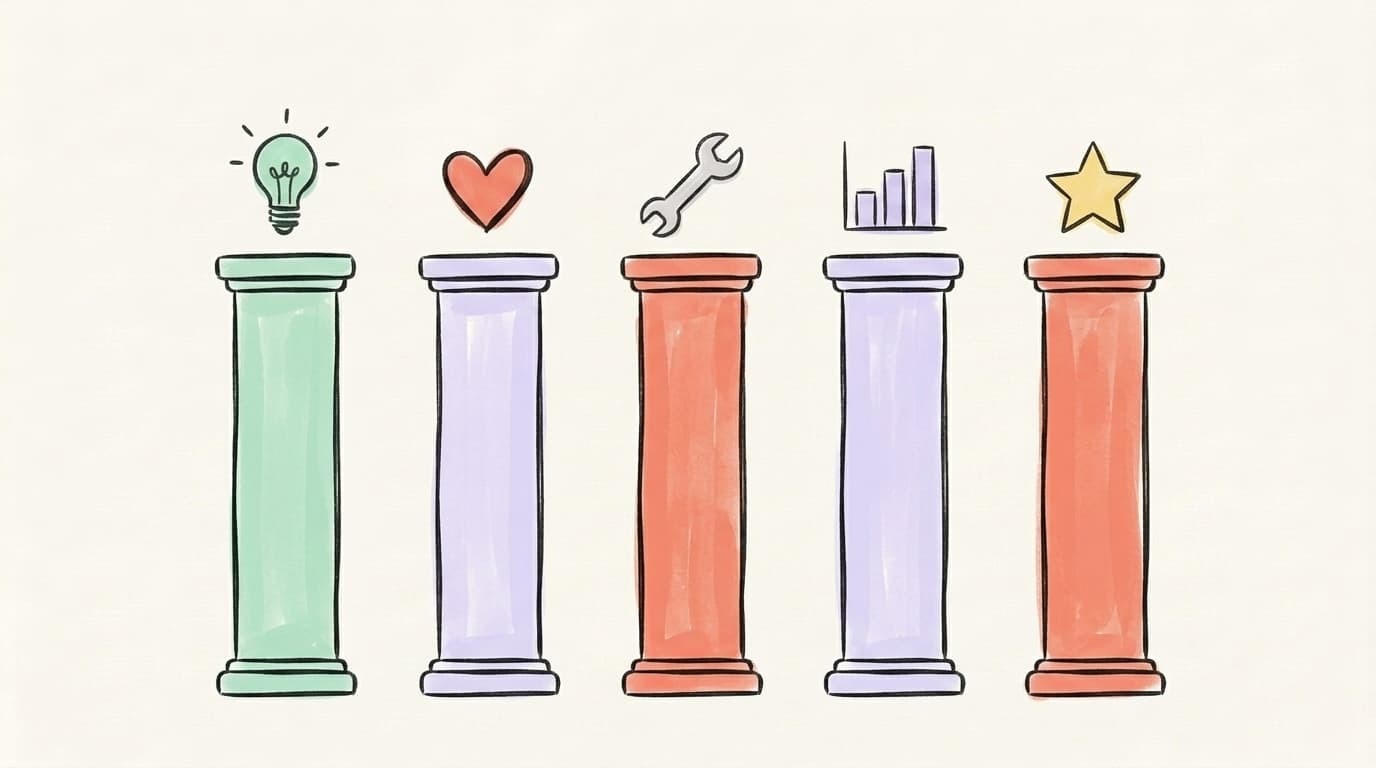
Content pillars are the 3-5 recurring themes your whole feed revolves around — and you define them by intersecting three things: what you genuinely know, what your audience actively searches for, and what your business actually sells. Not one of the three alone. A pillar chosen from expertise but zero audience interest produces crickets. A pillar chosen from trend-chasing but no business link produces viral posts that never convert. The sweet spot is the overlap. Frameworks from Sprout Social and others converge on 3-5 pillars — fewer feels repetitive and more gets unfocused. A good test: can you generate five specific post ideas per pillar in ten minutes? If you can't, the pillar is either too narrow or you don't actually have a point of view on it. Swap it.
Example — a freelance designer's pillars:
- Craft (design process, tools, before/afters)
- Client work (case studies, how a project went)
- Business (pricing, contracts, saying no)
- Behind the scenes (studio, mood boards, workflow)
That's four pillars. Every post they publish maps to one of them — which means the creative decision is never "what do I post?" but "which pillar gets today's slot?"
AI that learns your voice
Posts that actually sound like you
Postory's AI writes drafts in your voice — not generic AI mush — so you publish faster and still sound human.
What Makes Content "Engaging" (The Psychology)
Engaging content isn't "good" content — it's content that triggers a specific emotional or social response strong enough to interrupt scrolling and provoke an action. The academic version of this comes from Jonah Berger and Katherine Milkman's study on what makes content go viral, which found that high-arousal emotions (awe, anger, anxiety) drive sharing far more than low-arousal ones (sadness). That's why "useful but boring" posts die and "mildly controversial but relatable" posts explode. The second mechanism is Buffer's 2026 engagement data: posts where the creator replies in the comments outperform non-replied posts by +30% on LinkedIn, +42% on Threads, and +21% on Instagram. Engagement isn't a property of the post — it's a property of the conversation around it. If you write and walk away, you're leaving half the lift on the table.
The short version of engaging content: strong emotion + specificity + a reason to reply. Vague advice gets scrolled past. "Three ways I stopped overcharging clients (and one I regret)" gets saved and argued with in the comments.
7 Post Formats That Drive Comments and Shares
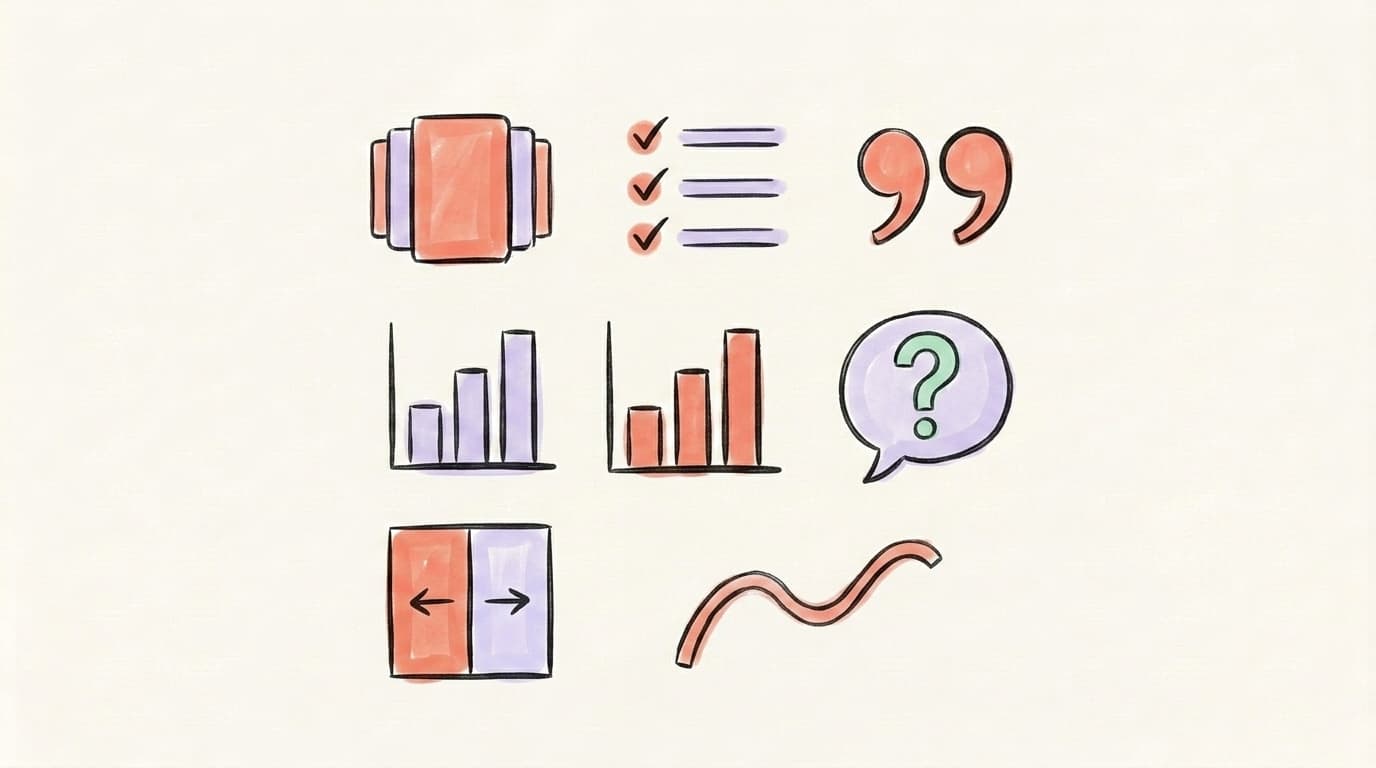
The post formats that consistently drive comments and shares are the ones structurally built to invite a response: contrarian takes, list posts, mini case studies, honest-mistake posts, question posts, frameworks, and carousels or threads. Each one triggers a different engagement behavior. Contrarian takes pull replies from both sides of an argument. Lists and frameworks get saved and screenshotted because they're scannable and reference-ready. Mini case studies earn trust through specific numbers and timelines. Honest-mistake posts invite "same here" replies because vulnerability is socially contagious. Question posts get the highest raw comment volume because the ask is low-effort. Carousels and threads let you fit long-form value into a feed-native format — on LinkedIn, carousels hit roughly 21.77% median engagement versus 3.18% for plain text posts. Generic "here's a thought" updates don't carry any of these structural invitations, which is why they quietly die in the feed.
- The contrarian take — "Everyone says X. I think the opposite, and here's why." Triggers replies from both sides.
- The list post — "5 [things] I wish I'd known when I started." Saveable, shareable, easy to skim.
- The mini case study — "How I did [specific result] in [specific time]." Specificity does the heavy lifting.
- The honest mistake — "I got this wrong for two years. Here's what I do now." Vulnerability invites "same here."
- The question post — "What's the one tool you'd pay 10x for?" Low-effort engagement, high comment volume.
- The framework — "I use a 3-step system for [X]. Here it is." People screenshot frameworks.
- The carousel/thread — long-form broken into slides or numbered posts. On LinkedIn, carousels hit ~21.77% median engagement vs. 3.18% for text.
Rotate these, don't stack them. Three contrarian takes in a week reads as performative. One per pillar per week reads as varied.
How Do You Adapt Content for Different Platforms?
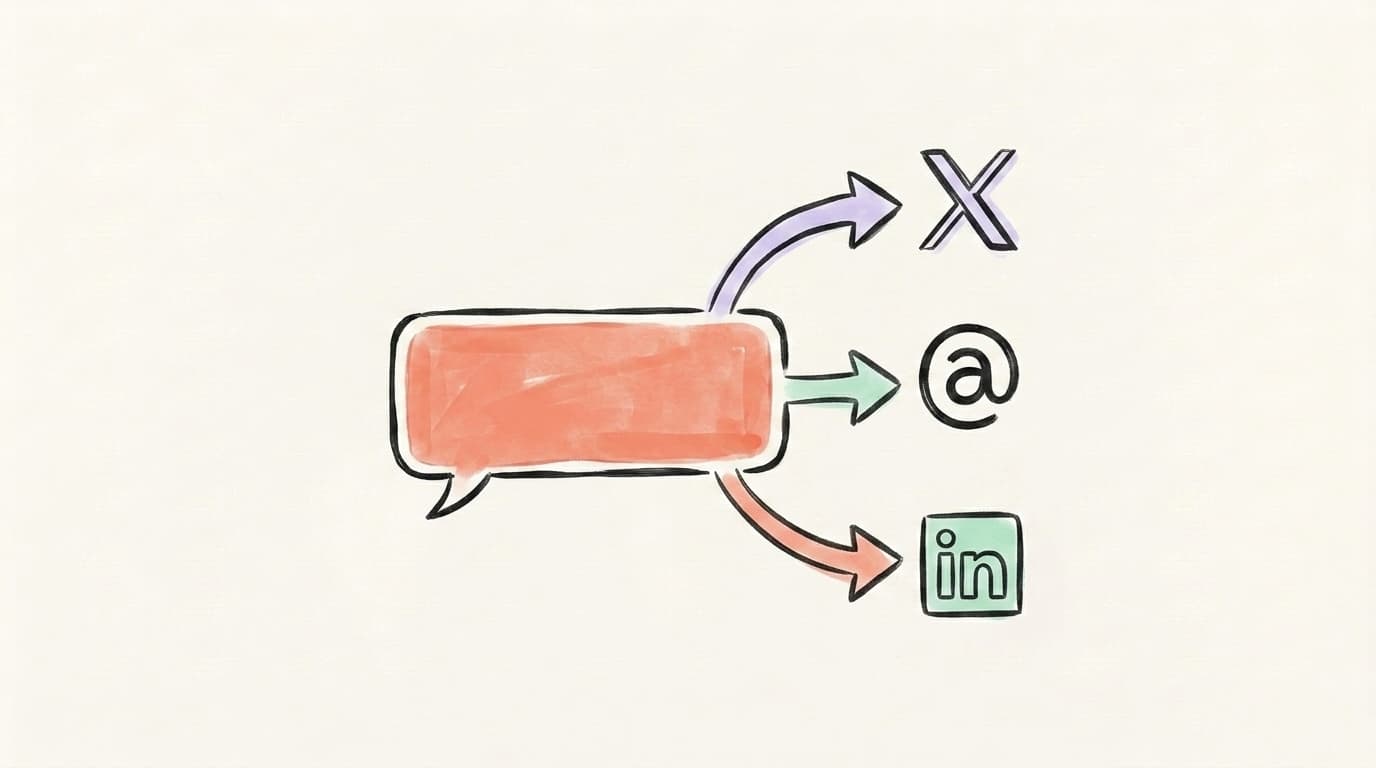
You don't write one post and paste it five places — you write one idea and reshape it for each platform's native behavior. X rewards brevity and opinion; a strong tweet is one sharp sentence plus a reply thread. LinkedIn rewards structured value — hook line, line break, payoff, line break, soft CTA to comment. Threads sits between the two, leaning casual and conversational. Instagram feed posts need a visual first and caption second. Facebook still works for community and longer-form storytelling with low-polish photos. The mistake most people make is copy-pasting a LinkedIn carousel caption into X — the tone reads corporate, the length buries the hook, and it flops. The fix is writing your core idea in a doc, then asking yourself one question per platform: "What's the one-sentence version for X? What's the structured version for LinkedIn? What's the casual version for Threads?" That takes ten minutes. The audience you reach by doing this is a multiple of what a single-platform post gets — because you're meeting each platform on its own terms.
How Do You Write Hooks That Stop the Scroll?
A hook has roughly a second or two to work — so you don't need clever, you need specific. The most reliable hook patterns call out a specific person, make a specific promise, or create a specific curiosity gap. "Everyone's writing about content marketing" is a dead opener because nothing about it tells the reader whether this post is for them. "If you're a solo founder and you've posted less than 3 times this month, read this" is alive because the reader knows, in the first half-second, whether it's for them and what they'll get for staying. That identity match is doing 80% of the work; the cleverness people chase is doing maybe 20%. The second lever is curiosity: leave a specific, unresolved gap the reader wants to close. "I used to charge $500 for logos. Then a client taught me something that changed my pricing forever" works because you need to know what the something is. Vague curiosity — "here's a crazy story about my career" — doesn't land, because "career" isn't specific enough to generate a gap.
Five hook patterns that work:
- Callout: "If you're a [specific role] struggling with [specific problem]..."
- Contrarian: "Most advice says X. It's wrong when [condition]."
- Curiosity gap: "I spent $5k learning this the hard way so you don't have to."
- Specificity: "Here's the exact 3-line DM that booked me 4 clients last month."
- Pattern break: Start with a half-sentence or a single word that doesn't match feed rhythm.
The pattern underneath all five: the hook is a promise. The body has to deliver on it. If your hook says "the exact 3-line DM that booked me 4 clients," the first line of the body better be that DM — not three paragraphs of setup.
Kallaway's three-step hook formula (Context Lean, Scroll Stop Interjection, Contrarian Snapback) is a useful deeper dive on why curiosity loops make the first two lines do most of the work:
How to Batch Create a Week of Content in 1 Hour
Batching works because the switching cost between "think of idea," "write post," and "format for platform" is larger than the tasks themselves. When you do all three for one post, then context-switch to the next post, you pay the cost five times. When you batch — do all five ideas first, then all five drafts, then all five platform adaptations — you pay it once. The hour looks like this: 10 minutes picking five pillar-slot combinations (Monday = pillar A, Tuesday = pillar B, etc.), 25 minutes writing five rough post drafts in a single doc, 15 minutes rewriting the hooks, 10 minutes adapting each for your primary platforms. That's a week of content in one sitting. The catch is that it requires a pillar system in place already — without pillars, the first step stretches to 40 minutes and the whole thing collapses. Pillars first, batching second.
How Does AI Change the Content Creation Workflow?
AI doesn't replace the ideation or the judgment — it collapses the time between "I have an idea" and "I have five platform-ready drafts." The old workflow had you spending 70% of your time drafting and 30% editing. The new workflow flips it: you spend 70% briefing (what's the idea, what angle, what audience) and 30% editing what the AI produces. The trap most people fall into is letting AI do the ideation and the writing — which produces content that sounds like everyone else's AI content, because the model is averaging across the internet. The working pattern is: you bring the lived specific thing (a real client moment, a real argument, a real opinion), then AI handles the platform adaptation, the hook variations, and the structural rewrite. That's a dramatic speedup on the mechanical work without losing your voice. Postory's AI post writing is built around this — you describe one idea, it generates platform-specific drafts for X, LinkedIn, and Threads in your own tone.
How Do You Stay Consistent When You're a Solo Creator?
Consistency isn't a willpower problem — it's a systems problem. Solo creators who post every weekday for a year aren't more disciplined than the ones who quit in month two. They have a pipeline: ideas captured in one place, drafts written in batches, a scheduler that publishes without their involvement, and a cadence that's realistic for their life. Buffer's 2026 data confirmed that even minimal consistency (1-2 posts per week) outperforms silence — the "no-post penalty was real and consistent" across every platform they analyzed. So the goal isn't "post every day or fail." It's "pick a cadence you can actually keep, then defend it." Three posts a week for 52 weeks beats daily posting for six weeks every time. Pair that with a scheduler so you don't need to be at your desk at the "right time," and the system runs without heroic effort. Postory's social media scheduler handles the publishing side so you can keep the cadence without manually posting at the "right time" every day.
Create a week of multi-platform content in minutes with AI
The whole system in this post — pillars, hooks, batching, platform adaptation — is what Postory is built to run. You drop in one idea, pick your pillars, and the AI produces platform-ready drafts for X, Threads, and LinkedIn in your voice. You edit, approve, and schedule. The creative work stays yours; the mechanical work disappears.
Try Postory free — batch a week of content today, stop posting from scratch tomorrow.
FAQ
Q: How often should I post on social media as a solo creator?
Three to five times per week per platform is the realistic sweet spot for a solo creator — enough to stay in the algorithm's favor without burning out. Posting daily is only worth it if you have a batching and scheduling system that makes it effortless. Consistency beats frequency: two posts a week for a year beats seven posts a week for a month.
Q: What are content pillars and how many do I need?
Content pillars are 3-5 recurring themes that anchor everything you post. Fewer than three feels repetitive; more than five gets unfocused. Each pillar should sit at the intersection of what you know, what your audience searches for, and what your business sells. If you can brainstorm five post ideas per pillar in ten minutes, it's a strong pillar.
Q: Should I create different content for each platform or repost the same thing?
Reshape the same idea for each platform — don't copy-paste. One idea becomes a one-liner on X, a structured carousel on LinkedIn, a conversational thread on Threads, and a visual-first caption on Instagram. The idea is the same; the format, length, and tone change. Copy-pasting wastes the reach of the platforms you're not optimizing for.
Q: How long should a social media post be?
Platform-dependent. X: 1-3 sentences for standalone posts, longer for threads. LinkedIn: 150-300 words for text posts, carousels for depth. Threads: conversational, 2-5 sentences. Instagram captions: short and visual-first for feed, longer for carousels. There's no universal "ideal length" — match the platform's native reading behavior.
Q: How do I come up with content ideas when I feel stuck?
Stop trying to invent topics from nothing. Go back to your pillars and pull angles from real sources: questions clients ask you, arguments you have on LinkedIn, things you Googled this week, mistakes you made last month. Ideation isn't invention — it's noticing what's already happening in your work and framing it as a post.
Q: Is AI-generated social media content bad?
AI-generated content is bad when AI does the thinking. It's good when you bring the lived, specific thing and AI handles the mechanical rewrite for each platform. The fingerprint of bad AI content is generic framing and hedged opinions; the fingerprint of good AI-assisted content is specific claims, real examples, and a distinct voice — because you supplied those.
Q: How do I measure if my social media content is actually working?
Engagement rate (likes + comments + shares, divided by followers or reach) is the industry baseline, but replies and saves are the stronger signals. Comments from the right audience — potential buyers, peers in your field — matter more than raw volume. Track which pillars and formats pull the highest reply rate, and rotate toward those.
Q: What's the biggest mistake people make with social media content?
Posting without a pillar system. Every post becomes a from-scratch creative act, which is unsustainable. The second biggest mistake is writing once and walking away — engagement compounds when you reply to comments, and creator replies add up to a +21-42% engagement lift depending on the platform.
Related articles
MCP for Social Media: How It Changes Content Workflows
Model Context Protocol lets Claude and ChatGPT plug straight into your social tools. Here's how MCP changes the way you create and publish content.
Jun 30, 2026
Claude for Social Media: When It Beats ChatGPT
An honest, task-by-task look at when Claude beats ChatGPT for social content — long-form voice and nuance versus raw speed and breadth.
Jun 29, 2026
ChatGPT for Social Media: A 7-Workflow Playbook
Seven copy-paste ChatGPT workflows for X, Threads, and LinkedIn — from turning a URL into multi-platform posts to drafting replies that sound like you.
Jun 29, 2026