
Build in Public on X: The Founder's Playbook

Score your build-in-public account
See whether your cadence, reply habits, topics and timing are actually compounding — out of 100, with a ranked fix list and your winning post template.
Build in public works because people follow a story, not a product. Pick a small set of repeatable content types, post 1-2 times a day plus replies, share progress and lessons (not your bank statements or your roadmap), and recut every update for X, LinkedIn, and Threads.
Most founders treat building in public as a vibe. They tweet a screenshot when they remember, go quiet for three weeks, then wonder why nobody cares. That's not building in public — that's just posting occasionally.
The founders who actually grow from it treat it like a system: a fixed cadence, a small set of content types, and a clear line between what they share and what they don't. This is how to grow on Twitter as a founder without spending your whole week on it.
What Does "Build in Public" Mean in 2026?
Building in public means openly sharing the real journey of building your product — the wins, the losses, the decisions, the metrics, and the lessons — instead of going quiet until launch day. In 2026 it's arguably the single most effective growth strategy for solo founders on X, because the platform's algorithm now favors individual voices over brand accounts. The point isn't to broadcast a polished highlight reel. It's to let people watch the thing get built so they feel invested before you ever ask them to buy. Founders like Pieter Levels (Nomad List, 850K+ followers) and Marc Lou (ShipFast, ~$50K/mo) built audiences this way before their products needed marketing budgets. The story is the marketing. The product is just the thing the story is about, and the audience you build along the way becomes your launch list.
The shift that matters: in January 2026, X open-sourced a new recommendation algorithm built on the same transformer architecture as xAI's Grok model, learning relevance directly from user engagement sequences. With ranking driven by engagement rather than account type, individual voices that spark replies and conversation tend to do well. For a solo founder, that's good news — you are the personal account, and a genuine build-in-public story is exactly the kind of engagement the model rewards.
What Are the 5 Build-in-Public Content Types?
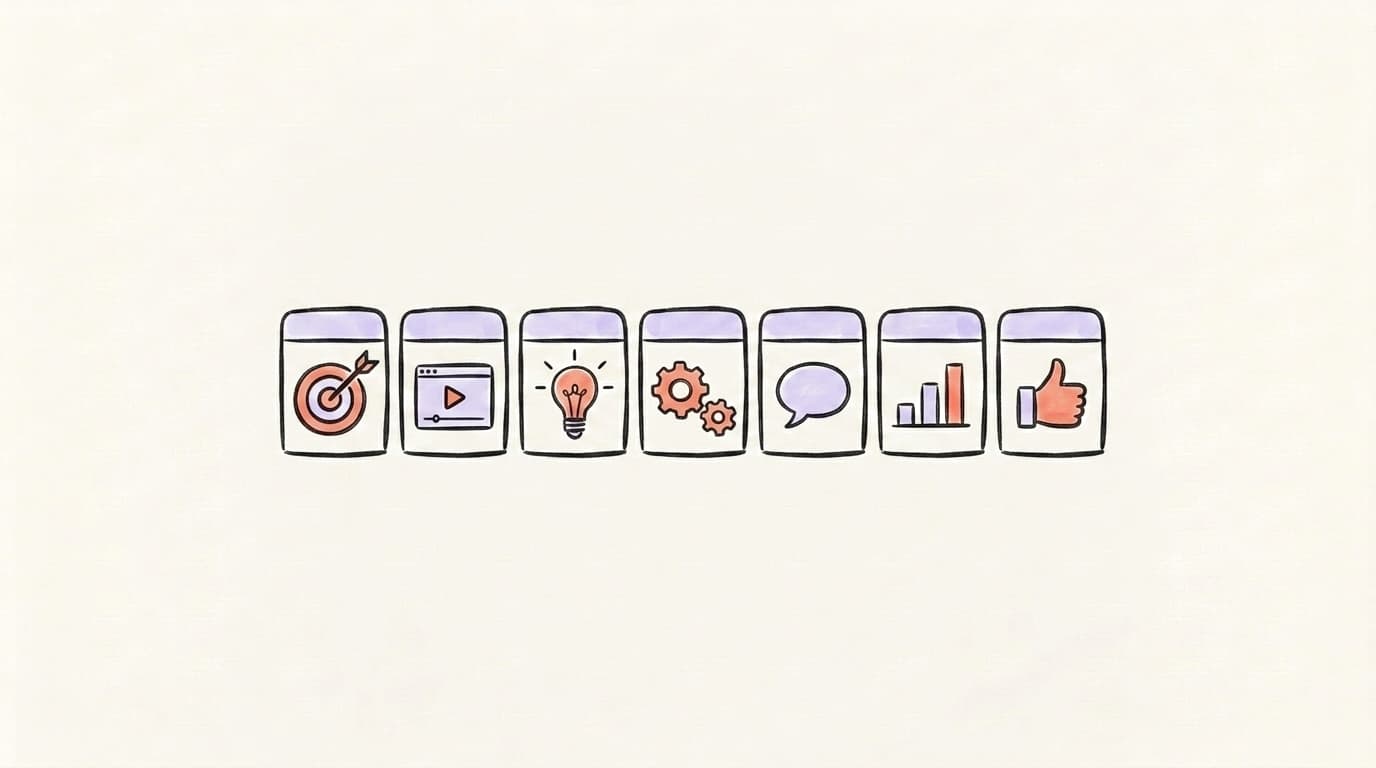
The five content types that carry build-in-public are progress updates, lessons, decisions, behind-the-scenes moments, and milestones. You don't need a new idea every day — you need a small rotation you can refill every week from the work you're already doing. That's the trick most founders miss: building in public isn't extra work on top of building. It's narrating the building you're already doing. Wilson Wilson grew Senja to $32K MRR by his early twenties largely by posting daily progress updates while he shipped. He wasn't inventing content — he was screenshotting his actual day. The five types below cover almost everything worth posting, and most updates fall naturally into one of them, so you're never staring at a blank box wondering what to say. Pick one type per day, rotate through the week, and your feed stays varied without any extra thinking. Here's the rotation that holds up:
- Progress updates — "Shipped the onboarding flow today. Here's the before/after." Concrete, visual, low effort.
- Lessons — "Spent two days on a feature nobody asked for. Here's what I'd do differently." These travel furthest.
- Decisions — "Choosing Stripe over Paddle. Here's my reasoning." Invites useful replies.
- Behind-the-scenes — the messy desk, the bug that broke prod, the 1am debugging session. Humanizes you.
- Milestones — first user, first dollar, first churned customer. The story beats.
Content calendar
Plan a month of content in an afternoon
Map out your posts on a visual calendar, batch your ideas, and never stare at a blank page again.
Why do failure posts outperform wins?
Failure and struggle posts often outperform success posts because they feel honest and useful, while a string of wins reads like bragging. Vulnerability builds trust faster than a victory lap — a post about a launch that flopped teaches your audience something and signals you're a real person, not a marketing account. You don't have to manufacture failure. Just don't edit it out. When something breaks, that is the content. The founders who only post green arrows train their audience to scroll past, because there's nothing to learn and no reason to root for them.
How Often Should You Post Without Burning Out?
For a solo founder, a sustainable cadence is one to two original posts per day plus a block of replies, not the 5-to-10-posts-a-day grind that growth accounts run. The goal is consistency you can hold for a year, not a heroic month followed by silence. Burnout is the real enemy of build-in-public — the strategy only compounds if you keep showing up, and you can't keep showing up if every day feels like a content sprint. The reply work matters more than people expect. A widely shared rule among X growth practitioners is the 70/30 split: spend most of your effort on thoughtful replies to accounts slightly bigger than yours, and the rest on original posts. Replies are where a small account actually gets discovered, because you're borrowing someone else's audience for the cost of a good comment.
A simple weekly skeleton that doesn't require daily inspiration:
- Monday — what you're shipping this week (public accountability)
- Tuesday — a product update or short demo
- Wednesday — a lesson or insight from the work
- Thursday — a question or reply-heavy engagement day
- Friday — a weekly recap with one number
- Weekend — one behind-the-scenes or human post
Six posts, refilled from a week you were going to live anyway. Batch them on Sunday and you've turned "post every day" into "plan once a week."
What Should You Share, and What Should You Keep Private?
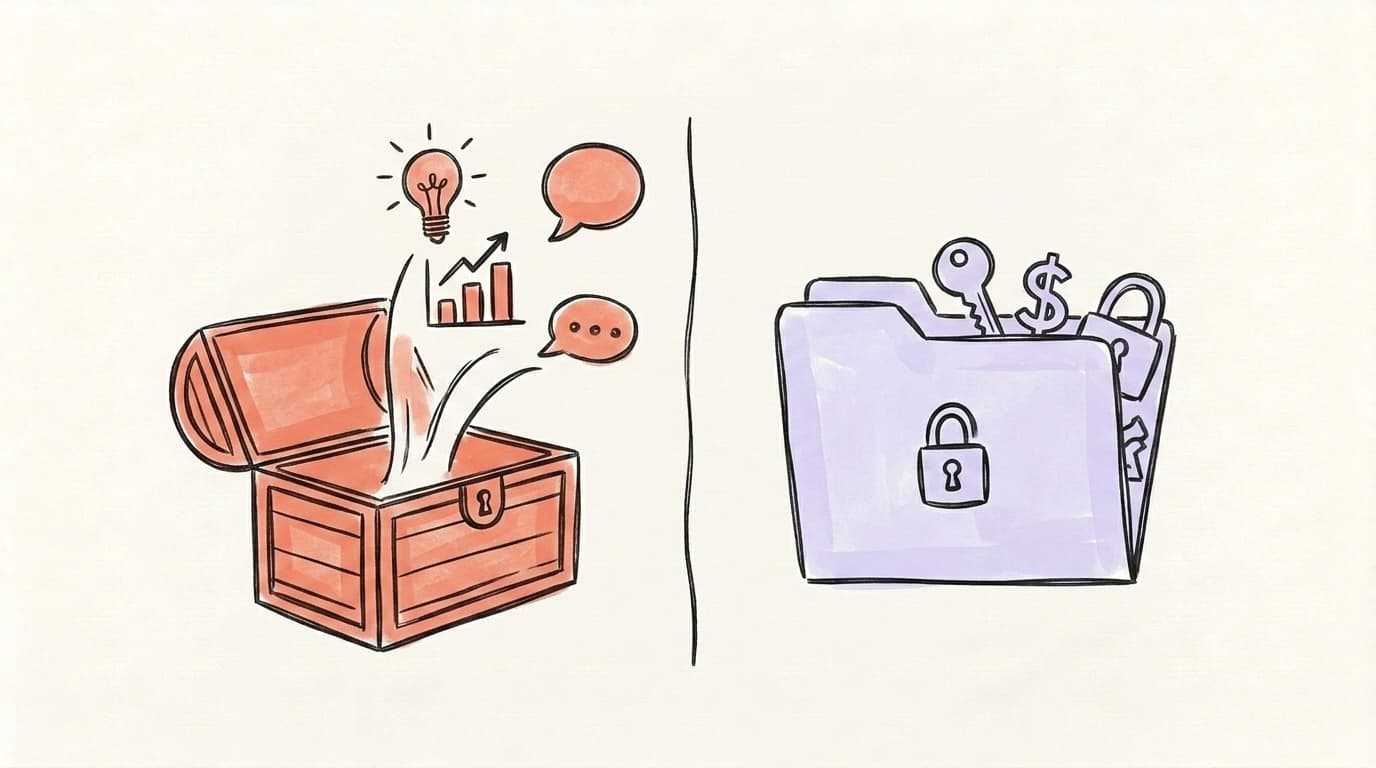
Share your progress, your reasoning, your lessons, and your milestones — but keep customer data, unshipped roadmap details, confidential negotiations, and exact financials private unless you've decided being fully open is your brand. The useful test: share things that teach or build trust, withhold things that create risk or hand competitors a map. A bug you fixed teaches; a security gap you haven't patched yet only invites trouble. The reasoning behind a pricing decision is gold; the exact terms of a deal you're mid-negotiation on is not yours to post. Specific revenue is the gray zone. Sharing it builds enormous trust and reach, but it's irreversible and it invites copycats — so a lot of founders share ranges or growth direction rather than exact figures, at least until the business is established enough that the number works in their favor.
Almost always safe to share:
- Product updates and demos
- The reasoning behind a decision
- Lessons and frameworks you've earned
- Personal, human moments
Share carefully:
- Exact financials (use ranges, or commit fully)
- Customer stories (get permission first)
- Competitor comparisons (stay factual, never petty)
Keep private:
- Customer data without consent
- Security gaps or vulnerabilities
- Confidential deals or negotiations
- Anything about employees or contractors that isn't theirs to share
When you're unsure, ask whether the post helps someone or just exposes something. If it only exposes, skip it.
Why Do MRR Posts Work — and When Do They Backfire?
MRR posts work because a real revenue number is concrete proof, and proof is rare on a platform full of vague advice — a chart climbing from $0 to $5K is a story people will follow for months. They backfire when the number becomes the whole identity, when growth stalls and the posts turn into pressure, or when you start optimizing the metric for the audience instead of the business. Revenue transparency is a powerful hook precisely because most founders won't do it. Beehiiv reached $100K MRR in roughly 14 months partly by building in public with founders posting updates directly on X. But there's a trap: once you've anchored your audience to a number, a flat or down month feels like a public failure, and that pressure can quietly steer you toward short-term revenue tactics that hurt the product.
If you post MRR, follow two rules. First, post the down months too — selective transparency reads as marketing and kills the trust the posts were supposed to build. Second, never let the number become your only content type. The revenue chart is one beat in the story, not the whole show. If you're not ready to share real figures, share relative progress instead — "doubled signups this month," "first $1K week" — which carries most of the credibility with none of the lock-in.
Here's a grounded walkthrough of how founders with tiny audiences are building in public the right way, including real day-by-day progress posts:
How Do You Adapt Build-in-Public for X, LinkedIn, and Threads?
The same update needs a different cut for each platform: X rewards punchy, in-the-moment posts and threads; LinkedIn rewards reflective, lesson-led long-form; Threads rewards casual, conversational takes. Posting the identical text everywhere is the most common build-in-public mistake — what reads as confident on X reads as terse on LinkedIn, and what reads as thoughtful on LinkedIn reads as a lecture on Threads. Each platform also rewards a different audience: X skews toward other founders and indie hackers, LinkedIn toward operators and potential B2B customers, Threads toward a more casual, mixed crowd. The underlying story stays the same; the framing, length, and tone change to match who's reading. A win that lands as a one-line flex on X becomes a short reflection on LinkedIn and a casual aside on Threads. Think of one weekly update as raw material you recut three ways rather than three separate jobs you write from scratch.
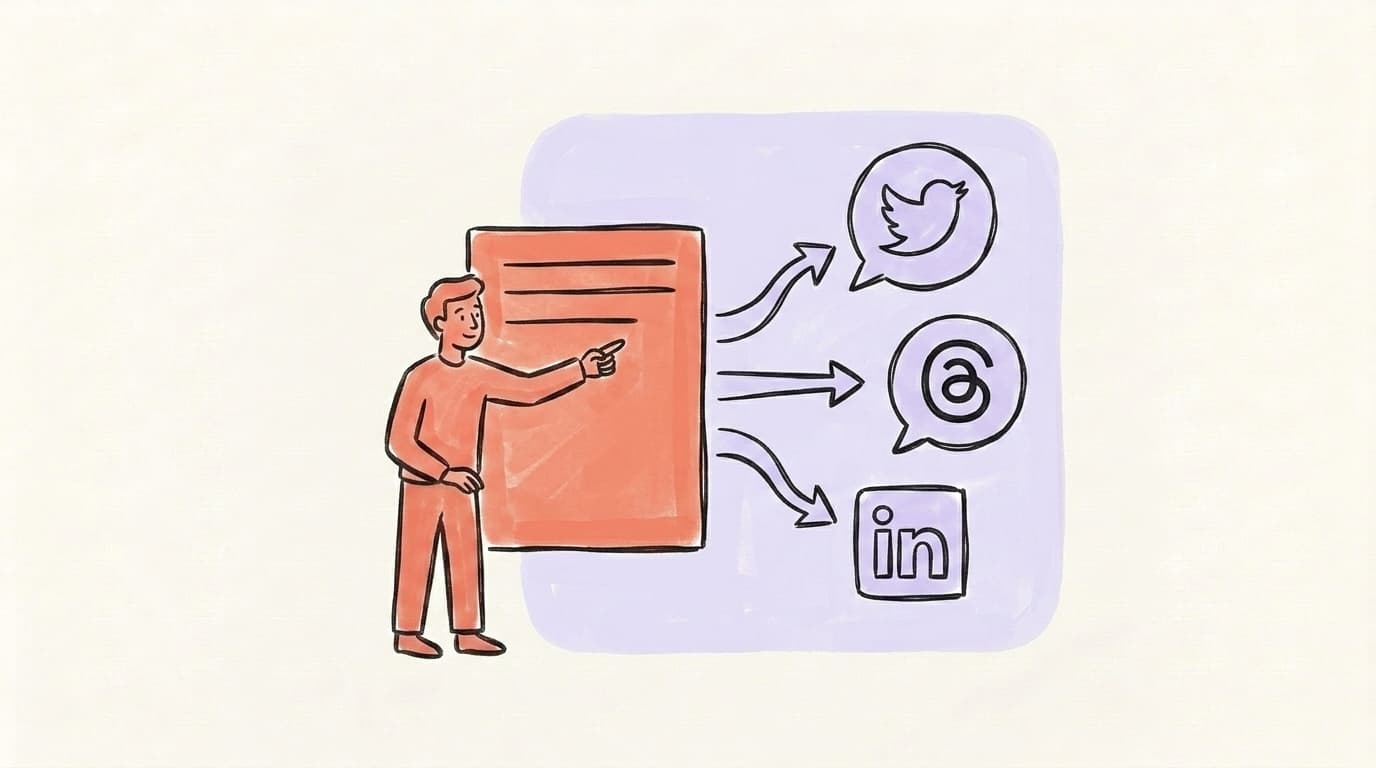
Take one update — "shipped a feature nobody used, killed it, learned to talk to users first" — and recut it:
- X: A short thread. Hook line, three quick beats, a lesson at the end (how to write an X thread covers the structure). Screenshot of the dead feature.
- LinkedIn: A reflective post. Open with the mistake, walk through what you learned about customer discovery, end with a takeaway other founders can use.
- Threads: A casual, almost-DM tone. "ok so I just deleted a whole feature lol here's why" — looser, more human, invites replies.
Writing each version from scratch, three times, six days a week, is how build-in-public dies by month two. The fix is treating one idea as a source that gets adapted — which is also where the right tooling earns its keep. (More on multi-platform publishing below.)
What Tools Run This Workflow in One Hour a Week?
The workflow that fits in an hour a week is: brain-dump your updates once, turn each into platform-specific versions, and schedule the whole week in one sitting. The bottleneck for solo founders is never ideas — it's the repetitive work of rewriting and posting. A content planner that lets you draft once and recut for X, LinkedIn, and Threads, then queue everything at once, collapses six days of posting into a single Sunday session. That's the difference between a build-in-public habit that survives and one that fizzles when your week gets busy. The principle is simple: separate the thinking (what happened this week, what did I learn) from the production (writing three versions, scheduling them). Do the thinking once, batch the production, and let a tool handle the calendar. Done this way, a week of posts takes one focused session instead of a daily scramble.
This is the core of the build-in-public playbook: you're not trying to be more creative, you're trying to make showing up automatic. For the deeper account-growth mechanics behind it, see our guide on how to grow on Twitter.
Start Building in Public with Postory
Building in public only compounds if you actually keep doing it — and the thing that kills most founders' consistency is the production overhead, not the ideas. Postory turns weekly build-in-public updates into ready-to-post X, Threads, and Bluesky content, so one brain-dump becomes a full week of platform-specific posts you can schedule in one sitting.
Plan your week once, recut every update for each platform automatically, and queue it all from a single social media planner — instead of rewriting the same update three times, six days a week.
Try Postory free — turn one weekly update into a full week of build-in-public posts across X, Threads, and Bluesky.
FAQ
Q: How do I start building in public with zero followers?
Start by replying. With a small account, thoughtful replies to founders slightly bigger than you are where you get discovered — far more than your own posts early on. Then layer in one daily progress update about whatever you actually shipped that day. Consistency for 60-90 days matters more than any single viral post.
Q: How often should a founder post when building in public?
One to two original posts per day plus a block of replies is sustainable for most solo founders. Chasing 5-10 posts a day leads to burnout, and build-in-public only works if you can hold the cadence for months. Batch your week's posts in one sitting so daily posting doesn't require daily effort.
Q: Should I share my exact revenue (MRR)?
Only if you're prepared to share the down months too and never let the number become your only story. Exact MRR builds strong trust and reach but locks you in — flat months start to feel like public failures. If you're unsure, share relative progress ("doubled signups this month") instead, which keeps most of the credibility without the lock-in.
Q: What should I never share when building in public?
Customer data without consent, security vulnerabilities, confidential negotiations, and anything personal about employees or contractors. The test is whether a post teaches or builds trust versus simply exposing something risky. When it only exposes, skip it.
Q: Is building in public still worth it in 2026?
Yes — arguably more than before. X's 2026 algorithm is a Grok-based transformer that ranks content by engagement learned from user behavior, which rewards the kind of genuine, reply-sparking posts solo founders make when they post as themselves. The transparency and story-driven approach that defines build-in-public is exactly the kind of content the platform now surfaces.
Q: Do I need to post the same thing on X, LinkedIn, and Threads?
No — and you shouldn't. The same update needs a different cut per platform: punchy on X, reflective and long-form on LinkedIn, casual on Threads. Keep the underlying story the same and adapt the framing, length, and tone to each audience.
Q: How do I build in public without it taking over my week?
Separate thinking from production. Spend a few minutes capturing what happened and what you learned, then batch all the rewriting and scheduling into one weekly session. A planner that recuts one update into platform-specific versions and queues the week turns daily posting into a one-hour-a-week habit.
Related articles
How I Got My First 100 Followers on X (From a Dead Account)
I started a brand new X account with zero followers and had my first 100 real followers a few days later. Here's the exact playbook.
Jul 19, 2026
The X Profile Banner Strategy: What to Put Above Your Tweets
Your X banner is prime real estate most accounts waste. 6 banner archetypes that turn profile visits into follows — plus the exact 2026 dimensions.
May 30, 2026
The X Quote Tweet Strategy That Outranks Replying
Quote tweets let you piggyback on bigger accounts' distribution while building your own. Here's the exact 5-format playbook that turns other people's reach into your followers in 2026.
May 29, 2026