

How to Grow on Twitter/X: A Repeatable System That Actually Works (2026)

See what's holding your X account back first
Before you change your posting, get your handle scored out of 100 — consistency, replies, content mix, profile, timing — with a worst-first fix list priced in points.
Growing on Twitter/X in 2026 is about running a repeatable system, not hunting viral lottery tickets. Pick 3 content pillars, post one tweet + one thread a week + 10–20 thoughtful replies a day, and compound. Replies are the single most underrated growth channel on the platform.
Most "how to grow on Twitter" advice reads like a horoscope: vague, punchy, and impossible to act on tomorrow morning. This post does the opposite. You get a concrete daily rhythm, a content plan you can copy, and a replies strategy that does most of the heavy lifting — all tuned to how X actually ranks content in 2026.
How Does the X/Twitter Algorithm Work in 2026?
X's 2026 ranking is built around predicted engagement, and creators widely report that posts with external links travel less far. In early 2026, xAI shifted to an AI-powered ranking model that evaluates the content of each post directly — reading text and watching video — rather than leaning purely on early engagement signals (Social Media Today). The weights are real but they don't mean what the round numbers suggest. xAI's ranking code publishes them, and its release notes explain that they multiply predicted probabilities of a viewer acting — not the reposts, replies and likes you accumulate. The 20x / 13.5x / 150x figures that circulate are third-party readings that treat the code as a scoreboard, so there's no per-action bonus to farm. Posts carrying external links are widely reported to reach fewer people; that's a report from creators, and the published configuration isn't the place that settles how large it is. Two claims usually ride along here, and they are not the same kind of claim. The sources cited here do not establish that the ranker deliberately favours smaller accounts. Premium is different: X's Premium documentation describes a preference for verified users' replies and says prioritization levels are being tested. That's a documented reply preference, not a measured reach multiplier on everything you post — plan on the documented part. Treat replies as the highest-leverage action on the platform, keep links out of your main tweets, and lean on threads and native media.
Jacob C. Edmunds reverse-engineered the 2026 ranking logic in this 8-minute breakdown:
The Daily Operating Rhythm: Your Growth System
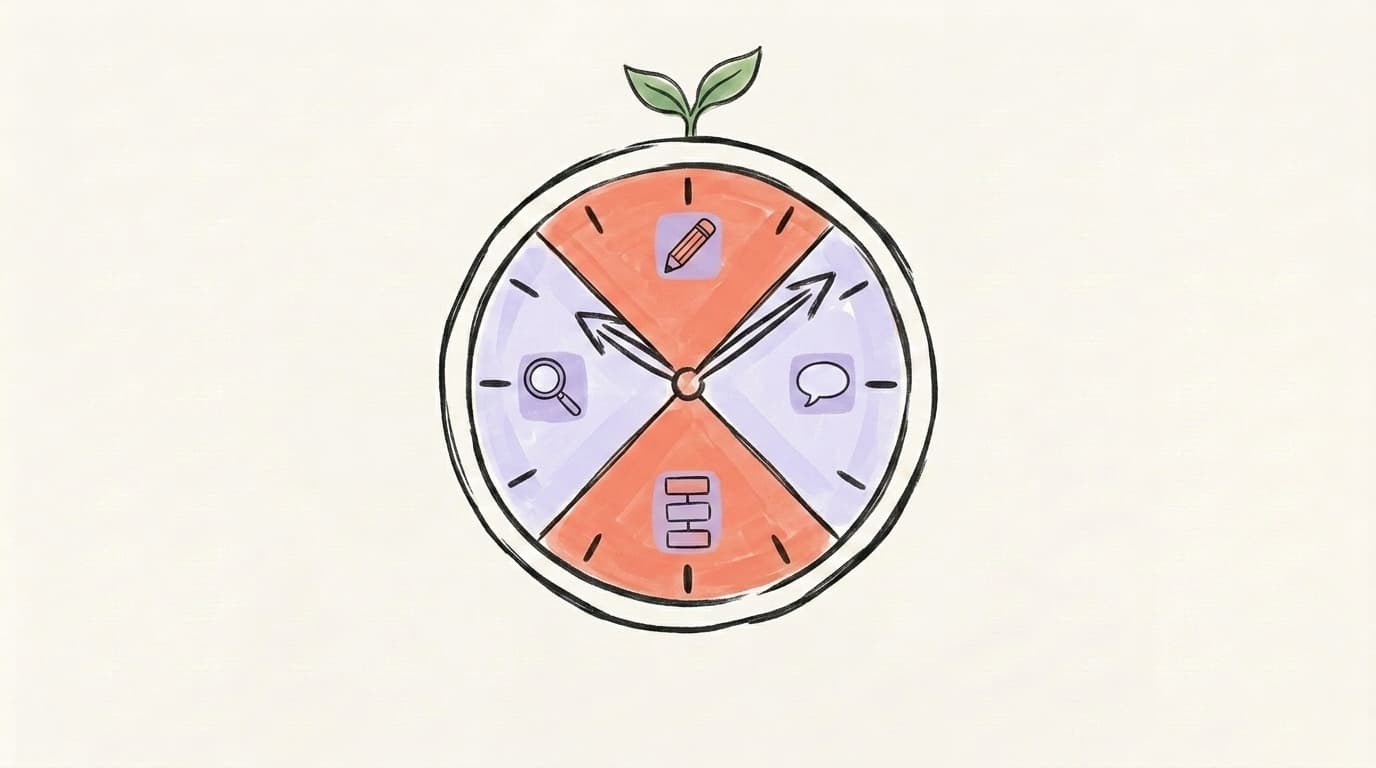
Growing on Twitter is 80% routine and 20% inspiration. The people who grow fast aren't smarter — they just show up on the same schedule every weekday. Here's a repeatable daily system that fits in about 45–60 minutes and hits every algorithm signal that matters in 2026. Run it five days a week and you'll be in the top ~5% of effort on the platform. The rhythm has four blocks: a morning post to seed the day, a mid-morning reply sprint to borrow other people's audiences, a first-hour conversation check to answer relevant replies, and one thread per week that acts as your flagship piece. You don't need to be online all day — you need to be on at the right moments.
Your 45-minute daily playbook:
- Morning (7–9am local): Post one standalone tweet from a pre-written batch. No links. Native media when possible.
- Reply sprint (10–20 minutes): Leave 10–20 thoughtful replies on larger accounts in your niche. This is your growth engine.
- First-hour check (5 minutes): Reply to every reply on your morning post during the first hour after you actually post it, whatever time that lands. Answering people while they're still in the thread is the part of the conversation you control.
- One thread per week: Post a longer thread on your best topic. Threads are your top-of-funnel magnet.
- Friday review (15 minutes): Open analytics, identify your top tweet and top reply, plan next week's content from what worked.
AI that learns your voice
Posts that actually sound like you
Postory's AI writes drafts in your voice — not generic AI mush — so you publish faster and still sound human.
How Do You Build a Twitter Content Plan That Compounds?

A Twitter content plan is a set of 3 content pillars plus a weekly template, planned and batched in one sitting. Posting without a plan is the single biggest reason accounts plateau — you sit down at 8am, stare at the composer, and post whatever's in your head. That's not a strategy, that's a coin flip. A content plan fixes two problems at once: it removes decision fatigue, and it makes your account feel coherent to the algorithm and to humans. Your pillars are 3 themes you'll be known for — for example, a SaaS founder might pick building in public, lessons from customer calls, and opinions on the industry. Every tweet you post should clearly belong to one pillar. Once pillars are set, you batch: spend 60 minutes on Sunday writing 10–15 tweets and one thread draft, queue them up, and you're free all week to focus on replies and conversations.
A simple weekly content template:
- 2 opinion tweets — a take you're willing to defend, tied to one of your pillars
- 2 tactical tweets — something you've learned or a small tip your audience can use today
- 1 story tweet — a short "here's what happened" post with a beginning, middle, and end
- 1 thread — your flagship weekly piece, 8–12 tweets, on your strongest pillar
- Daily replies — 10–20 replies on accounts 10–100x your size in your niche
Batch-write on Sunday. Queue it. Then you can show up each day and focus purely on conversations. If you want deeper context on what actually spreads on social platforms, our guide to what goes viral on X breaks down the patterns behind high-reach posts.
Which Content Types Actually Grow a Twitter Account?
Not all tweets are equal. In 2026, three formats outperform the rest: standalone opinion tweets, threads, and reply-driven conversation tweets. Standalone opinions get shared because they give followers something to agree or disagree with publicly — stakes create spread. Threads dominate because they keep users on-platform, which the algorithm explicitly rewards, and they give new followers something to scroll through when they land on your profile. Conversation tweets — the ones that ask a real question and pull a genuine back-and-forth — give you something to answer, and answering is the part of the exchange that's yours to run. The published weights don't put a price on a reply you collect, so treat conversation as the format that leaves you the most to do, not as a multiplier to farm. What consistently under-performs: tweets with external links, pure retweets with no added commentary, one-line jokes without context, and tweets that start with "Unpopular opinion:" or "Hot take:" (both openers are worn out). Keep your links in the first reply, your jokes rooted in a specific observation, and your opinions phrased like statements, not disclaimers.
How Do You Write Tweets That Get Engagement?
A high-engagement tweet on X in 2026 looks like a specific claim with zero filler — not a clever line, but a sharp observation someone would screenshot. The format that keeps winning: a one-line hook, a visual or structural break (line spacing, a short list, or native media), and a landing line that invites a response. Open with a concrete subject, not an opener like "I think" or "Here's the thing" — the first three words decide whether the thumb keeps scrolling. Numbers, names, and specifics outperform adjectives. A sharp line like "Posts with images roughly double engagement on X" will beat "Images really help your tweets" every time — even if the exact multiplier varies by niche. Questions at the end work, but only if they're genuinely answerable in one line — "What would you add?" is better than "Thoughts?" Keep it under 240 characters if you want retweets: shorter tweets fit on one screen, and the algorithm favors posts that generate action in the first 30–60 minutes after posting.
Quick engagement checklist for every tweet:
- First 3 words grab attention (no "I think", "Just saying")
- One clear idea per tweet, not three crammed together
- Specific over general — a real number, name, or example
- No link in the main tweet (put it in reply #1 if needed)
- Ends with something a reader can respond to without thinking hard
Want more concrete patterns? Our viral post breakdown analyzes what the highest-performing posts have in common across platforms.
Why Are Twitter Threads Still the Fastest Way to Grow?
Threads are still the fastest way to grow on Twitter/X because they solve the platform's core problem — a 280-character ceiling — while maximizing every algorithm signal that matters. One good thread a week will outperform ten good standalone tweets for follower growth. They keep readers on-platform (algorithm loves this), give new followers a "body of work" to scroll through on your profile, and are the most screenshotted format on X — meaning they leak into DMs and other platforms even after the algorithm moves on. The structure that consistently works: hook tweet (a contrarian claim or a numbered promise like "7 things I learned…"), proof tweet (credibility — your results, data, or a concrete example), 5–8 payoff tweets (one tight idea per tweet, each complete on its own), and a closing CTA (follow for more, bookmark this, share the first tweet). Keep each tweet under 240 characters, use line breaks generously, and drop your link only in the final reply. If you're staring at a blank composer, Postory's AI post writer turns a topic or a source URL into a structured thread draft in seconds.
Why Are Replies the Most Underrated Growth Channel on X?

Replies are the single fastest way to grow on X in 2026 — full stop. If you can only do one thing, do this. Every reply you leave is a free ad placed directly inside another creator's audience. When you drop a smart reply on a tweet from someone 50x your size, their followers see it, click your profile, and a percentage of them follow. Do this 15 times a day for 90 days and the compounding is brutal. The author-reply weight in the X algorithm also means your replies directly boost the original poster's tweet — which builds real relationships with accounts you want to be associated with. Most people treat replies as a side activity. The ones who grow treat replies as their primary channel and standalone tweets as secondary — reverse your ratio.
The reply strategy that compounds:
- Build a reply list of 20–30 accounts. These should be creators in your niche who are 10–100x your size and who post daily. Pin them in a List or follow them obsessively so their posts hit your feed first.
- Reply within the first 10 minutes of their post. Early replies sit at the top of the thread for hours and get the most eyeballs. Use X's notification settings to get pinged for your top 5 targets.
- Add something, don't agree. "Great post!" gets ignored. Add a counterpoint, a specific example from your experience, a related data point, or a question that extends the thread. You're trying to earn a profile click, not a like.
- Length rule: 1–3 sentences. Long enough to add value, short enough that readers don't bounce.
- Volume target: 10–20 replies a day, every weekday. That's 200+ chances a month for someone to discover you.
- Follow up on replies that get traction. If one of your replies gets 20+ likes or a response from the original author, reply again to keep the conversation alive — that second reply is where follows come from.
Treat the first 30 days as free prospecting. You won't see huge follower gains in week one — you're planting seeds. By week 4–6, the compounding kicks in as people start recognizing your handle across multiple conversations.
When Is the Best Time to Post on Twitter/X?
There's no universal best time to post on X, but the published datasets agree more about the day than the hour: Tuesday, Wednesday and Thursday show up repeatedly, and weekday mornings do well in some of them. Buffer's 2026 analysis of 8.7 million posts pinpointed Tuesday 9am as the single highest-engagement slot, with midweek mornings consistently ahead of afternoons and evenings (Buffer, 2026). Sprout Social's data points elsewhere — their top window is noon–6pm on Tue/Wed/Thu (Sprout Social, 2026), which doesn't overlap the 8–11am block at all. Two large datasets disagreeing on the hour is itself the finding: the day-of-week signal is consistent across both, the hour isn't. The worst slots: evenings (6–11pm) and Saturdays, when users are offline or doom-scrolling personal feeds. One nuance: a tweet posted at 2am is competing for attention with everything published while your audience was asleep. That's a reason to post when the people you want are around — not a reason to trust any precise number for how long a tweet lives. A great tweet posted at 2am gets buried. Default to Tue/Wed/Thu mornings, and save your flagship thread for Tuesday morning.
What Tools Do You Need to Run a Twitter Growth System?
Running the system manually works, but it's painful. You're holding batched drafts somewhere, remembering to post, tracking replies across 20 accounts, and trying to do this across other platforms too. Every hour you spend copy-pasting between a notes app and the X composer is an hour you're not spending on replies — the part that actually moves follower count. A few tool categories remove the friction: a scheduler (so you write Sunday and publish all week), a thread composer (to draft 8–12 tweet threads with character counts visible), analytics (to find your top tweet each week), and a multi-platform tool if you also run Threads or Bluesky — since the content you batch for X often works, lightly edited, on both. Postory is built for exactly this: write once, schedule to X, Threads, and Bluesky from one queue, and work threads natively with live character counts. Avoid tools that do nothing but spit out AI-generated tweets — ChatGPT does that for free, and raw text generation without a real scheduling and analytics workflow is not what grows accounts in 2026.
Start Growing on X with Postory
The system in this post is free to run. But running it across X, Threads, and Bluesky — writing once and adapting for each platform — is where most solo creators and founders give up. That's the gap Postory fills.
Create and schedule X content alongside Threads and Bluesky from a single queue. Draft a thread once, publish it natively on X, and repurpose the hook as a Threads post and a Bluesky post with one click. Your weekly batch turns into three platforms of content instead of one.
Try Postory free — the fastest way to run a real cross-platform content system without duplicating work.
FAQ
Q: How long does it take to grow on Twitter/X?
Expect 60–90 days before you see meaningful compounding, assuming you post consistently and reply 10–20 times a day. The first month is almost entirely seeding — you're getting your handle in front of people without much visible return. Most accounts that "grew fast" were actually running the system quietly for 3+ months before the growth curve kicked in.
Q: How many tweets should I post per day?
One standalone tweet a day plus one thread a week is the sweet spot for most creators. Volume alone doesn't grow an account — one post people want to argue with does more for you than five nobody finishes. Replies are a different story: aim for 10–20 per day. That's where the real growth comes from.
Q: How do I grow followers on Twitter without paid ads?
Grow organically on Twitter by picking 3 content pillars, posting one tweet a day and one thread a week, and replying thoughtfully to 10–20 larger accounts in your niche every day. The replies are the engine — paid ads on X barely move follower counts for small accounts. Organic consistency beats paid spend for under-10K creators.
Q: How do content creators grow on Twitter?
Creators grow fastest by picking a narrow niche, publishing one flagship thread a week, and using replies to borrow audiences from bigger creators in the same niche. Pick something specific enough that people can describe what you post about in one sentence. Breadth dilutes — depth compounds.
Q: Do I need X Premium to grow?
Premium gives a modest reach multiplier and unlocks longer posts, but it doesn't grow an account by itself. If you're consistent with the system in this post, Premium accelerates a bit. If you're inconsistent, Premium won't save you. Spend the $8 only after you've committed to 30 days of the daily routine.
Q: How do I grow an audience on Twitter from zero followers?
Start with replies, not tweets. For the first 2 weeks, post once a day and spend most of your time replying to creators in your niche — nobody will see your tweets yet, but they'll see your replies. By week 3, you'll have enough profile visits to start converting visitors into followers, and your tweets will start getting seen because you've built reply-driven credibility.
Q: Are Twitter threads still worth it in 2026?
Threads are arguably more valuable in 2026 than in any previous year. The 2026 algorithm rewards on-platform dwell time heavily, and threads maximize it. They're also the most-screenshotted format on X, meaning they spread beyond the algorithm. One well-crafted thread per week outperforms daily one-liners for follower growth.
Q: What's the worst thing I can do for Twitter growth?
Posting tweets with external links, ignoring your replies, and being inconsistent are the three biggest growth killers. Links in the main tweet are widely reported to reduce reach, though how much isn't something we can put a number on for you. Ignoring replies means giving up the one conversation the post already earned you. And an irregular schedule mostly costs you chances to publish — pick a cadence you can actually hold rather than a daily target you'll drop in a bad week.
Related articles
How I Got My First 100 Followers on X (From a Dead Account)
I started a brand new X account with zero followers and had my first 100 real followers a few days later. Here's the exact playbook.
Jul 19, 2026

The X Profile Banner Strategy: What to Put Above Your Tweets
Your X banner is prime real estate most accounts waste. 6 banner archetypes that turn profile visits into follows — plus the exact 2026 dimensions.
May 30, 2026
The X Quote Tweet Strategy That Outranks Replying
Quote tweets let you piggyback on bigger accounts' distribution while building your own. Here's the exact 5-format playbook that turns other people's reach into your followers in 2026.
May 29, 2026