
How to Quote Tweet on X: 5 Formats That Grow Your Account

See whether your engagement habits are the bottleneck
Your real reply cadence over the last 7 days graded against a target, alongside consistency, content mix, profile and timing — so you switch tactics for a reason, not on a hunch.
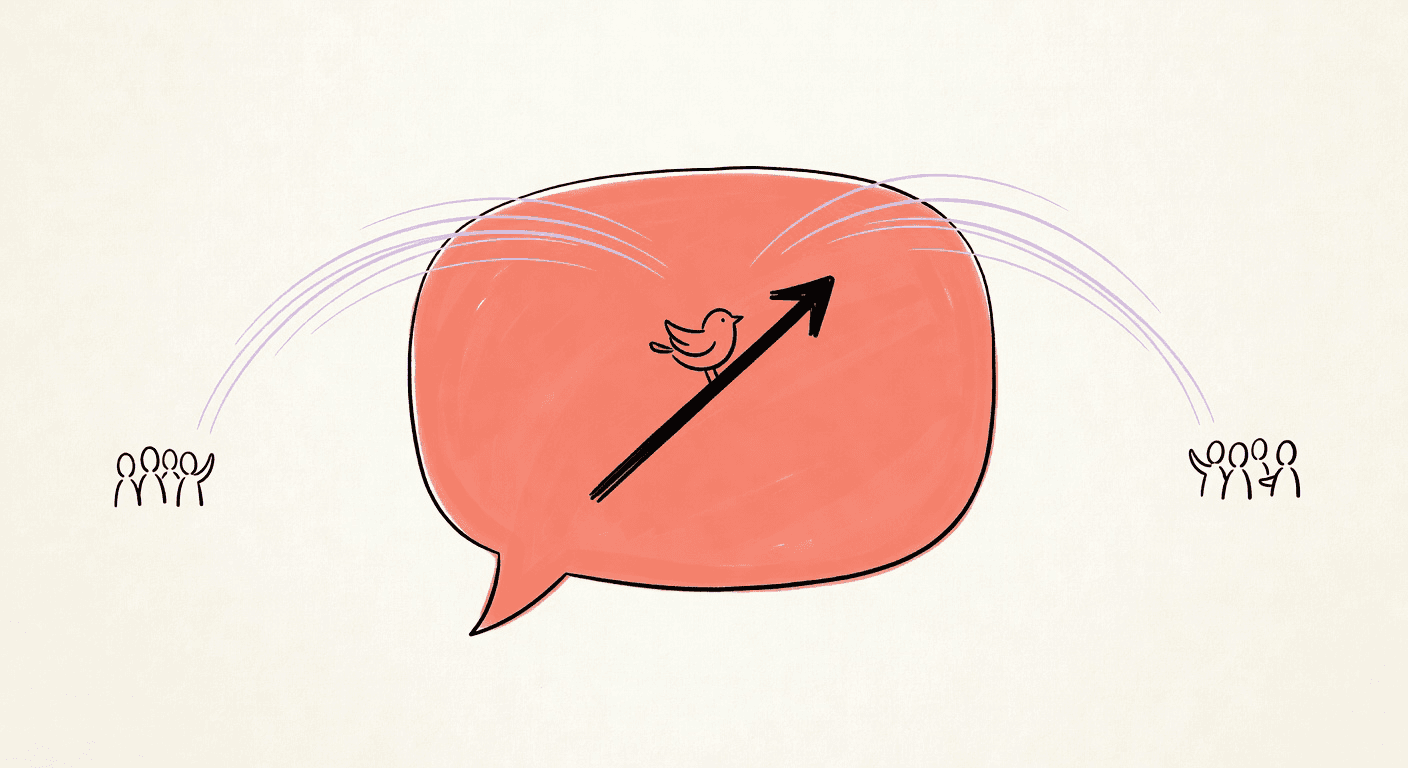
Quote tweets (quote posts) create a new post in your voice that appears in your followers' feeds while amplifying the original. They often drive 2-3x more profile visits than replies because they hit two audiences. Use the five formats below, time them right, and avoid the three mistakes that waste the opportunity.
Most accounts treat quote tweets like a casual reaction — a quick "This 🔥" or a hot take with zero substance. That approach adds almost nothing to your growth. The accounts that actually grow treat QTs as deliberate content that stands on its own. They piggyback on someone else's distribution while creating fresh value that earns profile clicks and follows.
This post breaks down exactly why quote tweets beat plain replies for distribution in many cases, the five formats that work right now, when to use each one, and the timing and quality rules that separate growth from noise.
How Do You Quote Tweet on X?
To quote tweet on X, open the post you want to share, select the Repost icon, choose the quote option, and add your own comment before publishing.
In the X app: Tap the Repost icon on the original post, then select Repost as Quote. Write your commentary in the composer and tap Repost to publish your quote.
On the web: Find the post on X, click its Repost button, and select Repost as Quote. Add your comment, then click Repost to share it.
These are the steps and button labels listed in X's Help Center. You can also attach media or quote one of your own posts; the original post stays referenced in your quote.
How Do Quote Tweets and Replies Differ in the X Algorithm?
Quote tweets and replies both outperform likes and plain reposts in the X algorithm, but they create fundamentally different distribution mechanics that matter when your goal is growing on X by earning profile visits from people who do not follow you yet. X's published ranking factors put the highest weight on conversation depth: the probability that a user replies to a post and the original author then engages back with that reply scores +75 — by far the strongest signal. A standard reply without the author follow-up scores +13.5. Retweets sit near +1 and likes at +0.5. Quotes and bookmarks are explicitly called out as positive engagement signals that boost reach for the original post (Social Media Today, September 2025). In practice, a quote tweet behaves like a high-value repost with your commentary permanently attached. Analyses put the amplification value of a quote for the source post in the 20–25x range relative to a like (OpenTweet 2026 breakdown). Your quote also earns its own independent engagement and distribution as standalone content on your profile. The mechanical difference is simple and decisive: a reply lives nested inside the original thread and primarily earns conversation signals for the source author, while a quote becomes a new first-class post on your own profile that appears in your existing followers' timelines, reaches entirely new people who never saw the source, and still delivers the positive quote signal back to the original post. Growth analyses show quote tweets generating 2–3x more profile visits than comparable replies because the reach is additive rather than contained (Teract.ai 2026 guide). The choice between them is not aesthetic — it is a deliberate decision about whose distribution you want to borrow and whether you need the post to live on your profile as owned media.

Replies win when you want the deepest author-conversation signals. Quote tweets win when you have a full perspective worth broadcasting under your own name to both the original audience and your existing followers. See the tactical reply system in our X reply strategy guide.
What Are the 5 Quote Tweet Formats That Actually Drive Growth?
The five formats that turn other people's reach into your own follower growth all share one non-negotiable trait: each one adds something concrete the original post did not already contain. Low-effort reactions — the "This 🔥" or single-sentence agreement — earn almost no profile visits because they send a clear zero-investment signal to both the algorithm and to human readers who have already seen the source. The patterns that actually drive real growth force you to contribute real substance in the limited space of a quote: a missing angle or implication, a respectful counter-example with receipts, a translation of the idea into your audience's specific constraints, hard proof from your own results, or an evolved context that updates an older take with 2026 realities. When you use any of these deliberately instead of reacting in the moment, quote tweets stop functioning as noise in the conversation and start compounding as owned discovery assets on your profile. The formats are not mutually exclusive on every post, but leading with one clear job — the single thing this quote is doing — keeps your commentary sharp, scannable in one screen, and valuable enough that a stranger who never saw the original still gets something useful and decides your profile is worth following. The list below shows the five patterns that separate quotes that drive consistent profile visits from the ones that get ignored.
Grow on autopilot
Grow your account without the guesswork
Postory turns what works into a repeatable posting system across X and Threads — so you grow consistently.
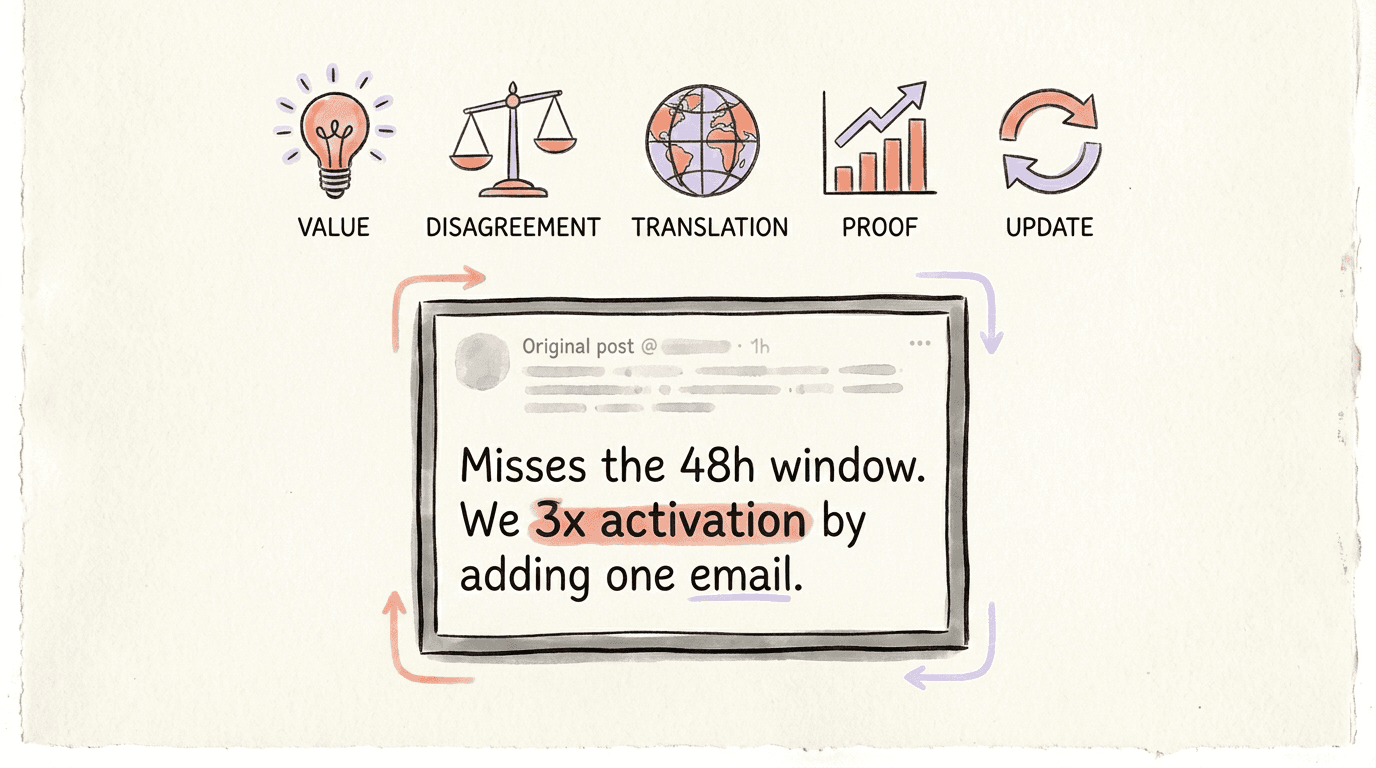
- Add Value / Complement — Extend the original point with a missing insight, example, or implication.
- Disagree Respectfully — Offer a substantiated counterpoint.
- Translate for Your Audience — Repackage the idea for your specific followers.
- Back It With Proof — Attach your own data or results.
- Evolved Take / Update — Refresh an older idea with 2026 context or sharper angle.
How Does the "Add Value" Quote Tweet Work?
The add value format is the highest-volume quote tweet approach because it is the easiest to repeat without forcing you into disagreement or heavy research. You read a substantive post in your niche, spot the exact gap the author left — a missing constraint, a second example, an edge case, or a downstream implication — and supply one concrete piece of missing insight that makes the original idea more useful. The first line acknowledges the post briefly, the middle delivers your specific addition with enough detail that it stands alone, and the close often ends with a light question that turns the quote into its own conversation starter. This works mechanically because the algorithm rewards the additional conversation depth your addition creates on the original post while your new post earns its own distribution in your followers' feeds. Human readers reward it because they get immediate utility they did not have before without needing to hunt through the thread. The key rule is that a stranger who lands on your quote from their timeline must still receive a complete, actionable point and feel the profile behind it is worth following. If your addition only makes sense inside the original thread context, it belongs as a reply instead. Use this format on posts that already have real substance where you have one clear extra angle or data point the author did not surface. Three to five of these per week compounds into steady, high-intent profile visits because each one positions you as the person who makes good ideas even better for your specific audience.
Why Does the "Disagree Respectfully" Quote Tweet Often Get the Highest Reach?
A respectful, evidence-based disagreement quote on a popular post in your niche often earns the highest reach of any format because it creates genuine conversation tension that the algorithm loves and readers actually engage with. When you open with partial agreement, deliver one specific counter-example or dataset the original post did not address, and stay civil, the quote gives people something concrete to agree with, push back on, or add to — which triggers replies and further quotes on your post rather than the source. This multiplicative engagement is why the reach advantage appears: your quote becomes the hub for the debate instead of a footnote inside the original thread. The risk is equally real and well documented in 2026 growth discussions: if the tone reads as a dunk for clout or personal attack rather than a good-faith contribution, you trigger mutes, blocks, and negative reaction signals that damage your reputation score faster than any temporary visibility spike is worth. The difference between a high-reach QT that brings new followers and a reputation hit that costs distribution is almost entirely in the first line, the presence of specific non-vibe substance, and the tone. One strong respectful counter on the right post frequently outperforms ten safe agreement quotes because it earns the exact conversation depth signals the algorithm weights most heavily while still delivering a standalone post on your profile that attracts the highest-intent visitors.
How Do You Use the "Translate for Your Audience" Quote Tweet?
The translate for your audience format turns someone else's general or adjacent idea into something your specific followers can actually use without extra work. Your audience almost never has the exact context, constraints, or business model the original poster assumed, so a strong quote takes the core concept and rewrites it in the language, limitations, and next actions that match the people who already follow you. You are not claiming original research or invention; you are doing the translation labor — mapping the idea onto the real problems, team sizes, tools, and incentives your readers face every day. This format performs especially well on industry news, creator playbooks, or frameworks originally written for much larger companies or entirely different verticals where the surface advice sounds good but the implementation details do not transfer. The first line of your quote names the source post briefly, the body delivers the translated version with one or two concrete adjustments your people need, and the result feels like you just saved them hours of mental mapping. Use it on posts that sit close enough to your niche that the idea is relevant but were clearly not written for the exact situation your followers operate in. Over time your audience starts to see you as the person who makes the rest of the internet make practical sense for people exactly like them. One or two of these per week positions you as a high-value curator without requiring you to generate every insight from scratch, and the profile visits convert well because the readers who click have already experienced the usefulness in the quote itself.
What Are the "Proof" and "Evolved Take" Quote Tweet Formats?
The proof and evolved take formats stand out because they transfer real credibility instead of just opinion or agreement. When you attach your own measurable outcome or fresh 2026 context to someone else's post, the quote stops feeling like commentary and becomes usable evidence that strangers can act on. These two consistently attract the highest-intent profile visits because the people who click are not browsing for entertainment or quick dopamine — they are actively looking for proof that a tactic works in practice or for the latest refined thinking on a problem they face right now. The proof version works by showing "I ran the exact play you described and here is the specific result plus the one constraint or variable that actually determined success." The evolved take works by taking an older idea referenced in the original post and demonstrating what changed with new data, platform updates, or sharper constraints since it was first shared. Both formats require the habit of tracking your own results and revisiting past work; without that discipline they become impossible to execute at volume. Accounts that use proof and evolved takes regularly see their quote tweets bookmarked and referenced by others rather than scrolled past, which compounds into followers who arrive already convinced of your expertise and ready to engage deeper.
The Proof Format
Attach your actual outcome directly to the claim in the post you are quoting. A strong example: the original post shares a framework for onboarding, and your quote says "We ran exactly this sequence for 90 days. Activation rose 34%. The one variable we protected was time-to-first-value under 48 hours — everything else was secondary." The credibility transfer is immediate because you are not theorizing. Readers follow because they want the next data point or the edge case you protected.
The Evolved Take Format
Take an older post or idea the original author referenced and refresh it with what actually changed. Example: the source post links to a 2024 thread on reply strategy, and your quote says "That 2024 thread still holds, but the 2026 weighting on author-engaged replies makes the first 5-minute window worth 4x what it was. We shifted our entire cadence and profile visits from quotes jumped 2.8x." This keeps your best thinking circulating and signals that you update your views with evidence instead of clinging to old wins.
Both formats separate the accounts that compound from the ones that just post because they force you to maintain a simple results log. Start with whatever you already track in your own analytics.
When Should You Quote Tweet Instead of Reply or Wait?
Quote tweet when you have a complete perspective or addition that deserves its own standalone post on your profile and you specifically want that post to appear in your existing followers' feeds in addition to reaching people who saw the original. The mechanical difference is ownership and additive distribution: your quote becomes a first-class post in your timeline history and in the For You feeds of people who follow you, while still amplifying the source through the quote signal the algorithm values. The first one-to-four hours after the original post is the sweet spot because early quotes ride the same velocity wave that boosts the source and appear before the conversation is flooded with low-effort noise. Reply instead when your point is short, conversational, or depends on the thread context for full meaning and will benefit from living inside the original conversation where the highest-weighted author-engaged reply signals (+75) can trigger. Skip entirely when you have nothing concrete to add, the post is already saturated with low-value quotes, or the original author has explicitly asked people not to quote them. The decision is not about which format is universally better; it is about matching the format to the job the commentary needs to do and the distribution you want to create for yourself.
A practical rhythm many growing accounts follow is a heavy engagement mix — often in the 60-70% range for replies and strategic quotes combined versus 30-40% original posts, consistent with 2026 guidance emphasizing borrowed reach before pure creation. In a focused 20–30 minute daily block you can scan your target list and drop two to four high-quality quotes on the freshest posts (under four hours old) while handling the rest as replies. The quotes produce owned assets that compound on your profile and continue earning profile visits long after the original conversation has moved on.
What Are the 3 Quote Tweet Mistakes That Backfire?
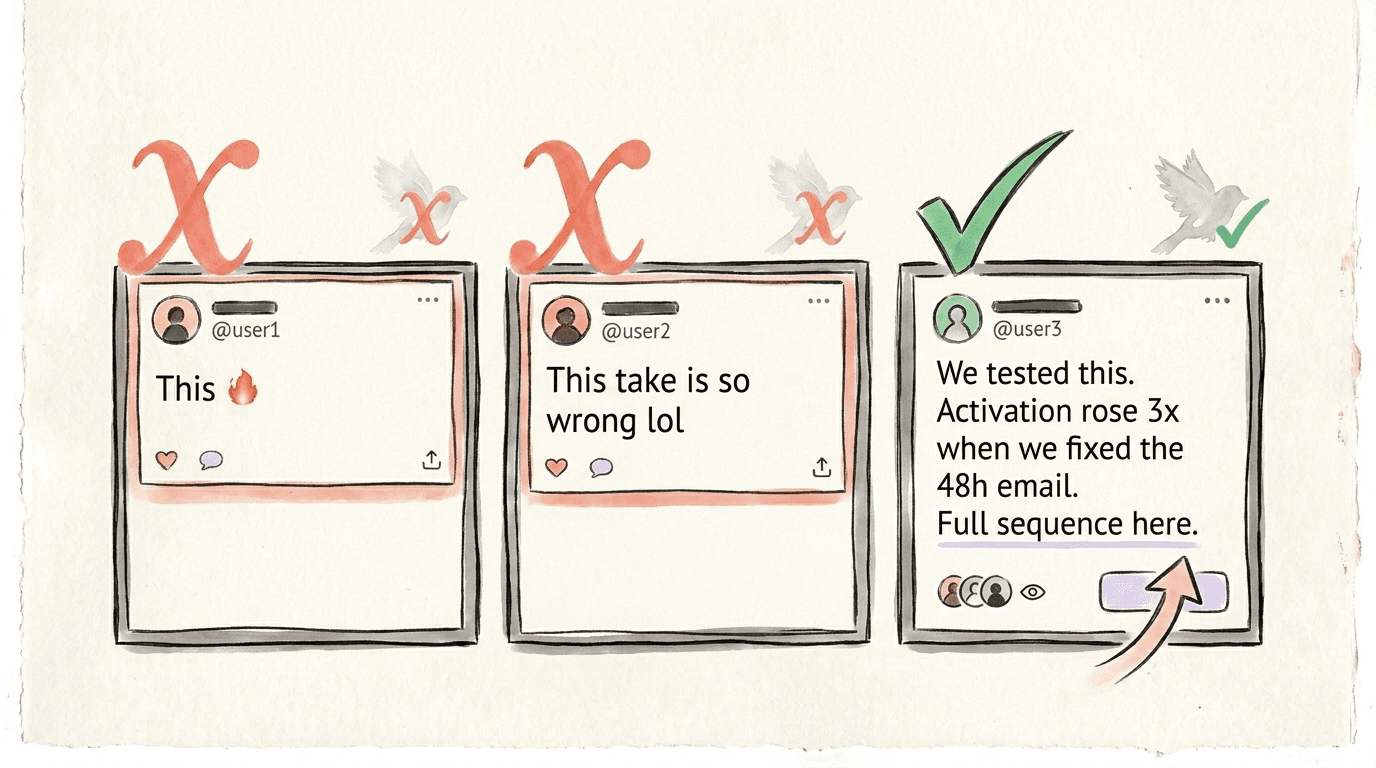
Most low-performing quote tweets fail for the same three reasons, and each one actively hurts the distribution and reputation the format is supposed to build. The first is low-effort reactions that add zero new signal — simple "This.", "100% agree", or emoji-only quotes. The algorithm treats these as noise because they create no conversation depth and no reason for other users to engage further; humans scroll past them instantly because there is no utility or tension worth stopping for. If you would not want that exact comment published as a standalone post on your own profile, do not publish it as a quote on someone else's. The second mistake is pure dunking or rage bait that reads as an attack rather than a contribution. These trigger mutes, blocks, and negative reaction signals that damage your account's long-term reputation score far faster than any temporary reach spike is worth; the algorithm and the community both penalize content whose primary purpose appears to be making the original poster look bad. The third is treating the quote like a billboard — dropping a naked "check my thread" or link with no actual value for the reader. These get filtered as spam and annoy the exact high-intent people you want to attract to your profile. Your bio and pinned post handle promotion; the quote itself must deliver standalone value or it backfires. If the original author has explicitly asked people not to quote them, respect the request immediately. Avoiding these three patterns is what separates quotes that compound into growth from the ones that quietly train the algorithm and your audience to ignore you.
Start Growing on X with Strategic Quote Tweets
Quote tweets are one of the cleanest ways to turn other people's distribution into your own growth on X because they let you borrow reach from accounts larger than yours while creating owned content that lives on your profile and continues working for you after the original conversation has moved on. The formats and timing rules covered in this post all come down to one habit: showing up with something specific and useful — a missing data point, a translated constraint, a real result, or a respectful counter — instead of hoping the algorithm or the audience notices you for existing. The accounts growing fastest right now are not the ones posting the most original threads. They are the ones whose every public action, including their quotes, gives a stranger who lands on the post a clear reason to click through to the profile and decide it is worth following for more of the same standard. When you consistently add one of the five value layers instead of reacting, the quote stops being a reaction and becomes a growth asset that compounds in impressions, profile visits, and followers over weeks and months.
Postory's AI post writer turns any URL or idea into a ready-to-post X draft in your voice in seconds. Paste the source post link or describe the angle you want to add, and it generates the commentary layer that fits one of the formats above — proof, translation, add-value, or evolved take — already sounding like you. You review, tweak if needed, and publish. The distribution work and the relationship with your audience stays entirely yours.
Try Postory free — turn any source post or idea into a strong X post draft that sounds like you and adds real value.
FAQ
Q: What is a quote tweet on X and how is it different from a reply?
A quote tweet (now called a quote post) creates a new post that includes the original tweet plus your commentary. It appears in your followers' feeds as original content and still amplifies the source. A reply nests inside the original thread and does not create a separate post on your profile. Quotes give you owned distribution; replies give you deeper conversation signals.
Q: Do quote tweets help you get more followers on X?
Yes — when executed with real value. Because a quote appears in two audiences (the original post's viewers and your own followers), thoughtful quotes consistently generate more profile visits than equivalent replies. The visitors who convert are usually the ones who found your added perspective useful and want more of it.
Q: How often should you quote tweet if you want to grow?
Many accounts executing this strategy well publish 3–8 high-quality quote tweets per week as part of the broader engagement mix (replies plus strategic quotes) recommended in 2026 analyses. Quality and consistency beat volume. Two excellent quotes that earn real profile clicks are worth more than fifteen low-effort ones that get ignored.
Q: Quote tweet vs reply: which grows your account faster?
Neither is universally superior. Replies excel at triggering the highest-weighted conversation signals (especially author replies back). Quote tweets win for distribution and owned reach because they appear in your followers' feeds. Many fast-growing accounts use both strategically.
Q: How do I find good posts to quote tweet for growth?
Build a private list of 15–30 accounts in your niche who post substantive content. Check it a few times a day. Quote the freshest posts (under 4 hours old) where you have one clear, valuable addition. The same targeting that works for replies works for quotes.
Related articles
How I Got My First 100 Followers on X (From a Dead Account)
I started a brand new X account with zero followers and had my first 100 real followers a few days later. Here's the exact playbook.
Jul 19, 2026

The X Profile Banner Strategy: What to Put Above Your Tweets
Your X banner is prime real estate most accounts waste. 6 banner archetypes that turn profile visits into follows — plus the exact 2026 dimensions.
May 30, 2026

X/Twitter for SaaS Founders: The Distribution Playbook
A distribution playbook for SaaS founders on X: positioning, content pillars, and the founder-to-product funnel that turns followers into paid users.
May 26, 2026