
What Goes Viral on X in 2026: A Viral Tweet Breakdown

See which of your posts already fit the pattern
Your recent posting read against the same signals: what you post about, how often, when, and how you reply — scored out of 100, with the gap costing you the most reach on top.
A viral tweet in 2026 is a post that sparks replies — because the X algorithm weights a back-and-forth reply at +75 versus +0.5 for a like (150x). Strong opinions, one-sided framing, native video, and threads drive the most reach. Links don't carry a coded penalty — link posts just have to earn their replies like everything else.
Everyone wants a viral tweet. Almost nobody has a clear picture of what actually makes one happen on X in 2026 — which is fair, because the platform has changed more in the last year than in the previous five. xAI open-sourced a new Rust-based recommendation stack in January 2026 and expanded it into the full runnable engine that May, Grok took over ranking, and several old rules of thumb stopped matching the code. The good news: we now have real signal about what the algorithm rewards. Below is the plain-English version.
What Makes a Tweet Go Viral in 2026?
A viral tweet on X in 2026 is a post that triggers a chain of replies between the author and other users, because that's the single strongest signal the ranking algorithm looks for. X's published ranking weights, documented in Social Media Today's breakdown, score the "user replies to the tweet and the author replies back" signal at +75 versus +0.5 for a simple like — that's 150x (75 ÷ 0.5) in the scoring formula. Everything else — retweets, bookmarks, profile visits, dwell time — matters, but nothing comes close to that reply-chain weight. This is why the tweets that explode in 2026 tend to be opinionated, slightly provocative, or emotionally charged: they give people something to argue with, agree with loudly, or add to. If a tweet can be scrolled past without any reaction, the algorithm reads that as "no one cares," and distribution dies within hours.
How Does the X Algorithm Decide What Goes Viral?
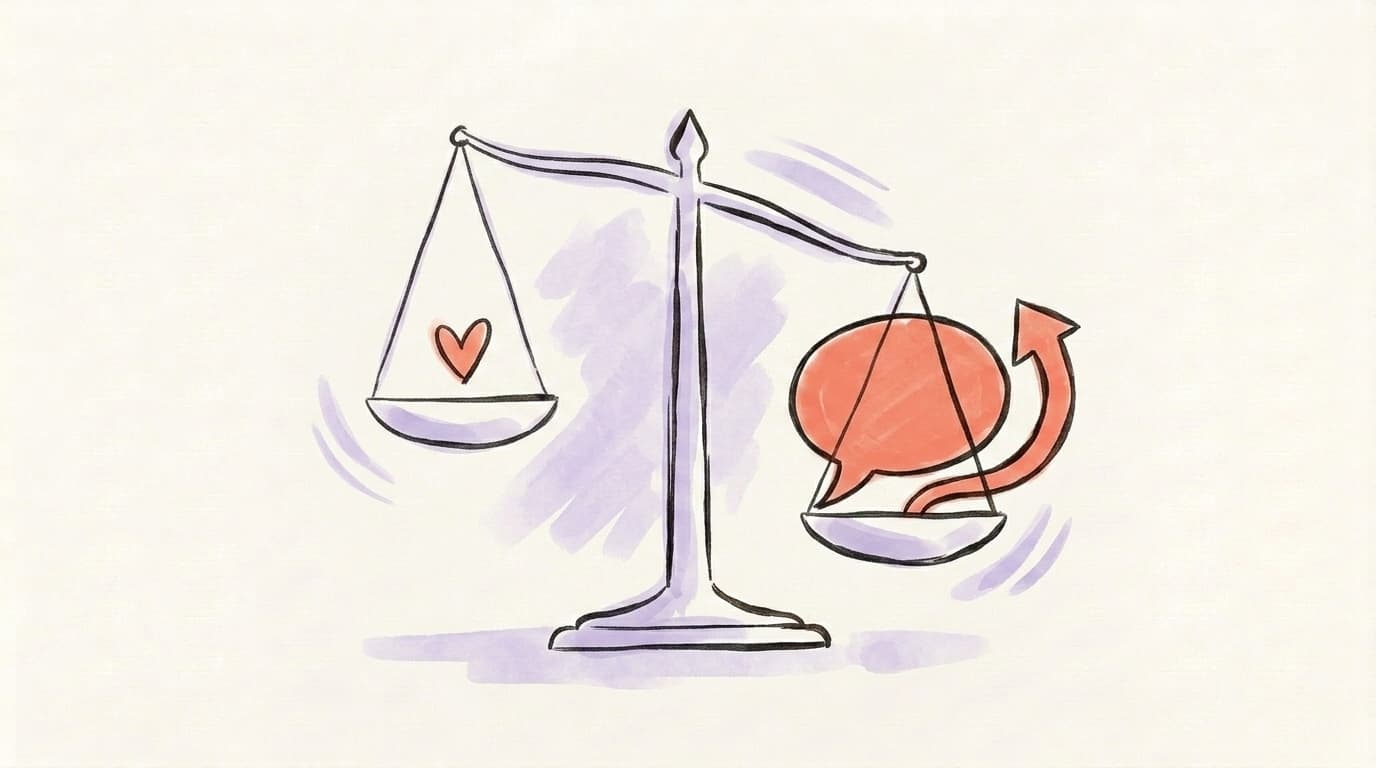
The X algorithm works as a funnel that narrows millions of candidate posts down to the few hundred shown in your feed, and the deciding weights are now public. Reverse-engineering during the release window put the weights roughly here — these are external estimates, not figures X published, so treat them as directional. Reply probability contributes +13.5 to a post's score, a reply that gets an author reply back contributes +75, profile visits with engagement add +12, conversation clicks with engagement add +11, and a dwell time of 2+ minutes inside the reply thread adds +10. Retweets contribute +1.0 and likes only +0.5. Videos watched past 50% and accounts with verification get additional boosts; all-caps text and spam-flagged content get pushed down. Link clicks are a positive signal — there is no hard-coded link penalty anywhere in the open-sourced stack, which is the biggest break from the advice most creators are still repeating (the code, file by file). The January 2026 xAI release also moved ranking to a Grok-transformer-based system, with out-of-network candidate retrieval handled by a module called Phoenix — so "interesting to humans" is now evaluated semantically, not just by engagement math. You can read the X recommendation source code on GitHub for the full picture.
AI that learns your voice
Posts that actually sound like you
Postory's AI writes drafts in your voice — not generic AI mush — so you publish faster and still sound human.
The signals that actually move the needle
- Reply chains with the author. The single highest-weighted signal. Ask questions, take positions, respond fast.
- Native video. A standalone boost, especially if viewers watch past 10 seconds.
- Dwell time in the replies. If people stay in your reply thread for 2+ minutes, the algorithm treats your post as interesting.
- Bookmarks and quote posts. Strong "I want to come back to this" signal — weighted higher than plain likes.
The signals that quietly kill reach
- All-caps posts and spam-flagged wording.
- No engagement in the first hour. A tweet loses about half its visibility score every six hours, so the first 60 minutes matter most.
- Predicted negative reactions. If the model expects a post to get "Not Interested"-ed, muted, blocked or reported, that prediction is multiplied by a negative weight and subtracted before the feed is sorted — silently, before anyone has actually reacted.
What about links? This is the one piece of standard advice worth retiring. There is no hard-coded link penalty anywhere in the open-sourced ranking stack, and the link-click signal carries a positive weight — we went through the files. What's true is subtler, and it still costs you reach: a link asks the reader to leave, and every signal that actually ranks a post — replies you reply to, dwell time in the thread, reposts, profile clicks — happens on X. A link post competes at a disadvantage it created, not one the algorithm assigned. So post the link when the link is the point, write the post so it stands on its own without the click, and judge it on its own numbers instead of assuming it was throttled.
What Types of Tweets Go Viral Most Often?
Looking at the tweets that consistently break out in 2026, a small handful of formats do most of the work. These aren't magic templates — they're formats that happen to line up with what the algorithm rewards: strong reactions, replies, and dwell time. The common thread is that every one of them forces the reader to stop scrolling and either nod, argue, or reply. Creators who study high-performing accounts tend to land on a similar short list of formats, and the overlap isn't a coincidence — each format is engineered, consciously or not, to trigger the specific signals the ranking model rewards most. If you reverse-engineer a week of breakout tweets from any large account, you'll see the same four or five shapes on repeat. Here's what consistently works, and why each one plays well with the way X ranks content in 2026.
Here's a great breakdown of viral tweet structure from a creator doing over 1B impressions per year:
Strong opinions and hot takes
The highest-performing single-tweet format on X right now is a confident one-sided opinion. The structure is simple: state something many people won't fully agree with, then defend it without hedging. No "on the other hand," no qualifiers. This format dominates because it generates the reply-chain behavior the algorithm weights most. People quote-tweet to argue, fans reply to agree, and the author can reply back — hitting the +75 reply-author-reply signal multiple times per viral post.
Relatable observations
"Tiny, specific observation that makes you feel seen" is the other dominant pattern. These are low-stakes emotionally — nobody's going to fight you over "why does every coffee shop play the same three songs" — but they generate massive like counts and quote tweets because people add their own version. The algorithm's video and dwell weights don't matter much here; the volume of quote tweets does the lifting.
Data and counterintuitive stats
Short posts that lead with a surprising stat or data point consistently pick up bookmarks and quote tweets — both of which are weighted more heavily than likes. The format is usually one sentence: "X is true, and here's the number," followed by where you got it. Credibility matters; made-up numbers get ratio'd fast now that most readers can ask Grok to fact-check in-thread.
Threads with a strong first tweet
Threads still work in 2026, but only if the first tweet earns the click. A thread keeps readers inside your conversation longer, which directly boosts the dwell-time signal, and each reply inside your own thread becomes another ranking opportunity. The trick is that the hook tweet has to stand on its own — if nobody stops scrolling, the rest of the thread never gets seen.
What Do Viral Tweets Have in Common?
Looking across these formats, the same handful of traits show up again and again in tweets that break out. Understanding them is more useful than copying any single template, because the algorithm rewards the underlying behavior — not the wording. A good way to self-check a draft tweet is to run through this list before you post. If it doesn't hit at least two of these, the distribution ceiling will be low. None of this is about writing "clever" — it's about writing something that gives other humans a clear reason to react, reply, or save. That's what the algorithm is actually measuring under the hood.
- They take a side. Balanced takes die. A confident position, even a wrong one, beats a neutral one.
- They're short enough to screenshot. Quote tweets and screenshots are a huge secondary distribution layer.
- They're emotionally charged. Research on virality consistently finds that high-arousal emotions — surprise, anger, awe, humor — travel further than neutral content (Berger & Milkman, 2012, Journal of Marketing Research).
- They're timed for when your audience is online. A tweet loses about half its visibility every six hours, so posting into an empty timeline wastes the window.
- They hand the reader something to add to. A reply that gets you to reply back is the most valuable engagement on the platform.
How Can You Write Tweets That Have a Shot at Going Viral?
You can't force a viral tweet, but you can stack the odds. The goal isn't to write one magic post — it's to write consistently enough that the algorithm has good data on you, and to structure each individual post so it doesn't cap its own reach. Most accounts that seem to "always" go viral are really just posting five to ten times a day, every day, with a strong opinion in most of them. The math works out. One tweet in twenty breaks out, and because the account is posting every day, that breakout happens often enough to look effortless from the outside. Here's the workflow that gives you the best shot.
- Lead with a strong first line. If the reader can't tell what you're arguing in the first eight words, they scroll.
- Cut hedging. Delete "I think," "maybe," "kind of." Take the position.
- Reply to every reply in the first hour. This is the single highest-ROI action you can take. Each author reply hits the +75 weight.
- Post consistently. Five to ten posts a day keeps your account in the algorithm's "known active" bucket. One post a week is a cold-start problem.
- Don't attach a link out of habit. There's no coded penalty for one, but a link pulls readers off X, and the replies and dwell time you lose are exactly what the ranker measures. Include it when it's the point of the post; drop it when it isn't.
- Use native video where it fits. A 30-second native video outperforms the same content as text most of the time.
- Check posting time. Post when your audience is online — otherwise the first-hour momentum never builds.
Should You Even Try to Go Viral?
Honest answer: viral tweets are a terrible business metric, but a great distribution side effect. Chasing virality for its own sake tends to produce thirsty, take-of-the-day content that attracts drive-by followers who don't convert into anything real. But if you're already posting thoughtful content about what you do, optimizing for the signals above is close to free and compounds fast. The accounts that win on X in 2026 aren't the ones trying to go viral every day — they're the ones building a recognizable voice, posting consistently, and occasionally landing a breakout. The breakouts bring the new audience; the consistency keeps them. Don't rewrite your strategy around a lottery ticket. Do structure each post so it isn't accidentally capping its own reach.
Start Writing Better Tweets with Postory
Writing tweets that actually earn replies is mostly about showing up every day with a clear point of view. Postory helps with the "showing up every day" part — you can generate tweet drafts from a source (a YouTube video, a blog post, a long note), edit them, and schedule them across X, Threads, and Bluesky in one flow. If you're stuck for ideas, our tweet ideas guide has dozens of prompts, and our how to grow on Twitter post covers the basics of building an audience from zero.
Try Postory free — turn one idea into a week's worth of tweets, threads, and Bluesky posts.
FAQ
Q: How many likes does a tweet need to be considered viral?
There's no official threshold, but a rough rule is that a tweet is "viral" when its engagement-to-follower ratio is noticeably higher than the account's baseline — one academic study classified a tweet as viral when retweets exceeded about 2.16x the author's follower count. For most accounts, a post that gets 10x your typical engagement qualifies.
Q: Do hashtags still help tweets go viral in 2026?
Not really. Hashtags haven't been a meaningful virality lever on X for years. The algorithm now uses semantic matching (via Grok) to decide what a post is about, so hashtags mostly clutter the copy without boosting reach. One or two can help categorization for niche communities, but stuffing is a negative signal.
Q: Is it better to post one long tweet or a thread?
Depends on the idea. If it fits in one screen, post one tweet — threads have a cost because each additional tweet is another chance for readers to drop off. But if you have 3+ distinct points, a thread boosts dwell time, which is a ranking signal, and gives you more replies to respond to.
Q: Does posting time really matter on X?
Yes, more than people think. A tweet loses about half its visibility score every six hours and gets almost no algorithmic distribution after 24 hours. Post when your audience is online so the first hour builds momentum. For most US-based accounts, 9 a.m.–noon ET and 7 p.m.–10 p.m. ET are safer windows.
Q: Will buying Premium make my tweets go viral?
X has said Premium (verified) accounts receive a ranking boost, meaning verified posts tend to need less engagement to get the same distribution — but it doesn't make bad tweets good. If the content is weak, Premium just means slightly more people scroll past it. Use it to amplify good content, not to rescue bad content.
Q: Are viral tweets worth anything if they don't convert?
Probably not. A viral tweet that brings 50,000 new followers who don't care about your actual work is brand damage disguised as a win. Structure your profile and pinned post so that anyone arriving from a viral moment has a clear next step — a product, a newsletter, a pinned thread. Otherwise the spike evaporates in a week.
Q: How do I avoid tanking my reach accidentally?
The fastest self-inflicted reach killers in 2026 are: all-caps writing, posting into dead hours, low-effort replies, and not replying to anyone in the first hour. Note what is not on that list — external links. There is no hard-coded link penalty in the open-sourced algorithm and the link click itself scores positive, so when a link post underperforms it's the post, not the URL. Fixing those four is usually worth more than any "hook formula."
Related articles
X Premium vs Premium Plus: Is Either Worth It in 2026?
X Premium vs Premium Plus: compare features, reply visibility, real reach data, Grok limits, and which paid tier is worth it for your account.
Oct 14, 2026
How I Got My First 100 Followers on X (From a Dead Account)
I started a brand new X account with zero followers and had my first 100 real followers a few days later. Here's the exact playbook.
Jul 19, 2026

The X Profile Banner Strategy: What to Put Above Your Tweets
Your X banner is prime real estate most accounts waste. 6 banner archetypes that turn profile visits into follows — plus the exact 2026 dimensions.
May 30, 2026