
How to Write Viral Tweets: Hooks, Formats and Timing

Find the hook and the hour that already work for you
Rather than guessing which format lands, the audit pulls the hook style, length and structure behind your own best post — plus the hours your account actually gets read.
Viral tweets follow repeatable patterns: a scroll-stopping first line, a proven format (story, list, contrarian take, screenshot, or one-liner), fast early engagement, and a reason for people to follow you — not just like the tweet.
Most advice on viral tweets is vague. "Be authentic." "Add value." "Engage your audience." None of it tells you what to type.
This guide is the opposite. We'll break down the specific patterns behind tweets that get millions of impressions, the hook formulas that stop the scroll, when to actually post (spoiler: it's changed), and how to turn one viral moment into real followers — not just a dopamine hit.
What Makes a Tweet Go Viral in 2026?
A viral tweet in 2026 is one that the X algorithm decides is interesting enough to push beyond your followers — and that real people then share, quote, or bookmark. What changed recently is how the algorithm decides. The old system rewarded engagement velocity: if your tweet got likes and replies in the first 30 minutes, it got distribution. Some creators argue the new AI-powered system (including Grok-based content scoring) extends distribution windows, so early engagement pods matter less than before — but the 30-60 minute velocity window still matters in most industry breakdowns, so don't write it off. What matters more than ever is whether your tweet is actually worth reading. On top of that, tweets that feel like a real person talking beat corporate-speak every time, and a well-placed screenshot or chart can still amplify a strong take. Write something a real human would want to screenshot and send to a friend.
Here's a great breakdown of the 2026 X algorithm change and what's working now from Jacob C. Edmunds:
Which 5 Viral Tweet Formats Work Repeatedly?
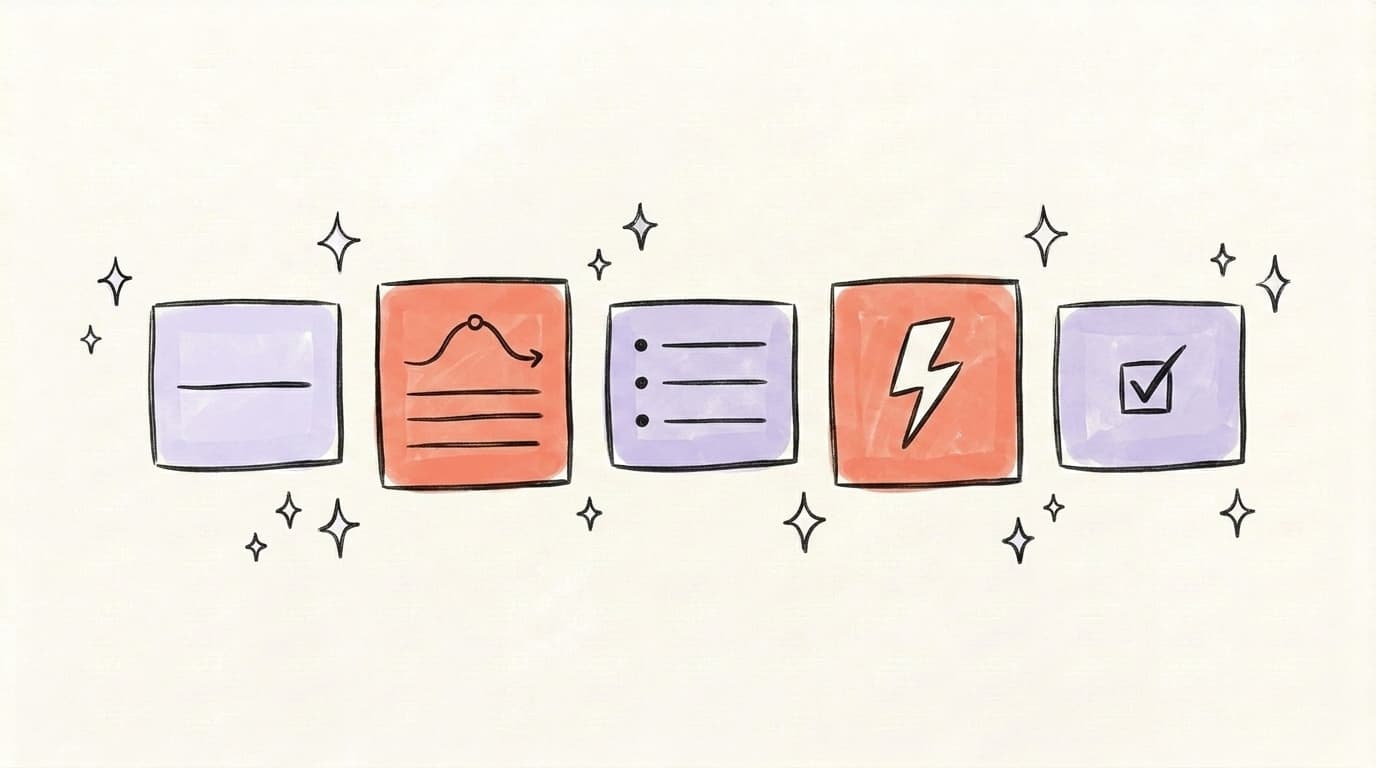
Five tweet formats account for the bulk of viral tweets you see in your timeline. They work because they're easy to read on a phone, trigger an emotional response, and give people a reason to reply or quote. You don't need to invent a new format — you need to pick one and execute it well. The five formats that repeat: the one-liner truth bomb (a single sharp sentence people want to quote), the story tweet (a short first-person narrative with a payoff), the numbered list (3-7 actionable items, one per line), the contrarian take (a confident opinion that challenges a common belief), and the screenshot tweet (a DM, email, chart, or receipt that makes a claim visual). Notice what's missing from that list: the corporate announcement, the question-only tweet, and the hashtag-stuffed text block. Those get skipped.
AI that learns your voice
Posts that actually sound like you
Postory's AI writes drafts in your voice — not generic AI mush — so you publish faster and still sound human.
Here's what each one looks like in practice:
- One-liner: "Nobody cares about your product. They care about what it does for them."
- Story: "I lost my biggest client on a Monday. By Friday I had three new ones. Here's what I did..."
- List: "5 mistakes I made building on X: 1) Posting without a hook 2) Ignoring replies 3) ..."
- Contrarian: "Unpopular opinion: most 'productivity' content is just procrastination in disguise."
- Screenshot: A screenshot of a $15K payout notification with the caption "6 months of posting daily."
Pair the format with the hook, and you've got the skeleton of a viral tweet.
How Do You Write a Hook That Stops the Scroll?
The first line is everything. Most people decide whether to keep reading your tweet in under a second — if your opening doesn't land, nothing else you wrote matters. The best viral tweet hooks use one of three patterns: a curiosity gap ("Most people are doing this wrong and don't even know it..."), a bold or specific claim ("I went from 200 to 15,000 followers in 4 months. Here's exactly what worked"), or an unexpected contrast ("I fired my best employee. It was the best decision I ever made."). Tweets with specific numbers tend to outperform vague claims — "I made $4,237 last month" lands harder than "I made a lot of money." Specifics are sticky because they feel real; rounded or vague numbers feel like hype. The worst hooks start with hedging ("I just wanted to share..."), throat-clearing ("So basically..."), or corporate lead-ins ("We're thrilled to announce..."). Cut all of it. Your first seven words decide whether the tweet exists or dies.
A quick test: read only the first line of your tweet and ask yourself, "Would I keep reading?" If the answer is no, rewrite it. If the answer is "maybe," rewrite it. Only post if the answer is a clear yes.
When Should You Post for Maximum Reach?
For years, timing was everything on Twitter. The algorithm rewarded fast early engagement, so posting when your audience was online mattered. Timing still matters in 2026, but content quality and media use have become bigger levers — a great tweet posted at a mediocre time outperforms a mediocre tweet posted at the perfect time. If you want the best shot at early momentum, the data still points to specific windows. Buffer's analysis of 8.7 million tweets found that Tuesday at 9 a.m., Wednesday at 10 a.m., and Wednesday at 9 a.m. are the three highest-engagement slots. Sprout Social's 2026 data points to a slightly later window — Tuesday through Thursday, 12-6 p.m. local time. The two don't actually overlap — Buffer's slots are mid-morning, Sprout's window is afternoon. What they agree on is the days, Tuesday through Thursday, not the hour. Weekends — especially Saturday — are the worst for engagement on most accounts. The caveat: your specific audience matters more than the average. A US B2B audience peaks at different times than a European crypto crowd. Post consistently for two weeks, then check your analytics and adjust.
Quick takeaways on timing:
- Best days: Tuesday, Wednesday, Thursday
- Best window: the two studies disagree — Buffer's strongest slots are mid-morning, Sprout Social's window is 12–6 p.m., both in your audience's local time
- Worst day: Saturday
- News/reactive niches: Timing still matters a lot — post as soon as the news breaks
- Everyone else: Focus on content quality first, timing second
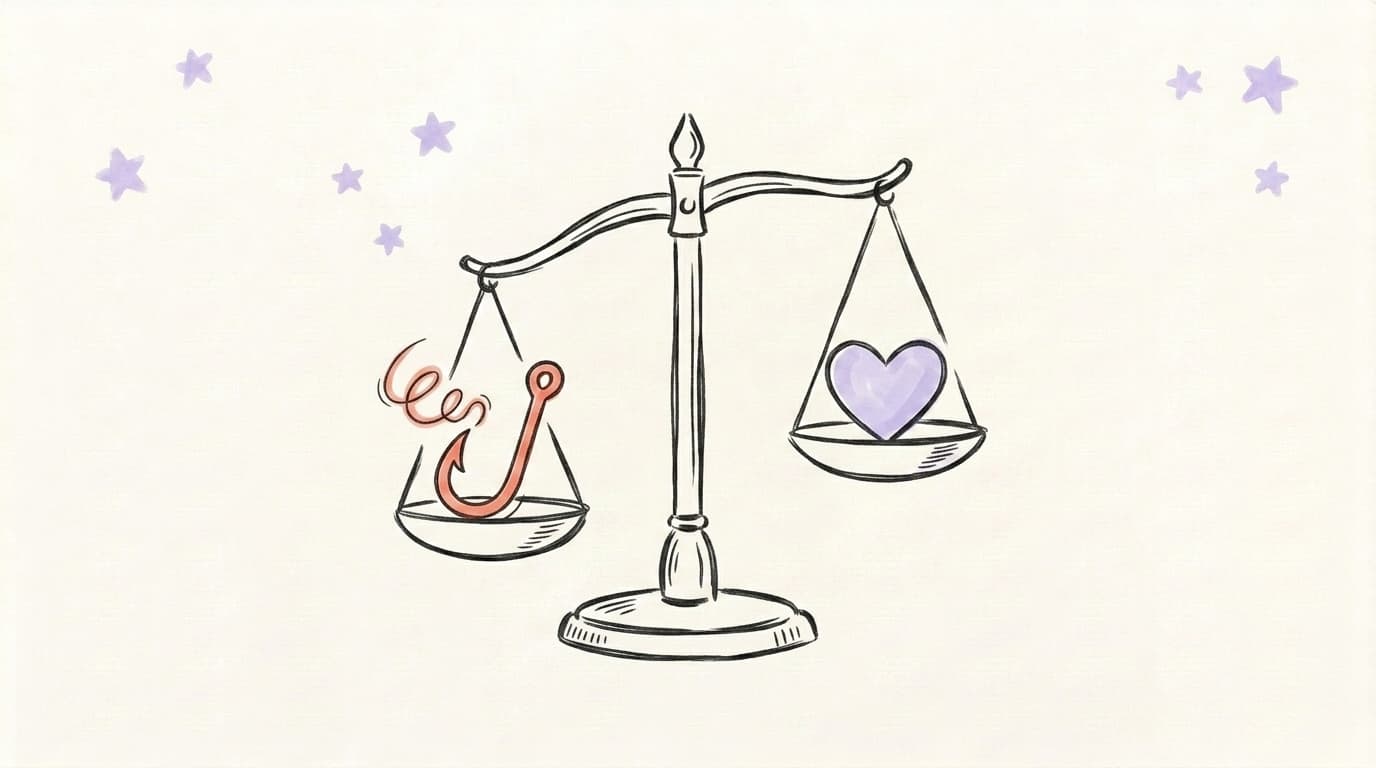
Engagement Bait vs. Genuine Value: Which Wins?
Genuine value wins on X, and engagement bait loses. Engagement bait is any tactic that manipulates people into engaging without delivering value — think "Like if you agree" or "Reply with your answer below" or ragebait designed to provoke quote-tweets. It works in the short term and poisons your account in the long term. X has cracked down on low-quality engagement bait, and accounts that lean on it see impressions collapse over weeks. Genuine value — a useful insight, a funny observation, a story that teaches something — compounds. Accounts built on bait get followers who never engage again after the viral moment fades. The new AI-powered algorithm makes this worse for bait: if the AI reads your post and decides it's low-quality manipulation, distribution drops fast. That said, there's a gray zone. Asking a real question you want answers to isn't bait. Taking a strong, genuine position that invites debate isn't bait either. The line is intent.
How Can You Manufacture Virality Ethically?
You can't force a tweet to go viral, but you can dramatically increase your odds. Manufacturing virality ethically means stacking the deck: write a tweet that hits all the known patterns, then do the small things that help it get seen. Start with the fundamentals — a tested format, a sharp hook, a clear payoff. Add media if it's genuinely relevant (not decorative) — adding relevant media often helps on X, but Buffer's 2026 data shows text-only can actually outperform media on this specific platform, so test it with your audience. Reply to every comment in the first hour — that early conversation signals quality and keeps the tweet alive. Later in the day, quote your own tweet with a follow-up insight to give it a second life. Most importantly, post volume: the accounts that consistently go viral write 3-10 tweets per day, treating each one as an experiment. Hypefury's YouTube analysis of 16,000 X accounts found that high-volume posters dominate the top performers — not because every tweet hits, but because they have far more at-bats. Need ideas? See our tweet ideas guide.
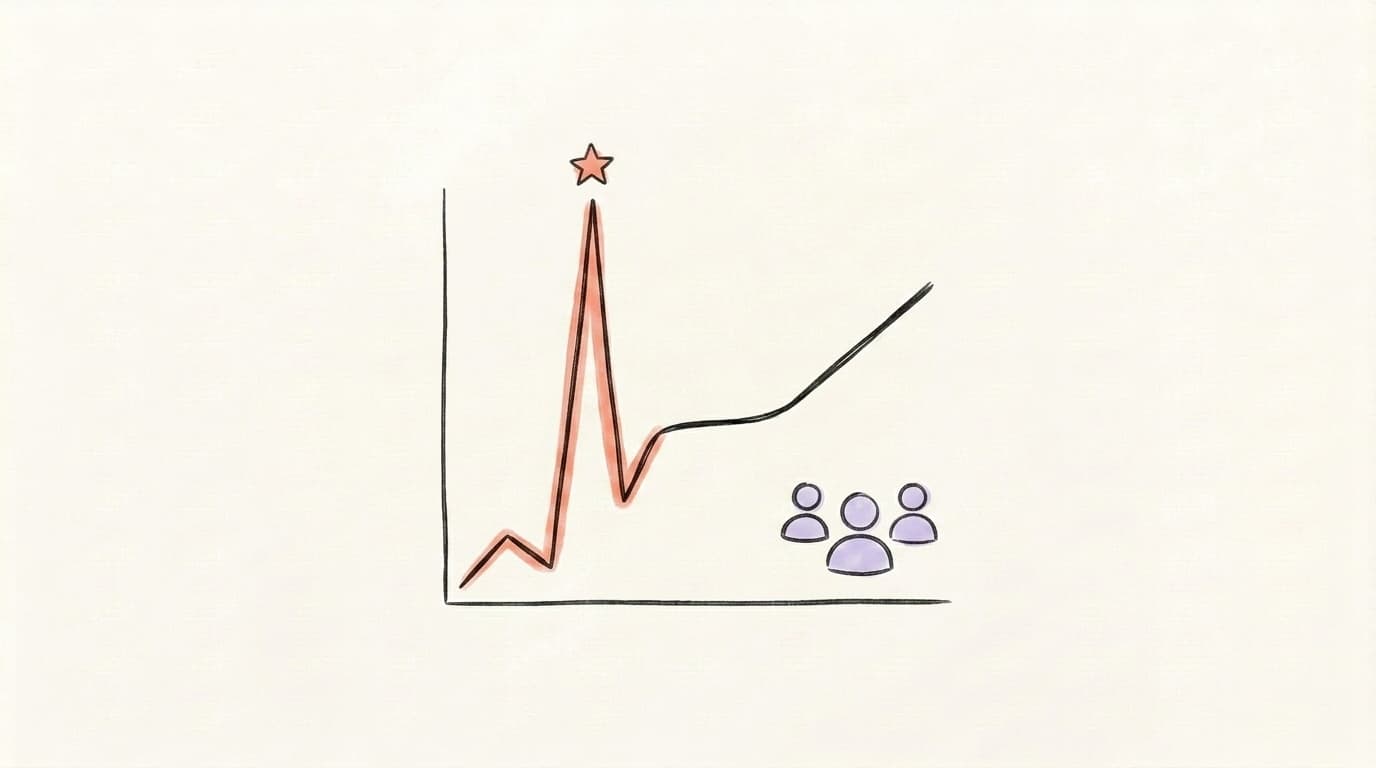
How Do You Turn a Viral Tweet Into Real Followers?
Virality is a spike. Followers are the compound interest. Most viral tweets bring a wave of likes and a trickle of follows because the reader has no reason to click your profile. To fix this, three things need to be in place before you go viral: a bio that sells the follow, a pinned tweet that shows your best work, and a backlog of recent tweets that match the vibe of the viral one. If your viral tweet is a sharp marketing take and your last ten tweets are vacation photos, new followers churn fast. Followers gained from a single viral post churn quickly without a retention plan. The fix is consistency — if someone follows you after a marketing take, your next five tweets should also be sharp marketing content. Reply to the viral tweet with a link to a lead magnet or newsletter. For the full playbook, see how to grow on Twitter.
Write Viral-Optimized Tweets with Postory
Writing one viral tweet is hard. Writing viral tweets consistently is what separates accounts that grow from accounts that peak once and fade. Postory's AI post writing learns your voice, generates tweet drafts using proven viral formats and hooks, and lets you schedule them across X, Threads, and Bluesky — so you can turn one idea into multiple on-platform experiments in minutes instead of hours.
Generate viral-optimized tweets with AI and schedule them with Postory — so you can focus on ideas, not formatting.
FAQ
Q: What is a viral tweet?
A viral tweet is a post on X (formerly Twitter) that gets significantly more engagement — likes, replies, reposts, bookmarks, or views — than your normal content. There's no fixed threshold, but most creators consider 100K+ impressions or 10x your usual engagement as "viral" for their account. For larger accounts, the bar is 1M+ impressions.
Q: How many followers do you need to go viral on Twitter?
Zero. The X algorithm pushes content based on quality and engagement signals, not follower count. Accounts under 1,000 followers regularly get tweets with 100K+ impressions. The 2026 AI-powered algorithm reads content directly, which actually levels the playing field for smaller accounts with sharp writing.
Q: What makes a tweet go viral the fastest?
Three things, in order: a hook that stops the scroll in the first 7 words, a proven format (story, list, contrarian take, screenshot, or one-liner), and posting when your audience is online so early engagement signals quality. Relevant media can help too, though on X you should test media-vs-text with your own audience.
Q: How often should you tweet to go viral?
3-10 tweets per day if growth is your goal. High-performing accounts treat each tweet as an experiment — more at-bats means more chances to hit. But quality still wins over volume: 3 sharp tweets beat 10 mediocre ones. If you can't sustain 10/day at quality, drop to 3-5.
Q: Should you use hashtags in viral tweets?
Sparingly. Stuffing hashtags on X reduces reach and looks spammy — the 5+ hashtag pattern is dead. One or two relevant hashtags are fine and can still help discoverability, especially on breaking-news topics that are already trending. Most top creators use zero or one.
Q: Do tweet threads go viral more than single tweets?
Tweet threads get more total impressions per post because they generate more time-on-page and multiple engagement opportunities, but they're harder to start — people have to commit to reading more. A strong single tweet reaches more new people per unit of effort. Use single tweets for hooks and threads for deep dives.
Q: How do you come up with viral tweet ideas?
Mine three sources: (1) your own recent experiences and lessons, (2) conversations you had in DMs or group chats where someone said "you should tweet that," and (3) other creators' viral tweets in your niche — don't copy them, use them as prompts to write your own take. Scrolling the timeline passively rarely produces ideas; writing from real life and real conversations does.
Q: Why did my viral tweet stop getting impressions?
Two reasons usually. First, X caps impressions for most tweets at around 24-48 hours under the new algorithm — after that, the tweet is "done" unless someone with a large following quotes it. Second, if replies or quote-tweets contain low-quality engagement, the algorithm can stop promoting the post. Keep replying in the first hour to keep it alive.
Related articles
X Premium vs Premium Plus: Is Either Worth It in 2026?
X Premium vs Premium Plus: compare features, reply visibility, real reach data, Grok limits, and which paid tier is worth it for your account.
Oct 14, 2026
How I Got My First 100 Followers on X (From a Dead Account)
I started a brand new X account with zero followers and had my first 100 real followers a few days later. Here's the exact playbook.
Jul 19, 2026

The X Profile Banner Strategy: What to Put Above Your Tweets
Your X banner is prime real estate most accounts waste. 6 banner archetypes that turn profile visits into follows — plus the exact 2026 dimensions.
May 30, 2026