

Twitter/X Reply Strategy: Replies Grow Accounts Faster

Check how your reply habits score today
The audit reads your last 7 days of replies against a target cadence — alongside consistency, content mix, profile and timing — and ranks what to fix first.
On X, replies carry far more algorithmic weight than likes, and they put you in front of audiences you don't have yet. Build a list of 10 accounts to reply to, use the four reply formats that actually convert, get in within the first 15 minutes, batch it into one 30-minute daily block, and track which replies send people to your profile.
In X's open-sourced ranking code, a reply is weighted roughly 27 times more than a like. That's the math behind a hard truth most small accounts learn the slow way while figuring out how to grow on Twitter: posting to 80 followers reaches almost no one, while a sharp reply on a big account puts you in front of an audience that's already paying attention. This post covers why replies win, how to pick the right accounts to reply to, the formats that convert, and a daily system you can run in half an hour.
Why Do Replies Grow Accounts Faster Than Posts?
Replies grow accounts faster than posts because they solve the hardest problem a small account has: nobody sees your content yet. Post to 80 followers and maybe ten people see it. Reply to an account with 100,000 followers and you place your words inside a conversation that already has attention — and readers can click straight to your profile. The X algorithm reinforces this. In the open-sourced ranking code, a reply is weighted at roughly 13.5 versus 0.5 for a like — about 27 times more. When the author replies back, that exchange is weighted at 75, roughly 150 times a single like (source breakdown). Conversation, not applause, is what the system optimizes for — a pattern we dig into in our breakdown of how the X algorithm works.
The mechanic is simple: a useful reply earns a profile click, and a strong profile converts that click into a follow. One creator documented growing from roughly 500 to 3,000 followers in two months by leaning on replies over original posts (Teract case study).
Here's a great breakdown of why this works for small accounts, from Hypefury:
How Do You Build a Reply Target List of 10 Accounts?
You build a reply target list by picking 10 accounts whose audience is the audience you want, then replying to them consistently so their followers start recognizing your name. The sweet spot is accounts with 2 to 10 times your follower count: big enough that their posts get real attention, small enough that your reply isn't buried under hundreds of others (Teract). Skip the mega-accounts — your reply drowns in the noise. Mix three types: a few peers near your size, a few mid-tier accounts for reach, and one or two larger ones for the occasional big hit. Add them to a private X List so their posts surface in one clean feed.
Content calendar
Plan a month of content in an afternoon
Map out your posts on a visual calendar, batch your ideas, and never stare at a blank page again.
Keep the list living. Here's how to choose and maintain it:
- They post often — daily or near-daily, so you always have something fresh to reply to.
- Their audience overlaps yours — same niche, same kind of follower you want.
- Their replies get read — the author engages back, or the comment section is active but not saturated.
- You actually have something to add — pick people whose topics you know well.
- Rotate quarterly — drop accounts that never engage back, add new ones who do.
What Are the 4 Reply Formats That Win (And the 3 That Don't)?
The four reply formats that win are the add-on insight, the specific question, the short story, and the respectful counterpoint — and they win because each gives the reader something the original post didn't. A reply that adds value gets read, earns profile clicks, and often pulls a response from the author (the highest-weighted signal in the algorithm). Keep them to 2-3 sentences; long replies get skimmed past (Teract). The three that lose are just as predictable: empty praise ("Great post!"), me-too agreement ("So true 💯"), and bait-y self-promo ("Check my profile!"). These signal nothing, and the algorithm treats them like the low-effort noise they are. The whole game is being the one reply in a thread of fifty that's actually worth reading.
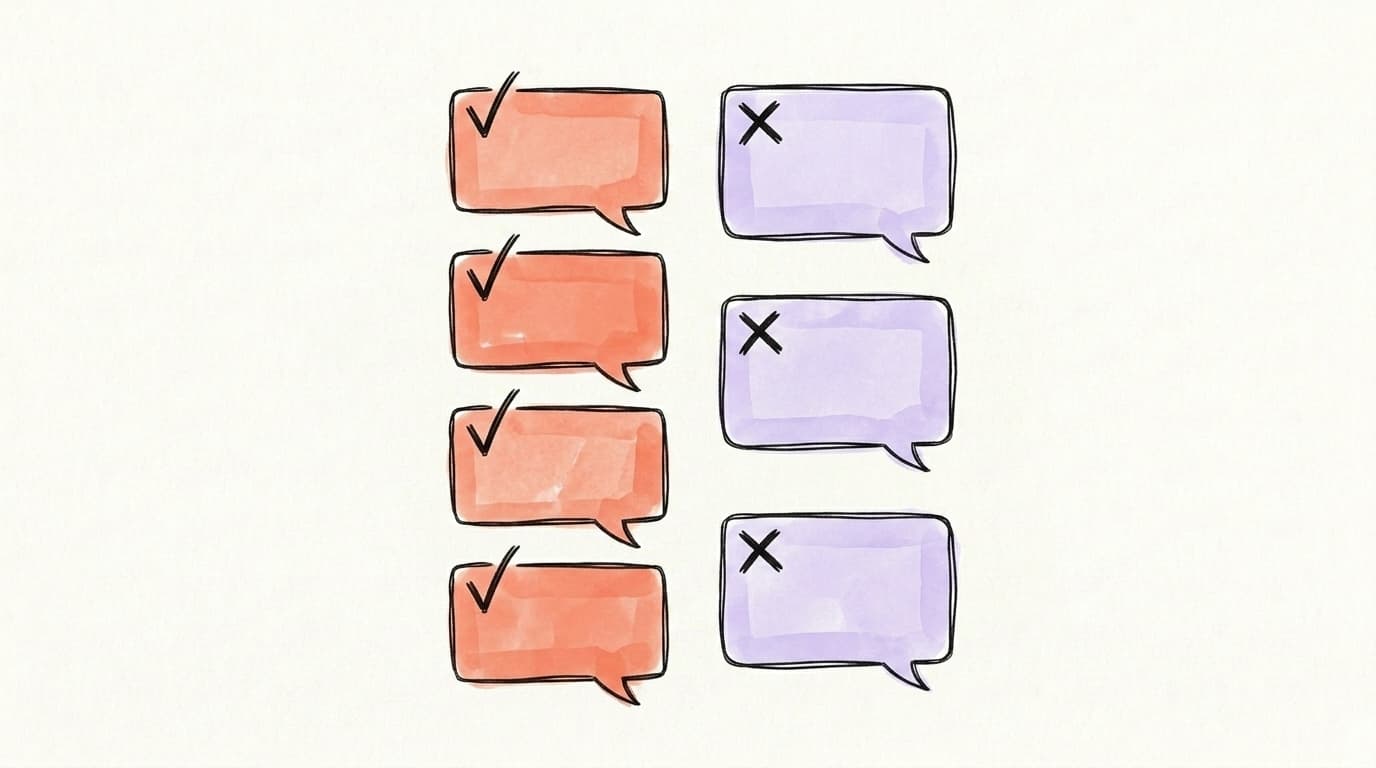
Here's what each winning format looks like in practice:
- Add-on insight — extend the original point with something they left out. "This is right, and the part most people miss is X." You position yourself as someone who knows more.
- Specific question — ask something that makes the author want to answer. Not "thoughts?" but "How does this hold up when you're under 1,000 followers?" A reply they answer triggers the algorithm's strongest signal.
- Short story — a one-line lived example. "Tried this for a month — went from 80 to 400 followers." Concrete and credible.
- Respectful counterpoint — disagree with substance. "Mostly agree, but I'd push back on one piece..." Tension drives replies, as long as you stay civil.
Why Does Replying Within the First 15 Minutes Matter?
Replying within the first 15 minutes matters because that's when a post has the most eyes on it and the fewest competing replies. Get in early and your comment sits near the top; show up two hours late and you're reply number 60, invisible below the fold. One growth breakdown found that replies posted within 15 minutes earned roughly 3 to 5 times more visibility than replies left after two hours (Teract). The early window also catches the post during its initial distribution push, when the author is most likely to be online and engaging back — triggering that high-value author-reply signal.
This is why the target list matters. Instead of refreshing your home feed, you open your list, see your 10 accounts' newest posts in order, and reply to the ones that went up minutes ago. Turn on notifications for your top two or three targets so you land in the first-15-minutes window without living on the app.
How Many Replies Per Day Is Too Many?
The right volume is roughly 10 to 20 quality replies per day when you're growing — enough to build momentum, few enough that each one stays thoughtful. Documented growth strategies tend to start around 10 replies daily, ramp toward 20-30 during an aggressive push, then settle back to 15-20 as the account matures (Teract). The ceiling isn't really a number, though — it's quality. The moment you're firing off "Love this!" just to hit a count, you've crossed into noise, and noise doesn't convert. There's also a practical risk: rapid-fire low-effort replying across dozens of accounts can look automated, and platforms throttle behavior that pattern-matches to spam. If your replies suddenly stopped earning any impressions, check whether you've tripped a ghost ban or reply deboost — a free Twitter shadowban test checks exactly those two reply-visibility filters from a logged-out view.
A simple gut check: if you can't say something a stranger would find genuinely useful, skip that post. Ten replies that each make someone think beat fifty that make people scroll faster.

What Does a 30-Minute Daily Reply System Look Like?
A 30-minute daily reply system is a single focused block where you open your target list, find fresh posts, and leave 10-15 strong replies — then close the app. Batching beats scattering because it keeps replying from eating your whole day and forces you to be deliberate instead of doom-scrolling. Treat it like a calendar appointment, ideally timed to when your niche is most active. Run this every day for a month and the compounding shows up: the same faces start recognizing you, authors begin replying back, and profile visits climb.
Here's a repeatable structure for the block:
- Minutes 0-5: Open your list, scan for the freshest posts (under 15 minutes old).
- Minutes 5-25: Reply top to bottom — one add-on insight, question, story, or counterpoint per post. Aim for 10-15.
- Minutes 25-30: Check replies on your own recent posts and reply back to anyone who engaged.
Planning the block in advance is half the battle. Postory's planner lets you schedule a recurring 30-minute reply session right alongside your posting calendar, so engagement stops being the thing you "get to eventually" and becomes a fixed daily habit — your replies and posts working together instead of competing for scattered attention.
How Do You Track Which Replies Drove Profile Visits?
You track which replies drove profile visits by watching the analytics on each reply and connecting spikes in profile clicks to specific comments. Every post on X — including your replies — has a built-in analytics view showing impressions, engagements, and profile clicks. The number to watch is profile clicks, because that's the step right before a follow. When a reply racks up clicks, note what made it work: which account, which format, what topic. Over a couple of weeks a pattern emerges — maybe your counterpoints on one creator's posts consistently outperform everything else. That's your signal to do more of that and drop what goes nowhere.
Keep it lightweight. A simple weekly habit beats an elaborate spreadsheet:
- Check reply analytics once a week — sort your replies by profile clicks.
- Note the winners — which account, which format, which topic earned the clicks.
- Watch follower timing — line up follower bumps with your biggest reply days.
- Double down — give more of your daily block to the accounts and formats that convert.
Start Growing on Twitter With Postory
The reply strategy works, but only if you run it every day — and that's where most people fall off. Postory's social media planner lets you block a recurring reply session into your calendar right next to your scheduled posts, so your engagement time and your publishing plan live in one place. Plan your week, lock in a daily 30-minute reply block, and keep your X, Threads, and Bluesky content moving together.
Try Postory free — plan your posts and your daily reply blocks in one calendar, so growth becomes a routine instead of a guess.
FAQ
Q: How many followers can you gain from a reply strategy?
It varies widely with niche, consistency, and reply quality, but documented strategies report several hundred to over a thousand new followers in a month from 10-20 daily quality replies (Teract). The bigger driver is consistency — small daily reply blocks compound over weeks far more than occasional bursts.
Q: Do replies really count more than likes in the X algorithm?
Yes. In X's open-sourced ranking code, a reply is weighted around 13.5 versus 0.5 for a like, and a reply the author engages back with is weighted at 75 — roughly 150 times a single like (breakdown). Conversation is the strongest engagement signal the system tracks.
Q: How fast should I reply to a post?
Aim for within the first 15 minutes. Early replies sit near the top of the thread and catch the post during its initial distribution, earning meaningfully more visibility than replies left hours later (Teract).
Q: What makes a reply convert a viewer into a follower?
It adds something the original post didn't — an insight, a sharp question, a concrete story, or a substantive counterpoint — delivered in 2-3 readable sentences. The reply earns a profile click, and a strong bio and pinned tweet close the follow.
Q: Can replying too much get my account flagged?
Rapid-fire, low-effort replying across many accounts can pattern-match to spam, which platforms throttle. Keep replies relevant and human, cap your daily volume at what you can do thoughtfully (around 10-20), and you stay well clear of trouble.
Related articles

How I Got My First 100 Followers on X (From a Dead Account)
I started a brand new X account with zero followers and had my first 100 real followers a few days later. Here's the exact playbook.
Jul 19, 2026

The X Profile Banner Strategy: What to Put Above Your Tweets
Your X banner is prime real estate most accounts waste. 6 banner archetypes that turn profile visits into follows — plus the exact 2026 dimensions.
May 30, 2026

The X Quote Tweet Strategy That Outranks Replying
Quote tweets let you piggyback on bigger accounts' distribution while building your own. Here's the exact 5-format playbook that turns other people's reach into your followers in 2026.
May 29, 2026