
Does Threads Have an Algorithm? How Reach Is Decided in 2026

Threads is algorithmic, not chronological. Meta's own documentation says ranking is driven by predicted engagement, with replies, follow-likelihood, and how fast a post earns interaction in the first 30–60 minutes carrying the most weight. Cross-posts from Instagram aren't penalized directly, but they get less reach because they're written for the wrong feed.
If you've been wondering how to post on Threads in a way that actually gets seen — not just published into the void — the first thing to accept is that Threads has an algorithm, and a fairly aggressive one. Adam Mosseri has said it publicly, Meta's transparency center documents it, and anyone who's watched a post hit 50 replies in 30 minutes and another get crickets has felt it.
This guide pulls together what Meta has officially said, what the platform's behavior reveals in practice, and a 14-day plan for digging out if your reach has flatlined.
What Has Meta Publicly Said About the Threads Algorithm?
Meta has confirmed in writing that Threads uses an AI ranking system to decide what shows up in your feed and in what order. According to Meta's Transparency Center documentation on the Instagram Threads feed, the system gathers public content plus posts from accounts you follow, scores each candidate against signals about your past behavior and interests, and then orders them by how much "value" the model predicts each one will provide. That's the official framing — and it tells us three useful things. First, Threads is not chronological by default. Second, recommended (non-follower) content is part of the mix, which is why a brand-new account can occasionally land a viral post. Third, "value" is a learned prediction, not a hand-tuned rule, which is why the platform's behavior shifts every few months. Adam Mosseri said publicly in November 2024 that the team is rebalancing ranking to prioritize content from people you follow and reduce recommended content from accounts you don't, meaning unconnected reach is getting harder. This is the core architecture every other ranking signal sits on top of.
What Are the 6 Ranking Signals That Matter Most on Threads?
The six signals that move Threads reach are reply engagement, follow probability, profile clicks, like likelihood, scroll-past likelihood, and engagement velocity. Meta hasn't published a leaderboard of weighted signals, but Buffer's breakdown of the Threads algorithm — based on Meta's own transparency disclosures — identifies five core predictions the model makes for every candidate post: like likelihood, reply engagement, follow probability, profile-click likelihood, and scroll-past likelihood. Combine those with the recency/velocity signal Meta has repeatedly emphasized, and you get the six factors that actually move reach in 2026. The relative ordering matters: reply engagement and follow probability sit at the top because they're the hardest actions to fake and the strongest predictors of long-term value to a viewer. Profile clicks and likes are middle-weight confirmations that interest is real. Scroll-past likelihood is the negative signal that quietly throttles posts that don't earn attention in the first second. Engagement velocity is the multiplier across all of it — the model checks how fast the early signals arrive before deciding whether to widen the audience or kill distribution. Below is what each one actually measures:
- Reply engagement — how likely you are to write a real reply, weighted by reply frequency and recent activity.
- Follow probability — whether viewers tend to follow the author after seeing similar content, including your Instagram interactions.
- Profile clicks — taps from feed into the author's profile, a high-effort signal that interest is real.
- Like likelihood — the baseline "this matches your taste" prediction.
- Scroll-past likelihood — a negative signal; if people thumb past your post fast, distribution narrows.
- Engagement velocity — how quickly the first wave of interaction lands after publishing.
Grow on autopilot
Grow your account without the guesswork
Postory turns what works into a repeatable posting system across X and Threads — so you grow consistently.
Anything that isn't one of these (hashtags, post length, emoji counts) is at best a weak indirect input.
Why Do Replies Outweigh Likes on Threads?
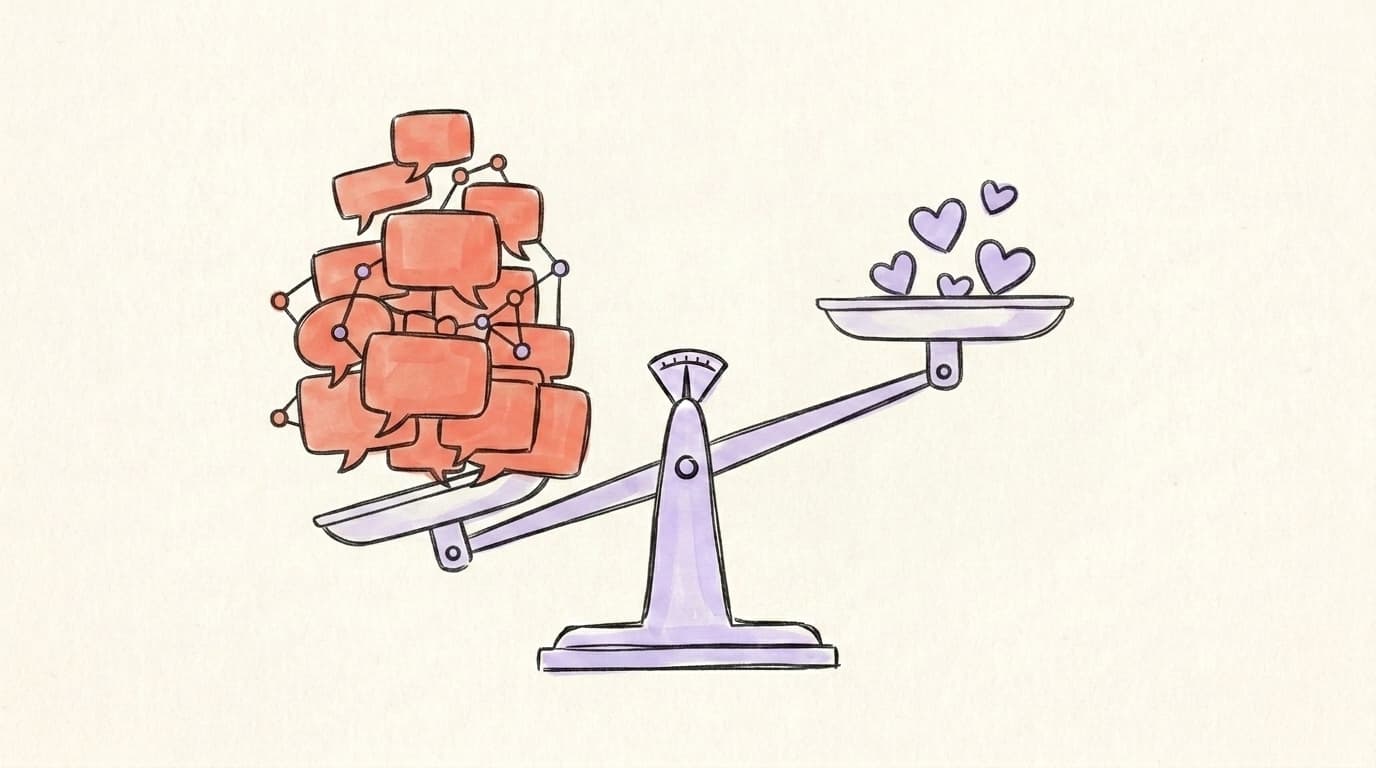
Replies outweigh likes on Threads because the platform is explicitly designed around conversation, and the algorithm rewards the actions that are hardest to fake. Meta's transparency materials repeatedly point at the same idea: actions that require more effort carry more weight. A like is one tap. A reply is reading, thinking, typing, and posting — and the model treats it accordingly. Mosseri has said that for creators trying to grow, "the sum of all your replies is about as valuable as the sum of all your posts," which is unusual phrasing from a platform exec and a real signal of how the team thinks about it. In practice this means a post with 10 substantive reply chains will out-distribute a post with 100 silent likes, and a post with reply chains where the original author keeps responding tends to keep distributing for hours rather than minutes. The corollary matters too: engagement bait that farms low-effort replies ("comment YES if you agree") is now actively penalized — Mosseri publicly acknowledged the engagement-bait problem in October 2024 and said Meta was "working to get it under control," and the algorithm has been getting more confident at detecting it since.
How Does Threads Treat Cross-Posts From Instagram?
Cross-posts from Instagram aren't punished by the algorithm in the way a lot of creators assume — but they almost always underperform native Threads posts for structural reasons. Meta has actually built features that encourage cross-posting in both directions, so there's no hidden demotion flag for "this came from IG." What hurts cross-posts is everything else. Instagram captions are written for an image-first feed and can run up to 2,200 characters; on Threads the cross-post gets cut to the 500-character post limit with the rest hidden behind a "more" expander almost nobody opens. Hashtags get tucked behind a "Show hashtags" toggle on cross-posted content. Image-led posts arrive in a text-led feed where the hook lives in the first line. And if your followers use both apps, they see the same post twice within minutes, which kills the second impression and trains the algorithm that your content is repetitive. The fix isn't to stop cross-posting — it's to rewrite the post for Threads. Lead with the text hook, cut the caption to 250 characters of actual punch, and stagger publishing by a few hours. If your strategy depends on getting both platforms to lift each other, the broader patterns in what works on Threads in 2026 cover what to keep and what to drop.
Why Do the First 30 Minutes Decide Everything?
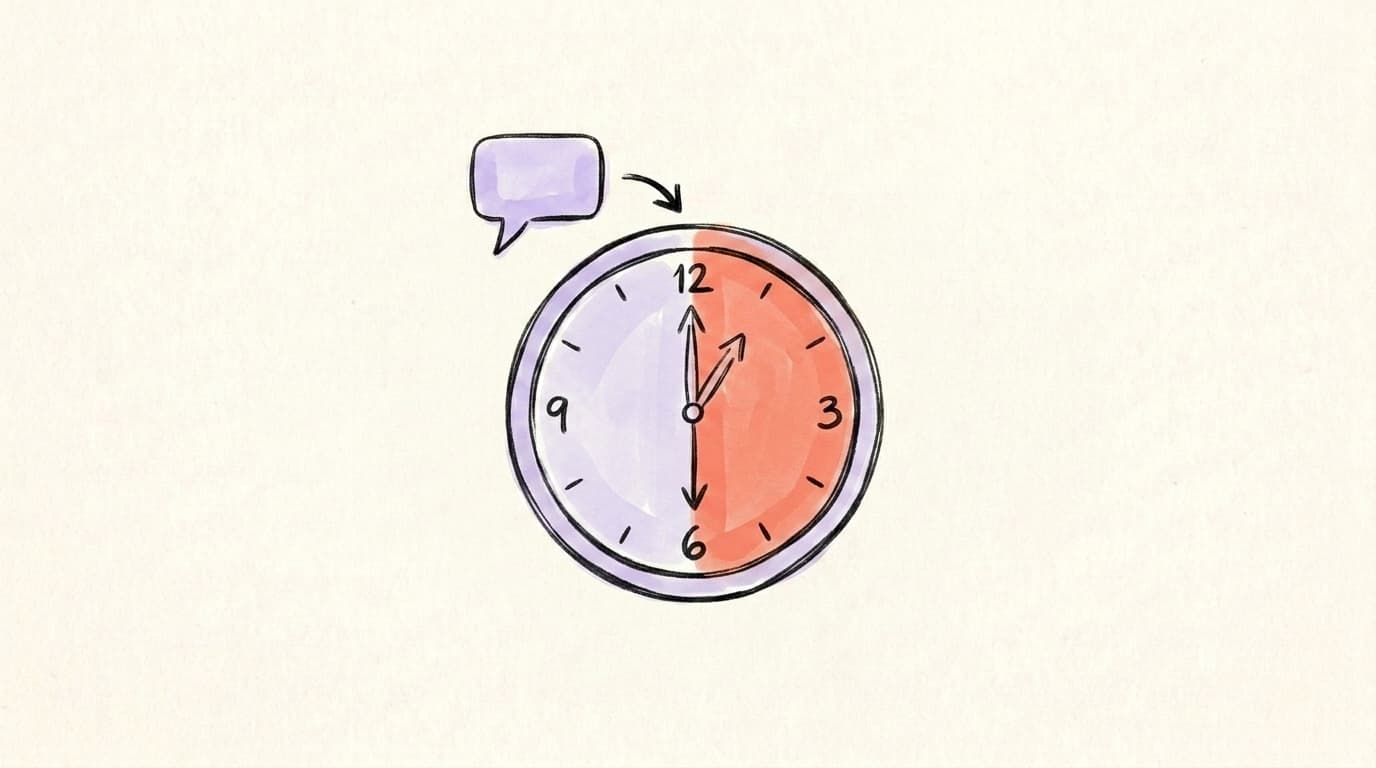
The first 30 minutes after you post on Threads decide everything because the algorithm uses early engagement velocity as its primary signal for whether to keep distributing a post or kill it. When you publish, Threads doesn't show your post to all your followers and the wider recommendation pool at once. It seeds it to a small test group — some followers, some likely-interested strangers — and watches what happens. If replies and saves accumulate quickly, the model treats that as a confidence signal and expands the audience to a larger tier, and then a larger one after that. If the test group scrolls past, the post stays small. This is why two posts on the same account from the same author can end up orders of magnitude apart in views. It's not that Threads liked one and hated the other in any meaningful sense — it's that one cleared the early-velocity bar and the other didn't. Practical implication: post when your audience is actually online, hook hard in the first line, and reply to every comment in the first hour to keep the conversation graph alive.
How Can You Tell If You're Being Algorithmically Suppressed?
You can tell you're being algorithmically suppressed on Threads when reach drops sharply across multiple posts in a row, search visibility for your handle disappears, and your replies on bigger accounts stop surfacing in active threads. Meta gives you one official check: the Account Status dashboard, accessible inside both the Instagram and Threads apps under Settings, surfaces whether your content is currently eligible for recommendation to non-followers. If you see a "Content lowered in feed" notice, that's Meta confirming distribution has been throttled. Beyond the official dashboard, the practical signs are consistent: average post views drop by more than half compared to your trailing baseline, replies on larger accounts get hidden behind a "View more replies" expander instead of appearing in the main flow, and new followers stop trickling in even when posting cadence is unchanged. Suppression isn't the same as a full shadowban — it's usually narrower and recoverable. The full diagnostic flow lives in our deeper guide on the Threads shadowban, but if you've ruled that out, the issue is almost always ranking-level distribution loss. To separate the two quickly, run our free Threads shadowban test: it checks the outsider view — whether your profile loads and whether your handle returns in people search when nobody's logged in — in about 20 seconds. Come back clean there and you're looking at distribution loss, not a filter, which is a ranking problem you solve with the levers below.
A 14-Day Reach-Recovery Plan
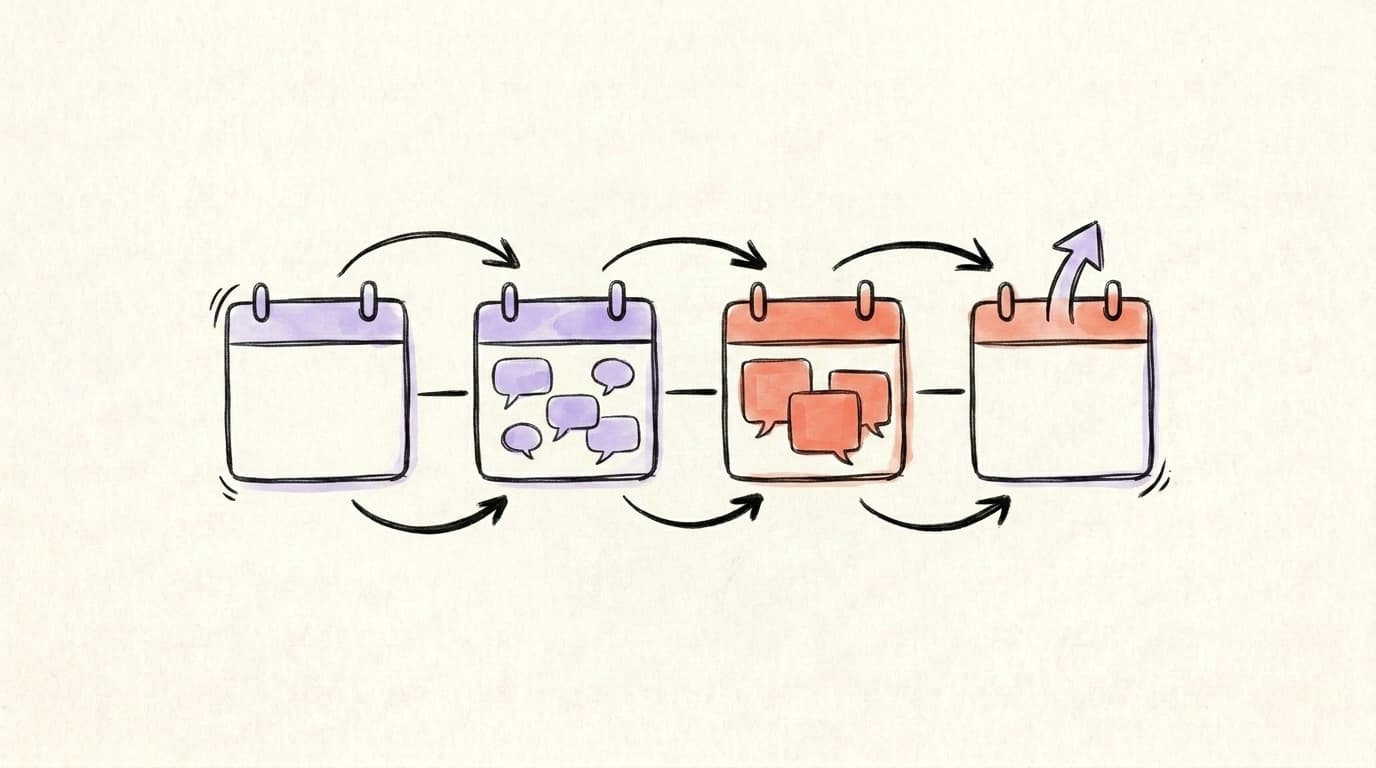
If your Threads reach has flatlined, two weeks of disciplined behavior is usually enough to reset the signals the algorithm is reading off your account. The logic of the plan is straightforward: pause to stop feeding the model more weak data, engage on other accounts to rebuild your reply-engagement signal, publish a small number of high-quality native posts to give the algorithm fresh positive evidence, then measure against your trailing baseline to see if distribution has actually recovered. Two weeks is the right window because Threads' ranking models weight your recent activity heavily — a few days isn't enough to overwrite a bad pattern, and stretching past three weeks usually means the problem is content-fit rather than suppression. The plan below assumes you've already checked Account Status, confirmed you're not in active violation, and want to rebuild distribution. Each phase has a single job. Don't compress them — the order is what makes it work.
Days 1–3: Diagnose and pause.
- Don't post. Look at your last 10 posts and note which had the worst reply-to-view ratios. Those are the model's strongest negative training data.
- Open Account Status. Screenshot anything flagged.
- Audit who you've been replying to — if it's all the same five accounts, your reply graph has collapsed.
Days 4–7: Engage before you publish.
- Spend 20 minutes a day writing substantive replies on larger accounts in your niche. Not "great post" — real replies that add a perspective.
- Aim for 8–10 quality replies a day. This rebuilds your reply-engagement signal and gets your handle in front of audiences who actually overlap with yours.
Days 8–11: Publish 4 native posts.
- One post per day, written natively for Threads (no Instagram cross-posts during recovery).
- Lead with a one-sentence hook. Ask a real question at the end.
- Reply to every comment within the first hour. Keep each reply chain going for at least three back-and-forths.
Days 12–14: Measure and adjust.
- Compare reach on these four posts to your trailing 10-post baseline.
- If two of the four cleared the baseline, your distribution is recovering — keep the cadence.
- If none did, the issue is likely content-fit, not suppression. Test a different post type (question, opinion, observation) before assuming the algorithm hates you.
Most accounts recover meaningful reach within this window. The ones that don't usually have a content problem the algorithm is correctly identifying.
Start Posting Smarter on Threads with Postory
Once you know what the algorithm is rewarding, the actual work is figuring out which post types in your specific niche win — and that's where guessing breaks down. Postory's analyzer surfaces the exact post types your Threads audience rewards, so you stop running blind A/B tests and start writing into a pattern that's already working for you. It's the same diagnostic approach we used in how the Twitter/X algorithm decides reach and our breakdown of the LinkedIn algorithm — the platform-specific signals are different, but the diagnostic loop is the same.
Try Postory's social media analyzer — find the Threads patterns your audience actually rewards.
FAQ
Q: How does the Threads app work for ranking content?
The Threads app uses a machine-learning ranking system that scores each candidate post against signals about your past behavior — accounts you've engaged with, content types you reply to, profiles you've clicked — and then orders the feed by predicted value. Followed-account content gets priority over recommended content, but recommendations still make up a meaningful share of what most users see. The system is documented at a high level in Meta's Transparency Center.
Q: Does Meta Threads use a chronological feed option?
Meta Threads offers a "Following" tab that shows posts from accounts you follow in roughly reverse-chronological order, but the default "For You" feed is algorithmic. Even the Following tab applies some ranking adjustments rather than being purely chronological. Most users stay on the default feed, which is why optimizing for the ranked feed is what actually drives reach.
Q: Why do my Threads posts get fewer views than my replies?
This is a common pattern and it's working as intended. Threads weights reply engagement heavily, and a thoughtful reply on a larger account often gets seen by far more people than your own post — especially if the larger account responds back. Mosseri has explicitly told creators their replies are roughly as valuable as their original posts for growth. Treat replies as distribution, not as filler.
Q: How to see who liked your post on Threads?
To see who liked your post on Threads, open the post, tap the heart icon or the likes count below the post body, and you'll see the full list of accounts that liked it. The same view is available for reposts and quote-posts. Note that likes don't carry as much algorithmic weight as replies, so the like list is more useful for relationship-building than for diagnosing reach.
Q: Does posting more often help or hurt Threads reach?
Posting more often only helps if the additional posts maintain the engagement-velocity bar. If you go from 3 quality posts a week to 14 mediocre ones, average per-post reach usually drops because each weak post pulls down your account's predicted-engagement baseline. A cadence of 3–5 well-crafted native posts per week, plus active replies, tends to outperform high-volume posting for most accounts.
Q: What's the difference between a Threads shadowban and algorithmic suppression?
A shadowban typically means your account is fully hidden from search and recommended content, often after a policy flag. Algorithmic suppression is narrower — your content still appears, but distribution is throttled below your baseline. Suppression is more common and usually recoverable within two weeks of disciplined posting; full shadowbans require the steps in our Threads shadowban guide.
Q: How long does it take to recover from a Threads reach drop?
Most algorithmic reach drops recover within 10–14 days of consistent native posting and active replying, assuming the underlying behavior that triggered the drop has stopped. If reach hasn't recovered after three weeks of disciplined activity, the issue is more likely content-market fit than ongoing suppression — at that point, change what you're posting, not how often.
Related articles
Do Hashtags Work on Threads? Yes, But Only One Tag
Threads doesn't have hashtags like Instagram — it has topic tags, and you only get one per post. Here's how to use them right in 2026.
May 21, 2026
X/Twitter Hashtags in 2026: Use, Skip, or Hurt You?
Hashtags built Twitter. In 2026 they're mostly dead weight — here's the data on when they help and when they quietly cost you reach.
May 29, 2026
How to Host an X Space in 2026: Requirements, Setup, Step by Step
Everything you need to host an X Space in 2026 — account requirements, the exact setup steps, and how to get listeners to show up.
May 23, 2026