

Social Media Audit Checklist: 20 Points in 30 Minutes

Run this 20-point audit once a quarter. It covers your profile, content, cadence, replies, and analytics — and tells you what to fix before you spend another month guessing how to create content for social media.
You don't need a new strategy every week. You need to know which of last quarter's posts actually worked — and most people never check. A clear-eyed audit beats a hundred small tweaks, because it shows you the pattern instead of the panic.
This checklist gives you 20 concrete things to look at across your profiles. No fluff, no agency jargon. Block 30 minutes, open your X, LinkedIn, and Threads accounts side by side, and work through it.
Why Does a Quarterly Audit Beat Daily Tweaking?
A quarterly audit beats daily tweaking because social platforms reward consistency over reaction, and you can't see a pattern in a single day's numbers. When you tweak daily — changing your hook style on Monday because one post flopped, then your posting time on Tuesday — you never give any single change enough runway to prove itself. A quarter (roughly 12 weeks) gives you 30 to 50 posts per platform, which is a big enough sample to separate signal from noise. The data backs the rhythm: LinkedIn's top performers post 3 to 4 times per week and let the algorithm reward consistency, per Socialinsider's 2026 benchmarks. Daily fiddling also burns the time you should spend creating. An audit flips that — you diagnose once, fix a batch of things, then leave the account alone long enough to learn what's working.
What's on the 20-Point Audit Checklist?
The 20-point audit checklist splits into four parts: 5 points for your profile and bio, 8 for content and cadence, 4 for engagement and replies, and 3 for analytics and goals. The weighting is deliberate — content and cadence get the most points because that's where most of your results come from, and where most people quietly drift off-strategy. Profile gets fewer points because it's a one-time fix, not an ongoing effort. You'll score each point as a quick pass, needs-work, or fail. By the end you'll have a punch list ranked by impact, not a vague feeling that "engagement is down." Work through all four sections in order — they build on each other, since a great post on a broken profile still loses you the follow.
Here's a 7-step audit walkthrough from Hootsuite Labs:
How Do You Audit Your Profile and Bio? (5 Points)
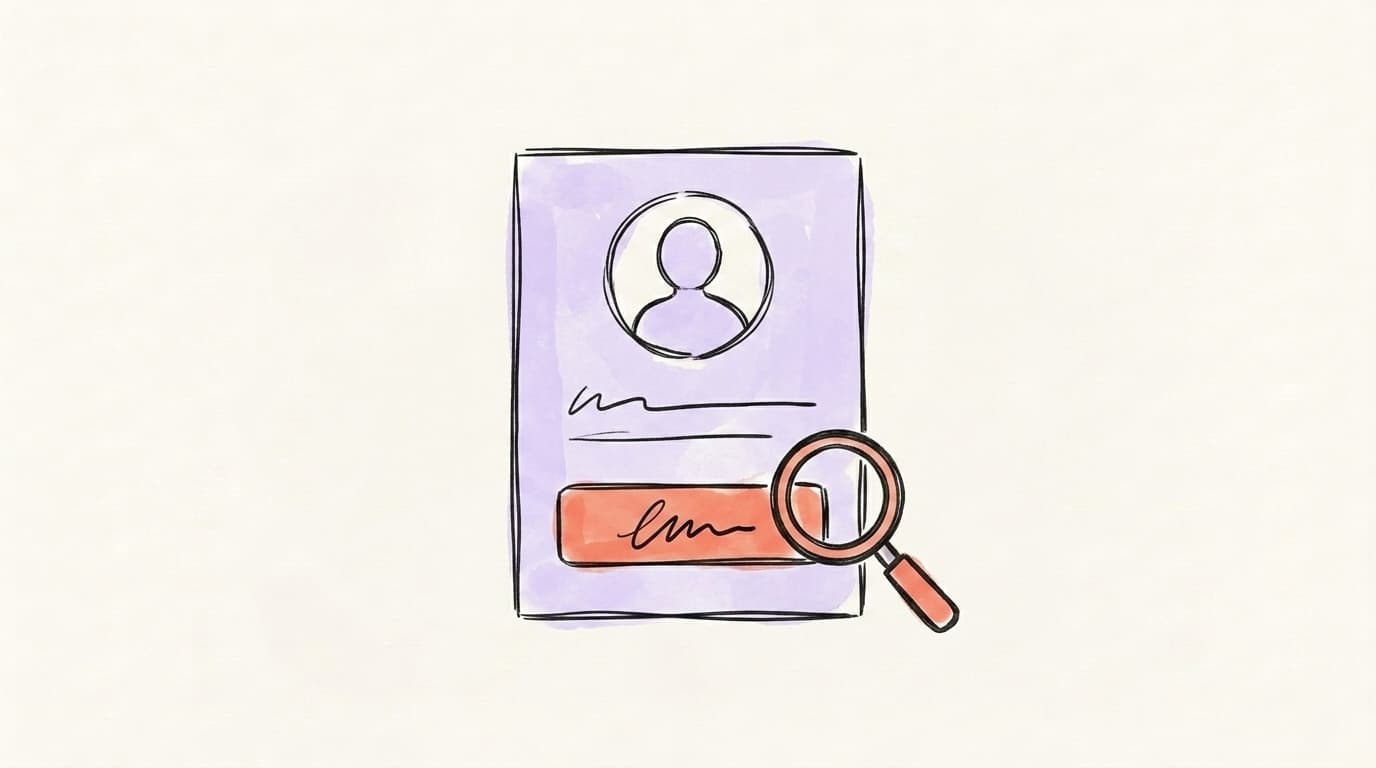
Auditing your profile and bio means checking the five elements a new visitor sees in the first three seconds before they decide to follow or bounce: your photo, your bio or headline, your link, your banner and pinned post, and your handle. Your profile is the conversion page for every post you publish — a viral post that sends people to a half-finished bio leaks followers who would otherwise have stuck around. This is also the fastest section to score, because each item is a simple yes-or-no: the photo is either current or it isn't, the link either works or it's broken, the handle either matches across platforms or it doesn't. Don't overthink it. Open each platform side by side, look at your profile the way a cold stranger would — not the way you already know it — and mark anything that's outdated, off-brand, or missing across these five points:
Profile analysis
See how your profile really scores
Postory analyzes your X or Threads profile and shows exactly what to fix to get more reach. Your 3-day trial covers an audit.
- Profile photo — Current, sharp, recognizable at thumbnail size. The same face or logo across X, LinkedIn, and Threads.
- Bio / headline — Says what you do and who you help in plain words. No clever-but-empty taglines.
- Link / CTA — One clear link that works. Test it. Broken links are more common than you'd think.
- Banner and pinned post — On-brand, still relevant, not promoting something from eight months ago.
- Username consistency — Same handle across platforms so people can find you. Note any mismatches to fix.
If three or more of these need work, fix them before anything else — it's the highest-leverage half hour in the whole audit.
How Do You Audit Your Content and Cadence? (8 Points)
Auditing your content and cadence means reviewing what you actually published last quarter against what performed — the eight points here are where most of your growth is won or lost. Pull up your last 30 to 50 posts per platform and look for patterns, not one-off hits, because a single lucky post tells you nothing about what to repeat. The goal is to learn how to create content for social media that fits each platform's rhythm instead of cross-posting the same thing everywhere and hoping it lands. Native formats consistently win: on LinkedIn, document and carousel posts hit a 7.00% engagement rate versus 4.50% for plain text, according to Socialinsider. The accounts that grow treat each platform as its own surface — a thread on X, a document on LinkedIn, a short conversational post on Threads — rather than pasting one update everywhere. Score these eight:
- Posting frequency — Are you hitting a consistent cadence (3–5 posts/week is the sweet spot for most), or posting in bursts then going quiet?
- Format mix — Are you using each platform's native formats (carousels, video, threads) or cross-posting one format everywhere?
- Top performers — Identify your 5 best posts. What do they have in common — topic, hook, format?
- Bottom performers — Identify your 5 worst. What's the shared failure?
- Hook quality — Do your first lines stop the scroll, or do they bury the point?
- On-message ratio — What share of posts actually tie back to your core topics? Drift is the silent killer.
- Repurposing — Are you turning one strong idea into platform-native versions, or starting from scratch each time?
- Visual consistency — Do your graphics and video look like they come from the same person?
If you want a deeper framework for fixing what you find here, our guide to social media content strategy breaks down how to build content pillars that keep you on-message.

How Do You Audit Engagement and Replies? (4 Points)
Auditing engagement and replies means checking whether you're treating social media as a conversation or a billboard — because the algorithms increasingly reward the former. Platforms now weight meaningful comments, saves, and watch-time over raw reach, and replies are the cheapest way to compound a post's distribution without publishing anything new. This section is short but mighty, especially if you're trying to figure out how to get more engagement on LinkedIn, where early comments in the first hour heavily influence how far a post travels before the feed moves on. Most people score themselves generously here, so be honest: pull up your last ten posts and count how many comments you actually replied to, how fast you replied, and how often you commented on someone else's post that week. Those three numbers usually tell the real story. Score these four:
- Reply speed — Do you respond to comments within the first hour, while the post is still being distributed?
- Outbound engagement — Are you commenting on other people's posts, or only broadcasting your own?
- Comment quality — Are your replies one-word ("Thanks!") or do they actually extend the conversation?
- DM and mention follow-up — Are real conversations and tags slipping through unanswered?
Two of these four points are about outbound engagement — that's intentional. The fastest-growing accounts spend as much time in other people's comment sections as in their own feed. If you're scoring low here, that's often the single change that lifts your reach the most — and our LinkedIn content strategy guide goes deeper on turning comments into reach.

How Do You Audit Analytics and Goals? (3 Points)
Auditing analytics and goals means closing the loop — checking that your numbers are actually moving toward a goal you set, not just numbers you happen to track. Without this step, an audit is just a tidy-up that makes you feel productive without changing anything. With it, you get a clear direction for the next quarter. The trap most people fall into is tracking vanity metrics (follower count, total impressions) that feel good but don't tie to anything they're trying to achieve. Pick one primary metric per platform that maps to your real goal — leads, qualified conversations, newsletter signups — because followers are rarely the thing that actually pays off. Then compare it against where you stood 90 days ago, not against yesterday, so a slow week doesn't read as a trend. Score these three:
- Goal clarity — Do you have one measurable goal per platform for the quarter (e.g., "10 inbound leads from LinkedIn"), or just "grow"?
- Trend direction — Is your chosen metric up, flat, or down over the last 90 days? Compare quarter to quarter, not day to day.
- Benchmark check — How does your engagement rate compare to the norm? LinkedIn's 2026 average sits at 5.20%, per Socialinsider — landing well above that average is a strong signal.
Write down your one goal per platform before you close the audit. That single sentence shapes every post you'll create until the next review.
Start Auditing Smarter With Postory
Running this audit by hand once a quarter is the right habit. But the slow part is gathering the data — clicking through profiles, scrolling old posts, eyeballing your cadence and reply patterns across three platforms.
That's exactly what Postory's social media analyzer automates. It scans your X, LinkedIn, and Threads profiles and surfaces the same signals this checklist asks for — profile gaps, posting consistency, top and bottom performers, engagement patterns — so you start your audit with the diagnosis already done.
Try Postory free — get an instant read on what's working across your social profiles, then spend your 30 minutes fixing instead of digging.
FAQ
Q: How often should I do a social media audit?
Quarterly is the sweet spot for most creators and small teams — every 90 days gives you a large enough sample of posts to spot real patterns without obsessing over daily noise. Run a lighter monthly check on your core metric if you're in a fast growth push, and a deeper annual audit to reset goals.
Q: How long does a social media audit take?
With this 20-point checklist and your profiles open side by side, about 30 minutes per round once you know the routine. Your first audit may take an hour because you're setting baseline numbers. Tools that pre-gather your data, like a profile analyzer, can cut the data-collection time to a couple of minutes.
Q: What should a social media audit include?
At minimum: a profile and branding check, a content and cadence review, an engagement and replies look, and an analytics-versus-goals comparison. This checklist breaks those into 20 scorable points so you finish with a ranked fix list instead of a vague impression.
Q: How do I create content for social media that performs after an audit?
Use what the audit surfaces. Double down on the formats and topics your top 5 posts share, drop the patterns from your bottom 5, and match each platform's native format — carousels and documents on LinkedIn, threads on X, short conversational posts on Threads. Native formats consistently out-engage cross-posted content.
Q: How do I get more engagement on LinkedIn specifically?
Post 3–5 times a week using native formats (documents and carousels lead at around 7% engagement), reply to comments within the first hour while the post is still being distributed, and spend real time commenting on others' posts. Outbound engagement is one of the most underused levers for reach.
Q: Should I audit every platform the same way?
The checklist applies to all of them, but your goals and benchmarks differ per platform. A LinkedIn goal might be inbound leads; an X goal might be community conversations; a Threads goal might be reach. Set one primary metric per platform rather than forcing the same target everywhere.
Related articles

Social Media Content Pillars: How to Pick Yours in 30 Minutes
The fastest way to learn how to create content for social media — pick 3 content pillars in 30 minutes and turn them into 90 days of posts.
Jun 16, 2026
LinkedIn SSI Score: What It Is and How to Improve It
Your LinkedIn SSI score is a free 0-100 number that rates how you use the platform. Here's what it measures and how to move it.
Jun 7, 2026

Threads vs. LinkedIn: Where Should B2B Founders Spend Time?
A founder's guide to choosing between Meta Threads and LinkedIn based on where your buyers are, what content travels, and how many hours each costs.
May 21, 2026