
How to Grow Social Media Accounts Faster: The 5-Step Loop

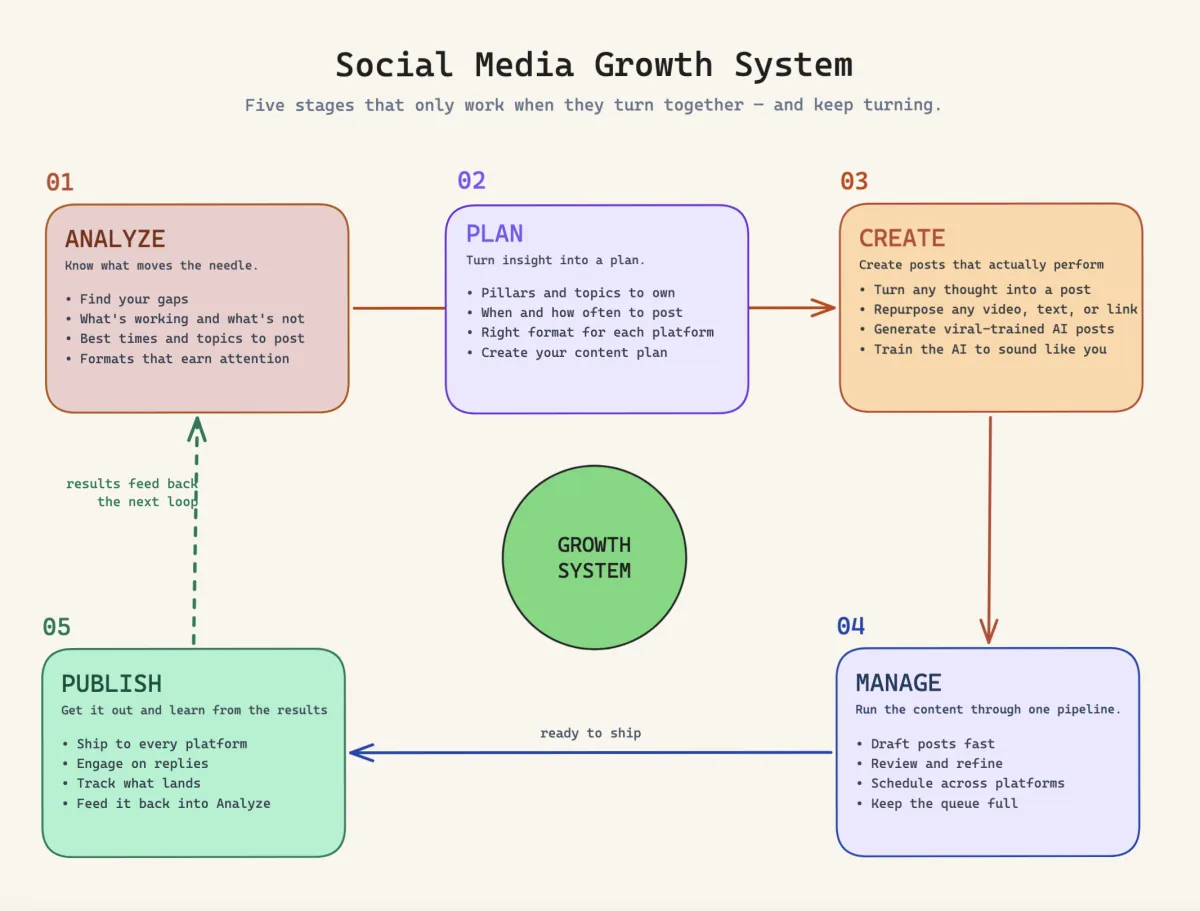
There's no shortcut for how to grow on social media — but there is a system. Analyze → Plan → Create → Manage → Publish, then feed results back to Analyze. The 10x unlock isn't any one step. It's running the full loop every week.
You post three times. Nothing moves. You post five times. Still flat. So you read another "viral hooks" thread, post some more, and a month later you're still staring at the same follower count wondering what's wrong.
It's almost never the hooks. It's the fact that most creators run two stages of a five-stage loop — and then wonder why growth doesn't compound. This post breaks down how to grow on social media using a repeatable 5-step growth framework: Analyze, Plan, Create, Manage, Publish. Each step matters. The loop is what multiplies them.
What does "10x faster" actually mean (and what it doesn't)?
"10x faster" doesn't mean going from 100 followers to 1,000 in a week — that's lottery math, not strategy. Based on what most creators report, reaching your first 1,000 followers tends to take a few months of consistent output, and getting to serious scale (10K+) is usually measured in quarters or years, not weeks. 10x means compressing that curve — moving through the learning cycles faster, so the account that would've taken many months to hit a milestone gets there in a fraction of the time. You achieve this by cutting wasted effort: fewer posts that flop, less time guessing what works, no weeks of silence while you "figure out what to post next," no scattered tools that each solve a sliver of the problem. Speed comes from the system, not from posting more — and specifically from running the full five-step loop every week instead of one or two pieces of it. The accounts that actually compound are the ones that turn every published post into an input for the next week's plan, not the ones that just post more.
Why do most creators plateau — and what fixes it?
Most creators plateau because they only run two stages of the loop: Create and Publish. They write a post, ship it, get a spike, hope for another, and repeat. They never formally Analyze what worked, never Plan around it, and never Manage a real pipeline — so every week they're starting from zero. The accounts that grow followers faster aren't writing better hooks in isolation; they're closing the loop. Results from published posts feed back into analysis, analysis sharpens the plan, the plan guides what gets created, and a single pipeline keeps it all moving. Skip any stage and the flywheel breaks. Run all five, and each week's output makes the next week smarter. That's the real unlock behind any serious social media growth strategy — and the rest of this post walks each step.
Step 1 — How do you analyze what's actually working on social media?
You analyze by ignoring follower count and focusing on four signals: which posts got saved, replied to, or clicked; which formats outperformed the average; which topics pulled in profile visits; and where you're actively losing (reach vs. engagement vs. conversions). Analyzing isn't vanity-metric staring — it's a 30-minute weekly pattern-match so the rest of the system has a direction. Honestly, this is the single step that separates accounts that compound from accounts that plateau, because without it every other stage is running on guesswork. The goal is two or three concrete signals, not a dashboard. If you only have time for one question, make it this: what did my three best posts from the last 30 days have in common? That one answer, applied to next week's plan, is worth more than reading another "viral hooks" thread.
Grow on autopilot
Grow your account without the guesswork
Postory turns what works into a repeatable posting system across X and Threads — so you grow consistently.
What to analyze:
- Your gaps. Where are you actually losing — reach, engagement, profile visits, conversions? Pick the weakest link.
- What's working vs. what's not. Sort your last 30–60 posts by engagement and look for patterns. Topic? Format? Hook structure? Time of day?
- Best times and topics. Your analytics already know this; most creators just never look.
- Formats that earn attention. Threads vs. single posts. Carousels vs. static. Text-only vs. image-led. The winners on your account won't match the generic "best practices" — that's the point of analyzing your own data.
Don't over-engineer this. Thirty minutes a week is enough.
Step 2 — How do you turn analysis into a content plan?
You plan by translating the signals from Step 1 into concrete decisions: three to five content pillars, a realistic weekly cadence per platform, a default format per pillar, and a rolling two-to-four-week calendar. Most creators skip straight from "I need to post" to writing, which is why their feed sounds scattered and nothing compounds. Planning is the bridge between insight and execution — it's also the step that lets you batch work, because a plan means you never have to decide what to post on a tired Tuesday night. In my experience, the single biggest planning mistake is picking a cadence based on what someone else does instead of what you can actually sustain for six months straight. Three posts a week you'll hit for six months beats ten a week you'll burn out on in three, every single time.
What to plan:
- Your content pillars. Three to five themes you want to be known for. Everything you post should ladder up to one of them.
- Posting frequency. A sustainable baseline is multiple X posts per day including replies, one-to-a-few Threads posts per day, and a few Bluesky posts per week. Pick the floor you can hit every week, not the ceiling you'll miss. Consistency beats volume — three posts every week beats 20 one week and zero the next.
- Format per platform. X rewards threads and sharp one-liners. Threads rewards conversational, timely takes — inside the limits of what Threads allows. Bluesky rewards niche, community-native posts. Your plan should specify format per platform, not just topic.
- A rolling content calendar. Two to four weeks ahead, not two to four days. (Here's a step-by-step on building one.)
The goal is never to have to ask "what do I post today?" again. When analysis tells you carousels on Tuesdays outperform, the plan locks that in — and creation becomes execution instead of improvisation.
Step 3 — How do you create posts that actually perform?
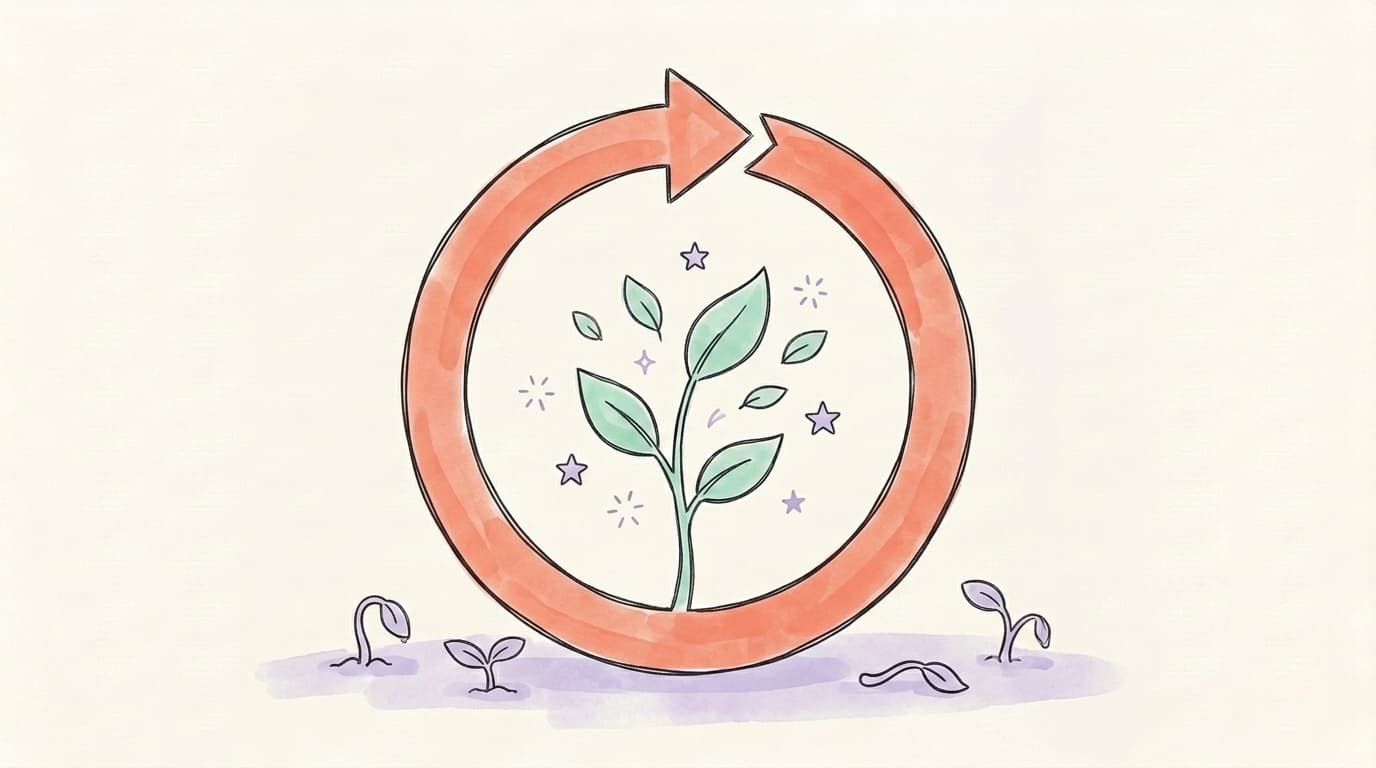
You create posts that perform by removing the blank page entirely: capture raw ideas the moment they hit (tweet ideas help when the well is dry), turn each idea into platform-native drafts, repurpose one pillar into many posts across X, Threads, and Bluesky, and use AI trained on your past posts and what already works on each platform. Creation is where most creators get stuck — staring at a blank page, rewriting the same post six times, and calling it a day with one under-cooked draft. The honest take: the problem is almost never writing ability, it's system. If your first blank-page minute is the one where you're trying to decide what to write about, you've already lost an hour before a single word hit the page. Separate ideation, drafting, and polishing into three different muscles, and the work gets noticeably faster (see: how to batch-create social media content).
What to create (and how):
- Turn any thought into a post. Capture raw ideas the moment they hit, then let a system turn them into platform-ready drafts.
- Repurpose one idea into many. One YouTube video → three Reels, three X threads, three Threads posts, a newsletter. (Full repurposing playbook here.)
- Use AI trained on viral patterns. Generic AI writes generic posts. AI trained on high-performing content for a specific platform writes drafts you actually want to ship.
- Train the tool on how you write. Style matters more than the model. Feed it your top 10 posts so new drafts read like you wrote them, not ChatGPT.
Matt Gray's version of this — he calls it a content waterfall, one pillar idea becoming 20+ posts across platforms — is a good cross-reference:
Postory's AI post writing is built on this same principle: drop a thought, a transcript, or a long-form piece, and it turns into platform-specific drafts trained on what actually performs on X, Threads, and Bluesky.
Step 4 — How do you manage a content pipeline?
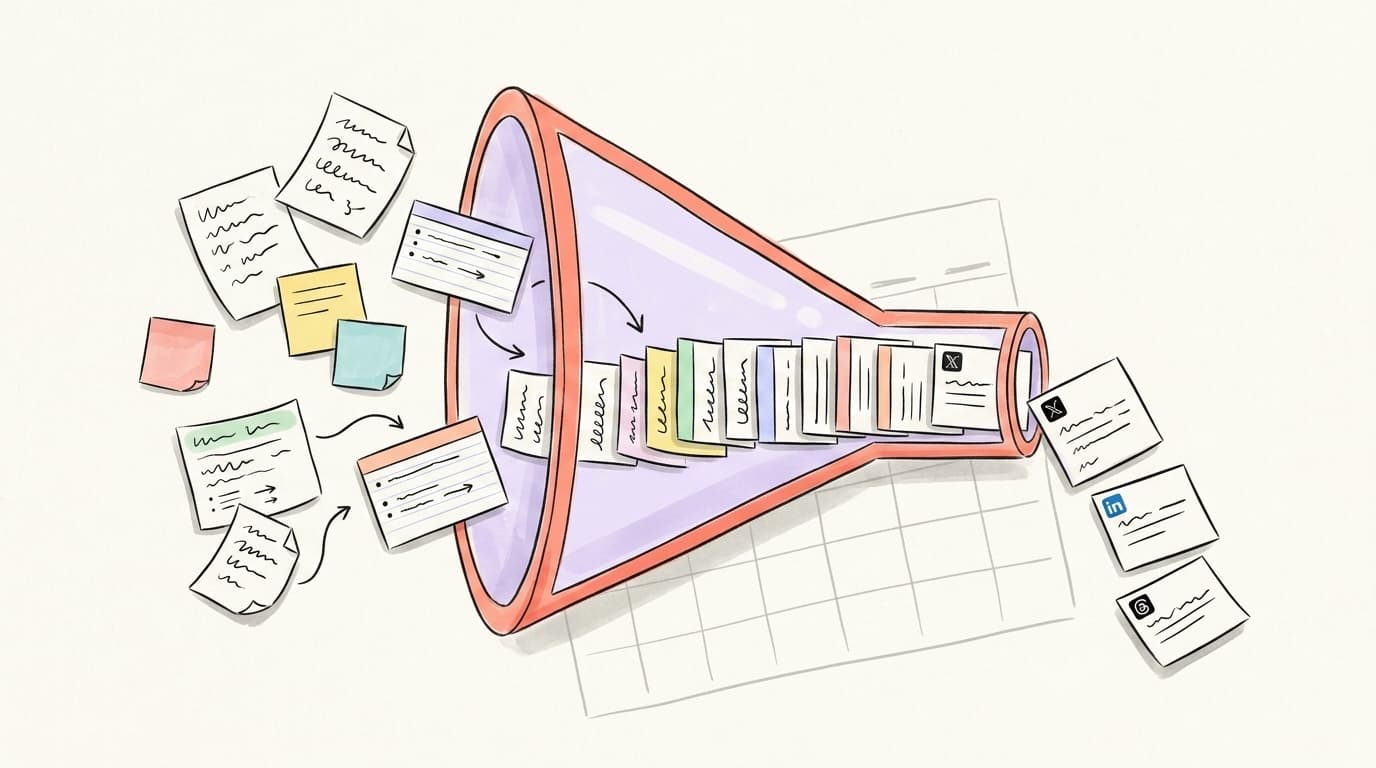
You manage a content pipeline by running every idea, draft, and scheduled post through a single queue — one inbox for raw thoughts, one place to draft, one place to review and refine, one place to schedule across every platform. This is the step creators skip most, and it's the one that quietly kills consistency. If your "system" is drafts scattered across Notes, Google Docs, Buffer tabs, and a half-abandoned Notion doc, you're paying a context-switching tax every single day just to ship. Honestly, most people think their problem is motivation when the real problem is infrastructure. One pipeline means one place to ideate, draft, approve, and schedule — so nothing falls through the cracks and you never face a cold-start Monday again. The measure of a working pipeline is simple: can you sit down for 90 minutes on a Sunday and leave with the week queued up?
What to manage:
- Draft fast, in one place. Every idea, every draft, every half-finished post lives in the same inbox.
- Review and refine. One queue you move through — not 12 tools to reopen.
- Schedule across platforms. Batch a week's worth at once instead of posting manually five times a day. (How to batch-create content.)
- Keep the queue full. Aim for 7–14 days of scheduled posts at all times. A full queue is the difference between growth and silence when life gets busy.
Step 5 — How do you publish and close the loop?
You close the loop by treating publishing as a data-generating step, not the finish line: ship to every platform from one place, engage hard on replies in the first hour, track the metrics that actually predict growth (saves, replies, profile visits, follows-per-post), and feed the results back into next week's analysis. Publishing is more than hitting "post" — it's the step that makes the whole flywheel spin, because every published post becomes tomorrow's data. My opinion: the hour after you hit publish is more valuable than the hour you spent writing. Answering the first few commenters is one of the follow-ups worth doing while a post is fresh: it costs minutes, and it's what turns a post into a conversation instead of a broadcast. Treat publishing as the start of a conversation, not the end of a task, and the next week's analysis gets sharper automatically.
How to publish (and manage what happens after):
- Ship to every platform from one place. Native publishing to X, Threads, and Bluesky without copy-pasting three times.
- Engage on replies right away. Answering the first few commenters while the post is fresh takes minutes and turns a post into a conversation.
- Track what lands. Save-rate, reply-rate, follows-per-post — not just likes. These are the signals analysis needs next week.
- Feed results back into Analyze. This is the whole point. Every week, last week's publishing data becomes this week's analysis input.
Postory stitches Manage and Publish into one pipeline — post management, scheduling, and multi-platform publishing all live in the same queue you drafted in, so the step where most tools drop off (the actual posting) isn't a separate workflow.
Why is the loop — not any single step — what makes growth 10x?
No single step gets you 10x. Better hooks alone won't compound. Better scheduling alone won't compound. Even a better content plan, in isolation, plateaus. What the loop gives you is a modest kind of compounding: each pass starts from what the last one taught you instead of from nothing. No stage delivers a multiplier on its own, and we haven't measured one for the loop either. Early on you're guessing what works. Once you've published enough to have results worth reading, each review lets you drop what didn't land and repeat what did, and the plan gets more specific to your audience than generic best practice ever is. The work can get easier as you stop starting from scratch each week — how quickly, and by how much, depends on how much you publish and isn't something we've measured. That's what compounding means in practice — and it only happens if all five stages run every week. Skip Analyze and you're back to guessing. Skip Plan and you're scattered. Skip Manage and you burn out. The loop is the product.
How can you run the full loop inside Postory?
Postory is built around these five stages — Analyze, Plan, Create, Manage, Publish — so the loop actually closes. AI post writing handles Create. Post management handles Manage. Scheduling and multi-platform publishing handle Publish. Analytics feed back into Analyze. You stop running five tools and start running one pipeline — which is the real reason creators using a unified system ship more, guess less, and grow faster. If you've been doing one or two of these steps well and ignoring the rest, that's your ceiling. Start free at postory.io and run the full loop this week.
FAQ
Q: How long does it take to grow a social media following using this framework?
Realistic expectations: a few months of consistent posting to get your first 1,000 followers, and typically a year or more to reach 10K+ on most platforms. The 5-step loop doesn't skip the timeline — it compresses it by cutting wasted effort, so the learning cycles happen faster than they would if you were only running Create and Publish.
Q: How often should I post on each platform?
A sustainable baseline most creators can hold is multiple X posts per day (including replies), one-to-a-few Threads posts per day, and a few Bluesky posts per week. Pick the floor you can hit every single week, not a ceiling you'll miss — consistency matters more than hitting the top of any recommended range.
Q: Do I need to post on all platforms to grow?
No. Start with one or two where your audience actually lives. Master the loop on one platform, then repurpose into the others once you have a system that works — this is the whole point of step 3 (Create → repurpose).
Q: What's the single most-skipped step in this framework?
Analyze. Most creators create and publish, then skip straight back to creating more. Without weekly analysis, you're running three of five stages — which is why you plateau. 30 minutes a week is usually enough.
Q: Can I do this without an AI tool?
Yes — the framework works manually. But running all five stages by hand is a part-time job in itself. AI-assisted runs (draft, repurpose, schedule) compress that to a few hours a week. The loop is the system; AI just makes it faster.
Q: How is this different from a typical "content calendar" approach?
A content calendar covers Plan. That's one of five steps. This framework adds Analyze (what to plan around), Create (how to produce faster), Manage (the pipeline), and Publish (closing the loop). A calendar on its own is a schedule; the loop is a system.
Q: What should I track week to week?
Per post: saves, replies, profile visits, follows-per-post. Per week: top 3 formats, top 3 topics, posting cadence hit/miss. Don't track 20 metrics. Track four and act on them.
Q: How do I know the loop is actually working?
Two signals: (1) your weekly time spent on social drops while output stays the same or grows; (2) your analysis has fewer surprises — you can predict which posts will hit before you publish them. When both are true, the system is compounding.
Related articles
What Is Mastodon Social Media? A Beginner’s Guide
What is Mastodon social media? Learn why it was created, how servers and the fediverse work, and whether this decentralized network suits you.
Oct 15, 2026

What Is Bluesky? How It Works, Users, Pros & Cons
What is Bluesky? How the social app works, who it is for, and its pros and cons. Learn its history, AT Protocol, feeds, and latest user count.
Oct 15, 2026

Threads vs X (Twitter) 2026: Which Is Better for Creators?
Threads vs Twitter/X in 2026 — audience, algorithm, monetization, ads, account safety, tools, and the cross-posting workflow creators actually use.
Aug 15, 2026