
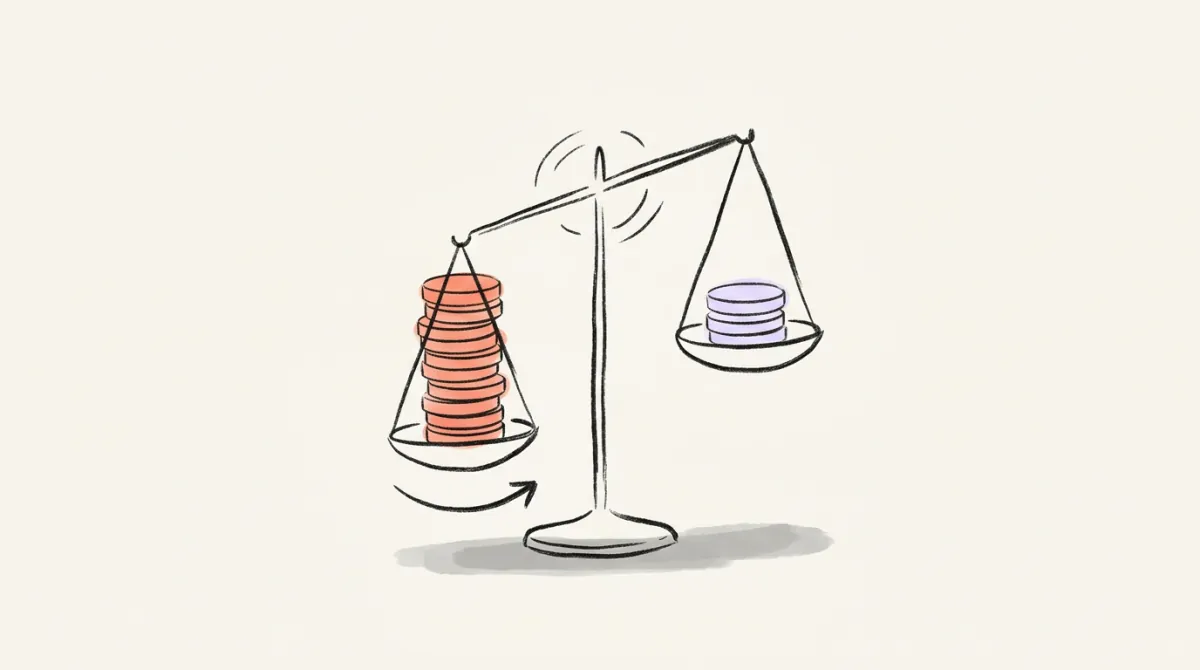
Follower to Following Ratio on X: What's Good in 2026

Find who to unfollow first to fix your ratio
The scan checks the accounts you follow one at a time and flags who went silent, who's suspended or bot-shaped, and who doesn't follow you back, worst first. We build the list, you tap unfollow on X.
Your ratio is followers ÷ following, and X publishes no "good" number. X documents one use: past 5,000 follows, more follows depend on it. Its 2023 open-sourced code also cut the reputation of accounts following over 2,500 unless followers outnumbered follows about 1.7 to 1. Fix a bad ratio by dropping dead and bot follows first, then growing real followers.
Most guides on the follower to following ratio hand you a magic number, 3:1 or 10:1, and stop. None of those numbers comes from X. Here's what X documents, what its code showed, what people read into your ratio, and how to fix it without getting locked.
Prefer to watch? This video uses a balanced ratio to pick who to connect with:
What Is the Follower to Following Ratio on X?
It's how many accounts follow you compared with how many you follow. Both counts sit under your bio: Following and Followers.
People also call it the Twitter follower ratio. A high ratio means more people chose your posts than you chose theirs; a low one means you follow many more accounts than follow you.
How to Calculate Your Twitter Followers to Following Ratio
Divide followers by following:
ratio = followers ÷ following
- 1,200 followers, 400 following: 1,200 ÷ 400 = 3, written 3:1.
- 800 followers, 800 following: 1:1.
- 300 followers, 1,500 following: 0.2, or 1:5. You follow five accounts for every one that follows you.
Watch the direction: Twitter's 2023 open-sourced code (below) uses the flip, following ÷ followers, so a "high ratio" there is the bad one.
What Is a Good Follower to Following Ratio?
X doesn't publish one. The figures below are rules of thumb, not an X number. HypeAuditor calls about 3:1 a solid Twitter ratio, and Unfollr's guide suggests 3:1 to 10:1 for creators and 5:1 to 20:1 for brands. Neither cites X. Our read by account type:
| Account type | Typical ratio | What's normal |
|---|---|---|
| New or personal account | around 1:1 or below | You follow people you want to read. |
| Active creator, community builder | 1:1 to 3:1 | You follow back and talk to peers. |
| Established creator or brand | 3:1 and up | Your posts pull followers you don't follow back. |
| Public figure, news outlet | far above 10:1 | They follow a handful of accounts. |
Following cleanup
Find every dead account you follow
The X Following Cleaner checks your following list one account at a time and hands you the named list of dead accounts and bots — you tap unfollow on X. No sign-up, from $4.99.
Where the ratio bites is scale. Past 2,500 follows, the 2023 code wanted followers well ahead of follows; past 5,000, X's follow limit uses your ratio. Below that, no documented X rule touches it.
Does X Use Your Ratio?
Twice: the 5,000 follow limit, and the 2023 reputation code.
The follow limit at 5,000
X's follow-limit page says every account can follow up to 5,000 accounts. Past that, you may need more followers before you follow more, and the number "is automatically calculated based on your unique ratio of followers to following". X doesn't publish the ratio, and under 5,000 follows it doesn't apply. Our follow-limit guide covers the daily cap and what to do when you hit the wall.
The 2023 ranking code
On March 31, 2023, Twitter published its recommendation code on GitHub. One file, Reputation.scala, adjusts Tweepcred, a PageRank-based reputation score. Its comment reads "reduce pagerank of users with low followers but high followings". How it works:
- It only touches accounts following more than 2,500.
- It computes following ÷ followers. At 0.6 or below, with your followers at least about 1.7 times your follows, nothing changes.
- Above 0.6, it divides your raw score by a factor that rises with the ratio, capped at 50.
Run the formula on an account following 3,000. With 6,000 followers, it's untouched. With 3,000 followers (1:1), the score is divided by about 12. With 2,000 followers, it hits the cap of 50.
That's what the code did in 2023. What X weighs today isn't public.
Following vs Followers on Twitter: What a Lopsided Ratio Signals
Before anyone follows you, they glance at those two numbers:
- Following far more than your followers looks like follow-for-follow: following to get followed back.
- Thousands of follows, few followers and few posts looks like a bot or a spam account.
- More followers than follows reads as credibility. In 2009 TechCrunch's MG Siegler called it Twitter's golden ratio: someone with more followers than follows is "probably a good person to at least consider following".
None of these is a rule: a focused account following 2,000 experts can beat a 20:1 account with nothing to say. But the first impression is real.

How to Improve Your Ratio Without Getting Locked
A ratio has two sides. Shrink the bottom first, then grow the top.
- Drop the dead weight you follow. Accounts that stopped posting, never posted, got suspended, or look like bots inflate your following count and give you nothing.
- Then review non-followers by hand. Keep the news, experts and brands you chose to read. Drop the follow-for-follow accounts that never followed back; who doesn't follow you back covers how to check.
- Grow real followers. Post on a topic, reply with substance, and track your follower count over time.
- Never buy followers. X's follow-limit page lists, among what the X Rules prohibit, "using or promoting third-party services or apps that claim to add followers", and bought followers are usually fake accounts that don't read you.
- Never churn follows. X bans "follow churn": following and then unfollowing large numbers of accounts to inflate your follower count. Its automation rules ban automated bulk or aggressive following and unfollowing, and its follow-limit page says it may lock an account for aggressive follow behavior. Unfollow in small batches, by hand.
Start Fixing Your Ratio with Postory
Analyze before you unfollow. Postory's X Following Cleaner checks the accounts you follow and flags dead accounts (no posts in 30+ days), accounts that never posted, suspended or deleted ones, bot-shaped accounts, and ones that don't follow you back. Protected accounts are held back, never called dead. It finds who to drop first; it doesn't list every non-follower.
You enter your handle: no sign-up, no login, no connection. $4.99 checks the 100 most suspicious of your last 1,000 follows; a check of everyone you follow (up to 5,000) is priced from your following count before you pay, from $4.99, once. You get a named list, worst first, with the reason on each row. Postory builds the list; you tap unfollow on X.
For the other side of the ratio, Postory Followers updates your connected X account's followers daily or weekly: new followers, who left (only proven changes) and a weekly +/− summary, from the day you start tracking. Signed in? Open Followers.
Start with Postory — and see what your X account needs next.
FAQ
Q: Does the follower to following ratio affect reach on X?
X doesn't say it does today. The ranking code X published in 2023 lowered the reputation score of accounts following more than 2,500 unless their followers outnumbered follows about 1.7 to 1, but what X weighs now isn't public. The one documented effect is the follow limit past 5,000 follows.
Q: Is a 1:1 follower to following ratio bad?
No. For a personal account or a growing creator, 1:1 is normal. In the 2023 code, it only mattered once you followed more than 2,500 accounts, and under 5,000 follows X's follow limit doesn't use your ratio at all.
Q: Does buying followers fix my ratio?
It raises the number and breaks X's rules. The X Rules prohibit "using or promoting third-party services or apps that claim to add followers". Bought followers rarely read or engage, so the number goes up while your posts reach no more real people.
Q: Can I see someone else's ratio on X?
Yes. Open their profile; the Following and Followers counts sit under the bio. Divide followers by following. That gives the number, not who those accounts are.
Q: What ratio does X use for the follow limit?
X doesn't publish it. Its help page says the limit past 5,000 follows is "automatically calculated based on your unique ratio of followers to following", and it's different for each account. Any exact figure you see elsewhere is a guess.
Q: Should I unfollow everyone who doesn't follow me back to fix my ratio?
No. Many of the best accounts you follow — news outlets, experts, brands — will never follow you back. Drop dead, suspended and bot accounts first, then the follow-for-follow accounts that never followed back, and keep the ones you actually read.
Q: How often should I check my ratio?
Rarely. It moves slowly, and it follows from what you do: who you follow and whether people want your posts. A monthly look at your follower count and your following list is plenty.
Related articles
Who Doesn't Follow You Back on X (Twitter)? How to Check
See who doesn't follow you back on X (Twitter): the manual check, what to look for in a tool, and who you shouldn't unfollow anyway.
Oct 18, 2026
Do Hashtags Still Work on X (Twitter) in 2026?
Most X posts don't need them, but not all: the three cases where one hashtag still pays, how many is too many, and the habits that cost you reach.
May 29, 2026

How to Host an X Space in 2026: Requirements, Setup, Step by Step
Everything you need to host an X Space in 2026 — account requirements, the exact setup steps, and how to get listeners to show up.
May 23, 2026