
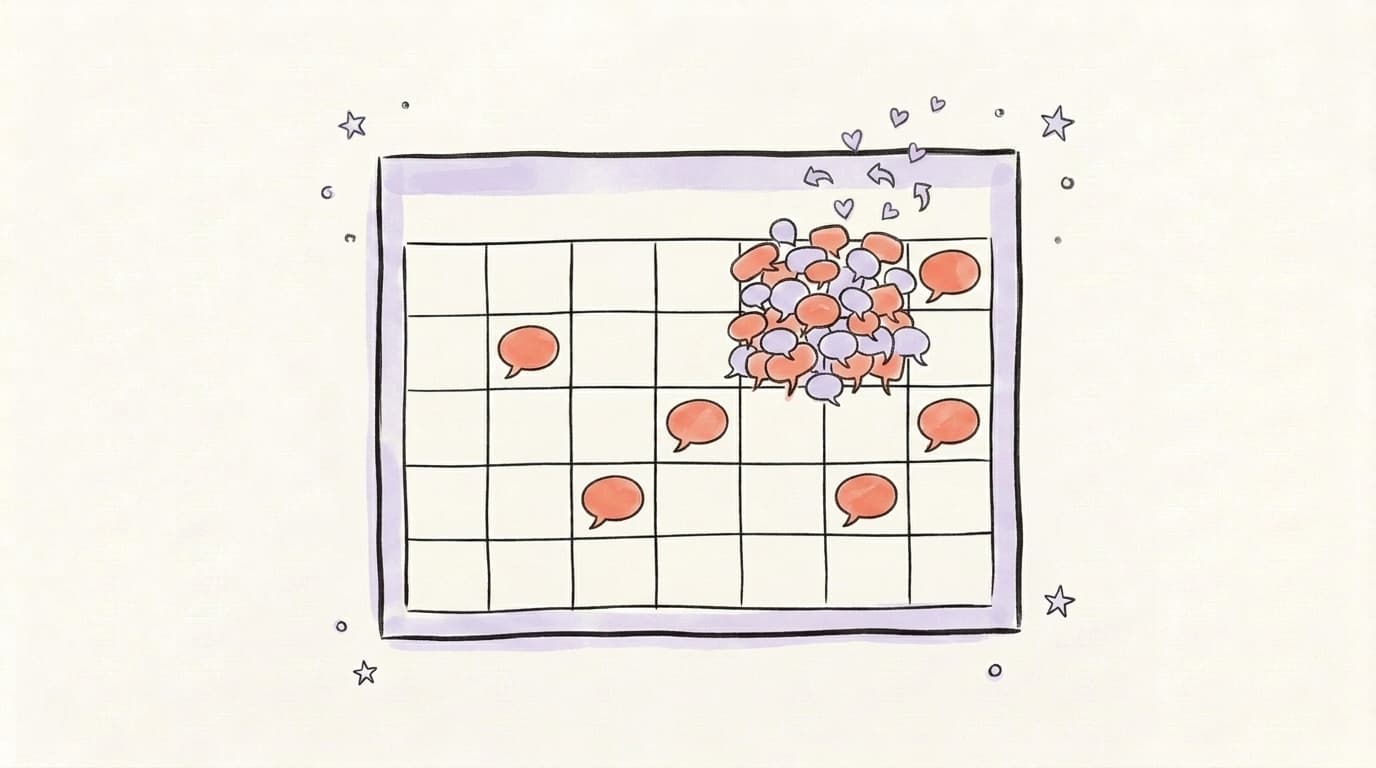
Threads Posting Frequency: How Often Is Too Often?

For most people, 1-2 quality Threads posts per day is the sweet spot. Posting more than ~5 times a day starts to dilute your own reach, because your posts compete with each other. Replies matter more than raw post count — so go reply-heavy, post-light, and stay consistent.
You opened the Threads composer for the fourth time today and paused. Is this too much? Will the algorithm punish me? Will my followers mute me?
Knowing how to post on Threads is the easy part. Knowing how often is where everyone gets stuck. Post too little and you fade from feeds. Post too much and you compete with yourself for attention. This guide gives you the real numbers, the threshold where more starts hurting, and a 14-day method to find the cadence that fits your account.
What Is the Right Threads Posting Frequency?
The honest answer is that the right Threads posting frequency depends on your stage, but 1-2 quality posts per day is the safe default for most accounts. If you're just starting out, even 3-4 posts a week is enough to signal you're active. Growth-focused accounts that want momentum often push to 1-2 daily posts plus replies. The ceiling matters more than the floor: algorithm research for 2026 suggests that posting more than roughly five times a day starts to dilute engagement per post, because your own content competes with itself for the same audience. Buffer, which analyzed 2.5 million Threads posts, frames it simply — if daily posting feels overwhelming, start with 3-4 times per week and build from there. There is no magic number that unlocks reach. Consistency that you can sustain beats a heroic burst you abandon two weeks later.
Why Does Posting Frequency Depend on Your Stage?
Posting frequency depends on your stage because a brand-new account and an established one are solving completely different problems. A new account needs reps and signal; an established account needs to protect the quality bar it already has. When you're new, the algorithm has almost no data on whether people like your content, so posting 1-2 times a day gives it more chances to learn and more surface area to get discovered. Once you have an engaged following, every weak post you publish drags down your average — and the Threads algorithm weighs signals like how often people scroll past you. So the curve flips: early on, more posts help you find your footing; later, ruthless selectivity protects your reach. Match your cadence to where you actually are, not to where a viral creator with 100K followers is.
Here's a rough map by stage:
- 0-1,000 followers: Post 1-2x/day. You need volume to learn what resonates. Reply heavily to bigger accounts in your niche.
- 1,000-10,000 followers: Post 1x/day with a hard quality bar. Drop anything that wouldn't make you proud.
- 10,000+ followers: Post 3-7x/week. Your average matters now. Protect it.
Posting Frequency Benchmarks: What Does the Data Say?
The data points to a tight band rather than a single number: most guidance lands between 1-2 posts per day for active growth, with 3-4 posts per week as a sustainable minimum. Threads itself rewards active accounts, but "active" is lower than people fear. SociaVault Labs, which tracked 18,000 Threads accounts over a 90-day window in early 2026, reports a median engagement around 3.8%, with 4-6% considered strong and anything above 6% exceptional — and its top performers are defined by a reply-to-like ratio near 1:3, not by sheer posting volume. Buffer's broader State of Social Media Engagement study of 52 million posts puts Threads' average engagement rate around 3.6%, healthy for a text platform. The pattern across every dataset is the same: engagement per post drops as raw volume climbs past a point. Quality and consistency, not quantity, move the benchmark.
Content calendar
Plan a month of content in an afternoon
Map out your posts on a visual calendar, batch your ideas, and never stare at a blank page again.
Why Do More Posts Hurt You After a Threshold?
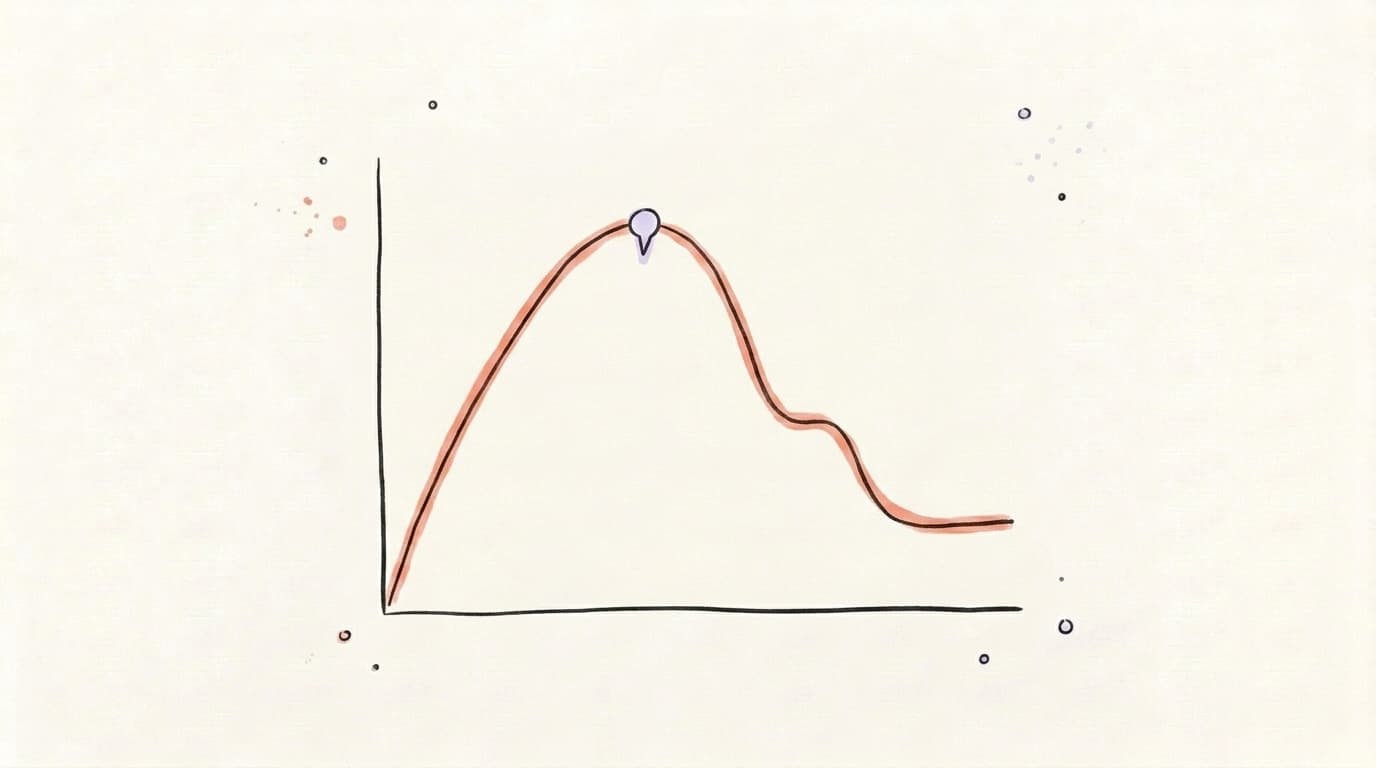
More posts hurt you past a threshold because your posts start competing against each other for the same followers' attention and the same algorithmic slots. Threads doesn't show every follower every post you publish — it predicts which ones they'll engage with and surfaces those. When you flood the feed with five, eight, ten posts in a day, the platform spreads your limited reach across all of them, so each individual post gets a thinner slice. Worse, if a few of those rushed posts get scrolled past or ignored, that's a negative signal the algorithm remembers. The result is a quieter average, not a louder one. This is why a creator posting twice a day with intent often out-reaches one posting ten times in a panic. The cap isn't a penalty Meta hands down — it's simple math: finite attention divided by too many posts equals less per post. There is a point where it stops being math, though: sustained bursts, near-duplicate replies, and bot-paced follows do trip Meta's spam classifier, and that is a penalty. If your reach fell off a cliff rather than thinning out gradually, check for that before you touch your cadence — our free Threads shadowban test tells you in about 20 seconds whether you're still visible to a logged-out viewer at all.
Why Is the Reply-Heavy, Post-Light Pattern So Effective?
The reply-heavy, post-light pattern works because on Threads, replies often count as much as original posts — sometimes more. The platform is conversation-first by design, and engaging in other people's threads puts you in front of audiences you don't have yet. A thoughtful reply on a 50,000-follower account can earn you more profile clicks and new followers than your own post that day. Meanwhile, your own posting stays lean and high-quality, so your feed presence never feels spammy. The practical split most growing accounts use: 1-2 original posts a day, then 10-20 genuine replies across other people's content. Replies are where discovery happens; posts are where you convert that attention into follows. This is also why volume on replies rarely backfires the way volume on posts does — a reply lives inside someone else's thread, so it never competes with your own feed presence.
The takeaway: stop treating Threads like a broadcast channel. Treat it like a room you talk in.
How Often Should You Post by Niche?
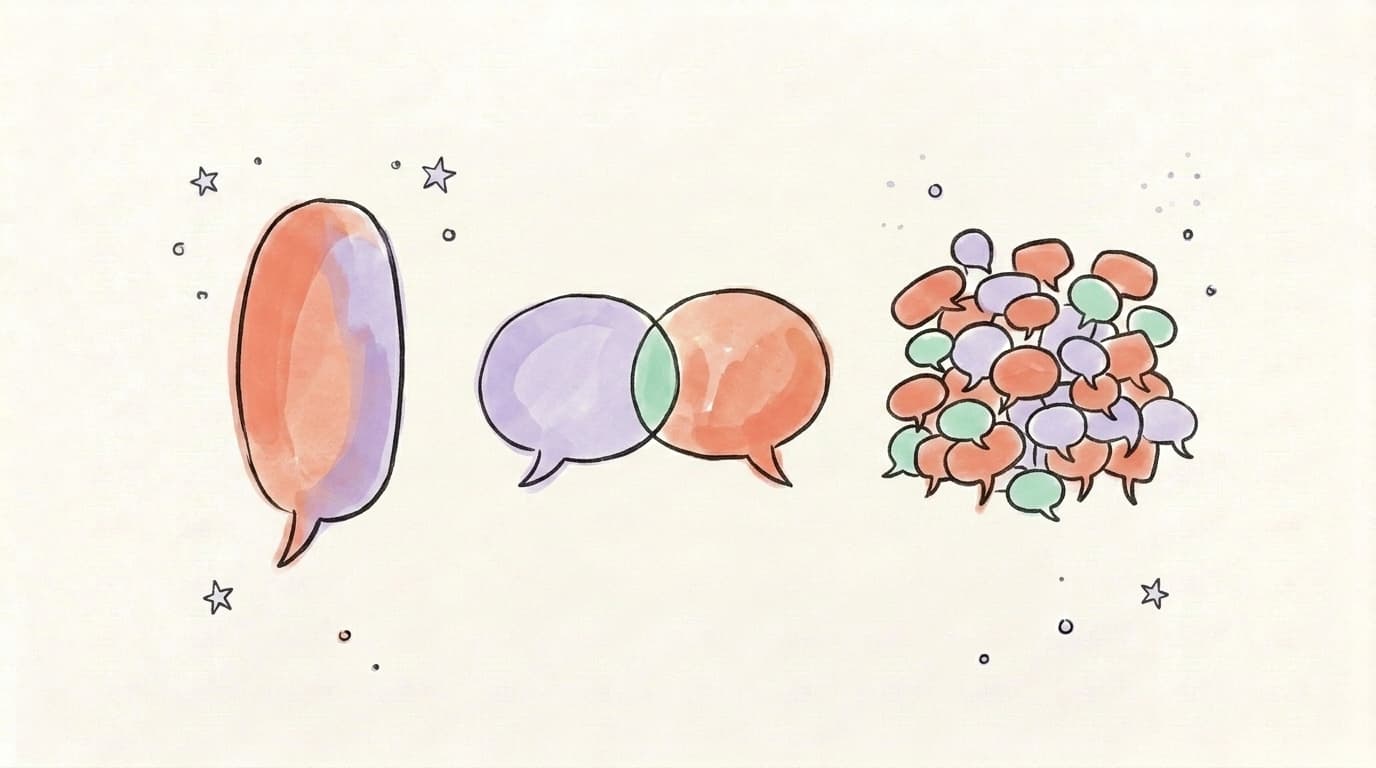
Posting frequency shifts by niche because audience expectations and content shelf-life are wildly different across B2B, creator, and consumer accounts. A B2B founder sharing one sharp insight a day will out-perform one dumping six. A consumer or entertainment account can sustain a faster, lighter cadence because the content is quick to make and quick to consume. Creators sit in the middle — enough volume to stay top-of-mind, enough restraint to keep the bar high. The mistake most people make is borrowing a cadence from a different niche entirely: a founder copying a meme account's six-posts-a-day rhythm ends up diluting the one sharp insight that would have landed. Shelf-life is the deciding factor — a B2B insight stays relevant for weeks, so it doesn't need to be republished hourly, while a reaction to a trending moment is stale by tomorrow and can be posted freely. Match your rhythm to what your audience actually wants from you, and to how long your content stays useful after you hit publish.
B2B and founders
Post 1x/day, 4-5 days a week. Lead with a specific insight, lesson, or contrarian take. Your audience is busy and skims — one strong post beats five forgettable ones. Save the rest of your energy for replies in founder and industry conversations, which is where B2B trust actually compounds.
Creators
Post 1-2x/day. You're building a personality, so frequency keeps you present, but every post should still earn its slot. Mix formats — hot takes, behind-the-scenes, questions to your audience — so the daily cadence never feels repetitive.
Consumer and entertainment
Post 2-4x/day. Lighter, faster content (reactions, memes, quick observations) has a shorter shelf-life and a higher tolerance for volume. This is the one niche where pushing toward the upper end can work — just watch your engagement-per-post and pull back if it sags.
What Does a Burnout-Proof Posting Cadence Look Like?
A burnout-proof cadence looks like a small, fixed number of slots you can fill on your worst week, not your best one. The most common reason people quit Threads isn't the algorithm — it's exhaustion from an unsustainable schedule they set during a motivated week. Design for the floor, not the ceiling. Pick a cadence you could hit even when you're busy, sick, or uninspired, then treat anything above that as a bonus. A reliable 4 posts a week for a year beats 2 posts a day for three weeks followed by silence — and silence is expensive in a plainer way than the folklore suggests: weeks with no posts are weeks with nothing new of yours for anyone to find, follow or reply to. The trick is to set your baseline at what your laziest, most overwhelmed self can still manage, then let motivated weeks be a bonus rather than the expectation. Most schedules fail because they're built around peak energy, which is the rarest state you'll actually be in.
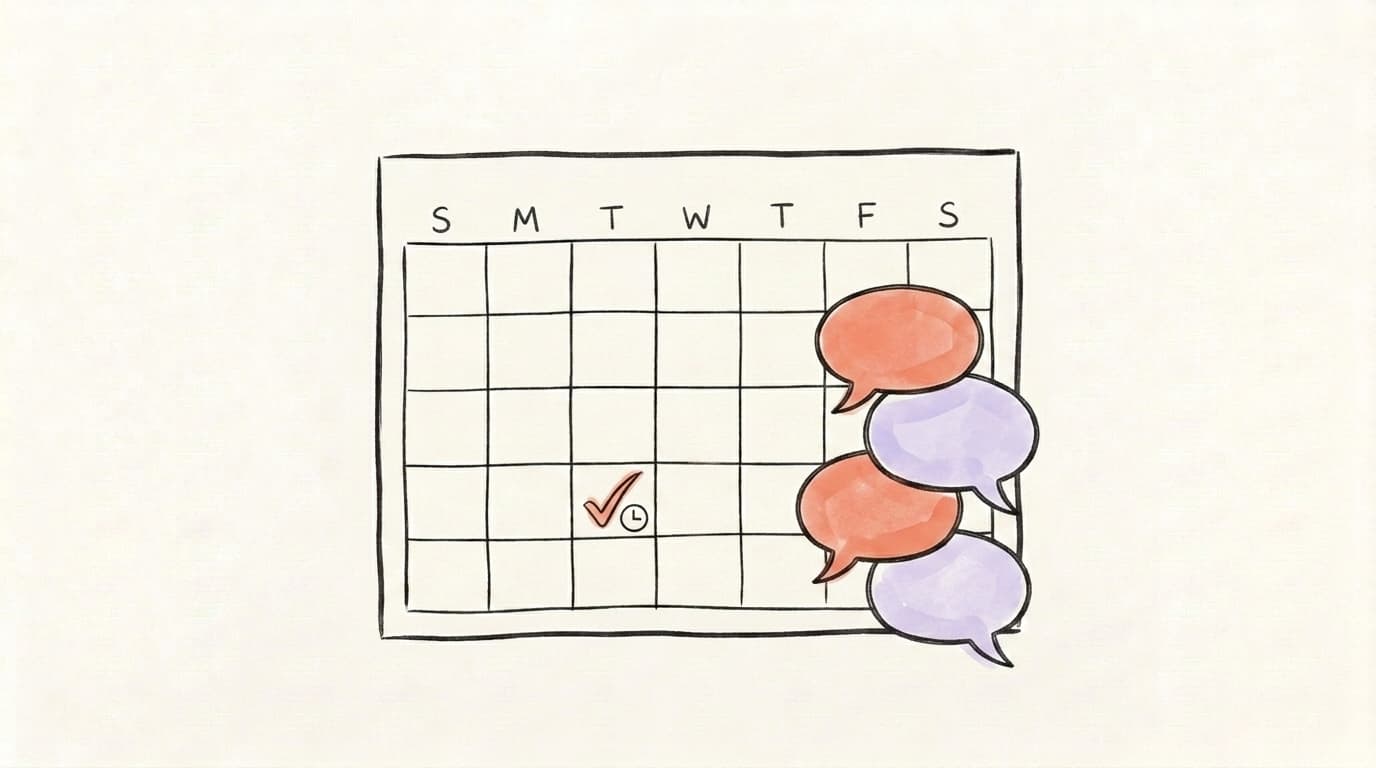
Three cadences that hold up over months:
- The Minimalist: 3 posts/week (Mon/Wed/Fri) + replies whenever you're scrolling anyway. Almost impossible to fall off.
- The Steady: 1 post/day on weekdays, weekends off. Predictable, repeatable, leaves room for life.
- The Builder: 2 posts/day + 15 replies, batched and scheduled in advance. For when you're in a serious growth push and have the bandwidth.
Batching is the unlock here. Writing five posts in one focused 30-minute session and spacing them out beats forcing yourself to be witty live every few hours. That's exactly what a planning tool is for — you can map a week of recurring slots inside the Postory social media planner and let the schedule carry the consistency so you don't have to.
How Do You Find YOUR Posting Frequency in 14 Days?
You find your ideal frequency by running a simple two-week test instead of guessing: post at a fixed cadence for 14 days, track engagement per post, and let the numbers tell you where your ceiling is. Most people never test — they copy a creator and assume it transfers. It usually doesn't. Here's the method:
- Days 1-7: Post once per day at a consistent time. Reply to 10-15 posts daily. Log views, likes, and replies for each post.
- Days 8-14: Bump to twice per day. Keep replying. Log the same metrics.
- Compare: Did your per-post engagement hold steady when you doubled volume, or did it drop? If it held, you can sustain the higher cadence. If it dropped meaningfully, your audience and bandwidth top out at one post a day — and that's your answer.
The metric that matters is engagement per post, not total. Two posts that each get half the engagement of one good post means you doubled your work for the same result. After 14 days you'll have your real number — not a guess, not a guru's number, yours.
Start Posting on Threads Smarter with Postory
Once you know your number, the hard part is holding the rhythm week after week — that's where a plan beats willpower. Postory's social media planner lets you set recurring Threads slots, draft and queue posts in batches, and keep a consistent cadence across X, Threads, and Bluesky without opening five apps a day. Build the schedule once, then spend your live time on replies — the part that actually grows you.
If you're still figuring out the bigger picture, our guides on how to grow on Threads and how often to post on social media go deeper on strategy and cross-platform cadence.
Try Postory free — set sustainable, recurring Threads slots and let the schedule do the remembering.
FAQ
Q: How often should I post on Threads per day?
For most accounts, 1-2 quality posts per day is ideal. New accounts can post 1-2 times daily to learn what resonates, while established accounts often do better with 3-7 posts spread across the week. Anything above roughly 5 posts a day risks diluting your own reach.
Q: Can you post too much on Threads?
Yes. Past about five posts a day, your own content starts competing for the same followers' attention and the same algorithmic slots, so each post gets a thinner slice of reach. You don't get a formal penalty — you just quietly lower your average engagement per post.
Q: Does Threads punish you for not posting enough?
There's no penalty, but going quiet has a cost. A long gap mostly means weeks went by with nothing of yours for anyone to read or reply to. Posting even a few times a week keeps you in the system as an active account.
Q: Are replies more important than posts on Threads?
On Threads, replies are remarkably powerful — they often drive more discovery than your own posts because they put you in front of other people's audiences. A reply-heavy, post-light approach (1-2 posts plus 10-20 genuine replies a day) is one of the most reliable growth patterns on the platform.
Q: How many times a day do top Threads accounts post?
Top-performing accounts (those clearing the ~6% "exceptional" engagement bar) generally aren't the highest-volume posters. Most land around 1-2 high-quality posts a day paired with heavy replying, rather than flooding the feed with ten posts.
Q: How do I know if I'm posting too often on Threads?
Track your engagement per post over two weeks. If doubling your posting volume cuts your per-post engagement roughly in half, you've passed your audience's tolerance. Steady per-post numbers mean you have room; a sharp drop means scale back.
Q: What's a good posting schedule if I'm busy?
Start with 3 posts a week on fixed days (like Monday, Wednesday, Friday) plus replies whenever you're already scrolling. Batch-write the posts in one short session and schedule them ahead so a busy week never breaks your consistency.
Related articles
Bluesky vs Mastodon vs Threads vs X: The Honest 2026 Comparison
Bluesky vs Mastodon vs Threads vs X in 2026 — audience size, engagement and moderation compared, plus which two are actually worth your time.
May 22, 2026
Is Threads Owned by Meta? (And Why It Matters for Creators)
Yes — Threads is owned by Meta, the company behind Instagram, Facebook and WhatsApp. What that means for your account, your data and your growth.
May 19, 2026
Threads vs X (Twitter) 2026: Which Is Better for Creators?
Threads vs Twitter/X in 2026 — audience, algorithm, monetization, ads, account safety, tools, and the cross-posting workflow creators actually use.
Aug 15, 2026