
X DM Restrictions: Why You're Limited and How to Get Them Back

Score the profile people land on after your DM
Every pitch sends them to your profile. Bio, avatar, display name and your recent posting graded out of 100 — so the account they check backs the message up.
Most X DM restrictions come from one of five things: hitting the daily cap, sending near-identical messages, messaging strangers too fast, a new or cold account, or the recipient's own message-request settings. Four of the five clear on their own once you stop and change the pattern.
Match what you're seeing on screen to its cause — each one has a different fix:
- "You are over the daily limit" → you hit the cap. Wait until the counter resets.
- Messages send but nothing arrives → likely a message-request setting on their side, not a penalty on yours.
- A short lockout after a burst → duplicate or rapid-fire DMs tripped spam detection. Stop for at least 30 minutes.
- DMs blocked for days → an account-level restriction. Normalize your behavior and don't work around it.
- No DM button at all → they don't accept requests from you, or you're blocked.
Why Are Your X DMs Restricted?
Your X DMs get restricted when your sending pattern looks automated or unwanted — not because you crossed one magic number. X's spam systems watch the shape of your messaging: how many recipients are strangers, how similar the messages are, how fast they go out, and how old your account is. X's own Direct Message FAQ says sending duplicate Direct Messages to multiple accounts may be reported as spam activity and can block your DMs for a short time — and that you need at least 30 minutes with no send attempts before it lifts. Reports matter as much as volume: a handful of recipients tapping "report" in a short window will restrict an account that never came near the daily cap. Most restrictions are temporary rate-limits, not bans, and they expire once the behavior stops — but retrying every few minutes keeps the timer running.
| What you see | Usual cause | Fix |
|---|---|---|
| Daily limit message | Cap reached | Wait for the reset; send fewer tomorrow |
| Short lockout after a burst | Duplicate or rapid DMs | Stop 30+ minutes, vary every message |
| Multi-day DM block | Reports or repeat offences | Pause outreach entirely, post normally |
| "Sent" but no reply, ever | Their message-request settings | Get a follow or reply first |
| No DM button | Blocked, or requests closed | Nothing to fix on your side |
What Are DMs on X, and Who Can Message You?
DMs — Direct Messages — are X's private one-to-one and group messages, separate from public posts and replies. Anyone can send you a message, but whether it lands in your inbox or in a filtered message request folder depends on your settings. X lets you choose who may send you requests: everyone, verified accounts plus people you follow, or no one. That single setting is behind most "my DM never arrived" confusion — the message shows as sent on your side while the recipient never sees a notification. If someone follows you or has replied to you, your DM almost always reaches the main inbox. If they've never interacted with you and their settings are tightened, it doesn't. Before you assume you've been penalized, check whether the person simply never opened the door. A restriction stops all your DMs; a settings mismatch only affects that one conversation.
Content calendar
Plan a month of content in an afternoon
Map out your posts on a visual calendar, batch your ideas, and never stare at a blank page again.
What Are X's DM Limits in 2026, and What Does Premium Change?
X publishes one hard number: 500 Direct Messages per day, after which you can't send any more until the counter resets, per the X Direct Message FAQ. Third-party trackers report higher observed ceilings on paid tiers, but X does not document any of them, so treat those figures as observations rather than policy. Premium's real effect on DMs is less about volume and more about delivery: paid accounts are treated as verified senders, so their message requests reach people whose settings only accept requests from verified accounts and people they follow. That is why an unverified account can watch every cold request vanish while a Premium account sending the same messages gets replies — nothing was restricted, the requests simply never surfaced. What Premium does not buy is immunity from spam enforcement. Either way, sameness and speed trip the system, not volume — identical or link-heavy messages get you restricted at 30 sends as easily as at 500.
How Do You Lift an X DM Restriction?
You lift an X DM restriction mostly by waiting and changing what you were doing — there is no button that clears it faster. A burst-triggered lockout needs at least 30 uninterrupted minutes with no send attempts, and every retry inside that window restarts the clock. A daily-cap block clears when the 24-hour counter rolls over. A longer, account-level DM restriction lifts once your behavior normalizes: keep posting and replying publicly, stop outbound messaging entirely for a few days, and don't try to route around the limit with a second account, which is what turns a temporary restriction into a suspension. If DMs are still blocked after a week of normal use, treat it as account-level rather than DM-level — our guide on what to do when your X account is suspended covers that escalation path. The same caution applies to follows: X's follow limits punish bursts the same way.
Is a DM Restriction the Same as a Shadowban?
No — and treating them as the same problem sends you chasing the wrong fix. A DM restriction is a messaging limit: your posts, replies and profile still work normally, and you get explicit feedback ("you are over the daily limit", a failed send, a cool-off). A shadowban is a visibility limit: everything appears to send fine, but your posts and replies reach fewer people, and X tells you nothing. Different systems, different triggers, different recovery. Blasting DMs won't shadowban you, and a reach problem won't stop your messages from sending. So don't run a shadowban test to diagnose a failed DM — check the causes in the table above instead. If the account you're worried about is on Threads rather than X, the escalation to watch there is a full Threads account ban, which behaves differently again.
How Do You Cold DM on X Without Triggering a Restriction?
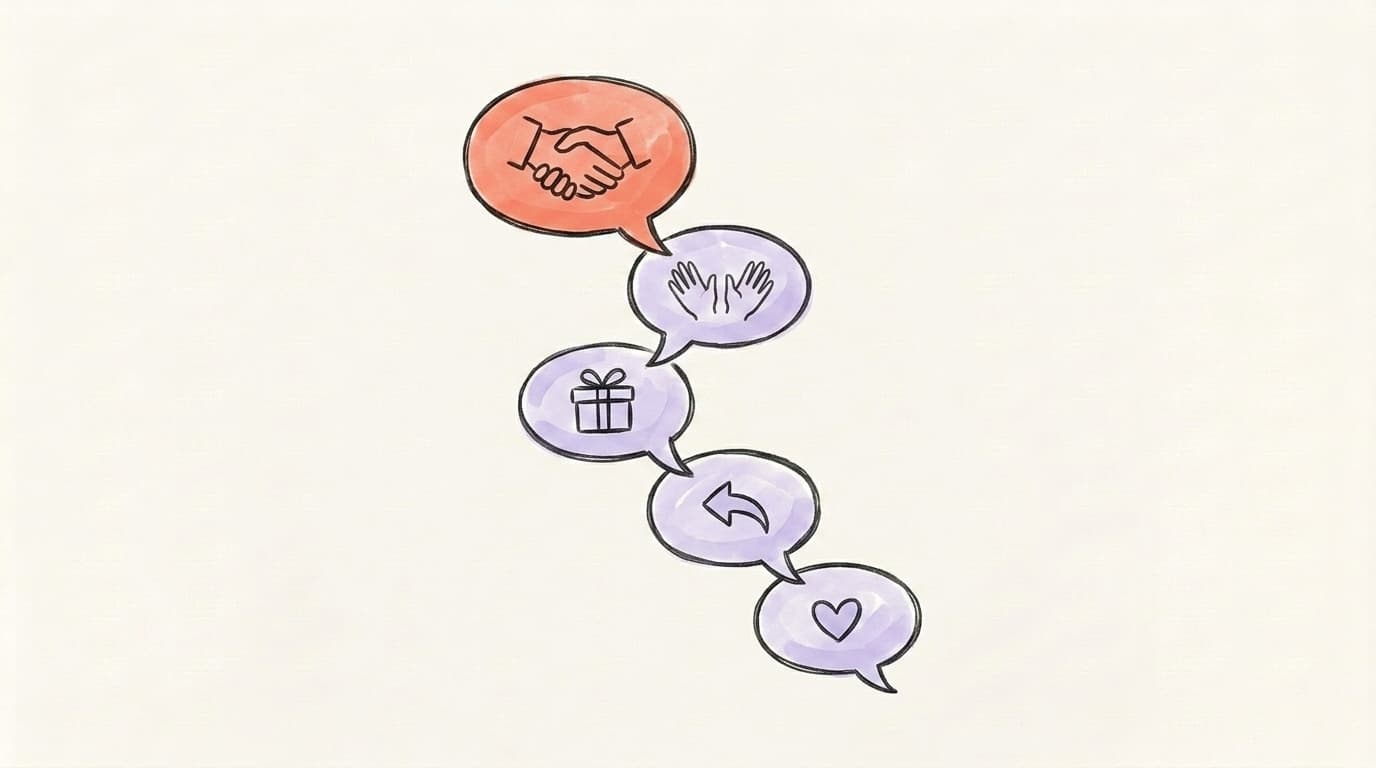
You cold DM safely by making every message look like it could only have been sent to that one person, and by earning some visibility before you send it. The pattern that gets flagged is always the same: identical text, a link in the first message, dozens of strangers, all in one sitting. The pattern that doesn't is a handful of personalized messages a day to people who have already seen your name. X's automation rules are explicit that automated DMs are only permitted to people who requested or clearly indicated they want to be contacted that way — a follow is not consent, so bulk auto-DM tools are out regardless of how well they "personalize". Pace yourself too: a dozen hand-written messages spread across a day behaves nothing like the same dozen fired off in five minutes, even though the total is identical. Warm up first with five public touches over several days:
- Follow them and turn on notifications for their posts.
- Like two or three recent posts — genuinely, not all at once.
- Leave one reply that adds something, not "great post".
- Quote one of their posts with your own take.
- Then DM, referencing the interaction you already had.
Charlie Morgan breaks down the connect-first sequence in detail, including how he opens without a pitch:
One caveat: his template still has to be rewritten for each recipient. Sent verbatim to a list, it recreates the exact duplicate-message pattern that gets DMs blocked.
Three openers that don't read as spam — rewrite the specifics every time, because pasting them verbatim recreates the exact duplicate-message pattern that gets DMs blocked:
Hey [name] — loved your thread on [topic], the point about [specific detail] stuck with me. I work on [thing] and had a quick idea that might fit. Want me to share it, or is now a bad time?
Quick question since you've clearly done this — how did you handle [specific challenge] when you were [their situation]?
Saw you mentioned [pain point]. I put together a [resource] on exactly that — happy to send it over, no strings.
No links in the opener, and an easy way to say no in every one. The pitch comes after they reply.
Keep Your X Presence Warm with Postory
DM restrictions hit hardest when messaging is the only thing your account does. Accounts that post consistently and get replies look human to X's systems — and their DMs land with people who already recognize the name.
Postory helps with that side of it: write and schedule posts for X, Threads and Bluesky, and keep your drafts and follow-ups organized on a post management board instead of scattered across tabs.
Try Postory free — keep posting consistently so your DMs never have to do all the work.
FAQ
Q: Why are my DMs restricted on X?
Usually because you sent duplicate or rapid-fire messages, hit the daily cap, or collected reports. X's Direct Message FAQ notes that duplicate DMs to multiple accounts may be treated as spam and block messaging for a short period. New accounts and messages full of links are flagged fastest.
Q: How long does an X DM restriction last?
A burst-triggered lockout clears after at least 30 minutes with no send attempts — retrying restarts that window. A daily-cap block clears when the 24-hour counter resets. Account-level DM restrictions can last days and lift only once your behavior normalizes.
Q: How many DMs can I send on X per day?
X documents a limit of 500 Direct Messages per day. Paid tiers are reported to sit higher, though X doesn't publish those figures. Either way you can be restricted far below the cap if your messages are identical or link-heavy.
Q: Why do my X DMs say sent but never get a reply?
Often it isn't a restriction at all. If the recipient only accepts message requests from people they follow and verified accounts, your request sits in a folder they may never open. A follow, reply or like from them first usually fixes it.
Q: Does X Premium remove DM limits?
No. Premium raises the practical ceiling and makes your requests more likely to reach people with tightened settings, but it does not exempt you from spam enforcement. A Premium account sending the same templated pitch to strangers still gets restricted.
Q: Is a DM restriction a shadowban?
No. A DM restriction limits messaging and gives you visible errors; a shadowban limits how far your public posts travel and gives no feedback at all. They come from different systems, so a shadowban check won't explain a blocked DM.
Q: Are automated DM tools allowed on X?
Only in a narrow case. X's automation rules permit automated DMs solely to people who explicitly asked to be contacted that way. Someone following you is not consent, and bulk auto-DM tools are a common cause of restrictions and suspensions.
Q: How do I avoid getting my DMs restricted again?
Send fewer, slower, and never the same words twice. Keep links out of first messages, warm up with public interaction before reaching out, and keep new accounts to a handful of DMs a day until they have some posting history behind them.
Related articles
Does X Delete Inactive Accounts? What the Policy Says
Does Twitter delete inactive accounts? X's policy says accounts may be removed for prolonged inactivity — but it names no deadline. Here's what it says.
Sep 9, 2026
How to Remove Followers on X
How to remove followers on X, step by step — what it actually changes, what to check when the option won't show up, and what to do about bot followers.
Sep 7, 2026
"Rate Limit Exceeded" on X/Twitter: What It Means, How Long
X says "Rate limit exceeded"? What the error means, how long it lasts, why it is not a shadowban, and what to do while you wait.
Sep 7, 2026