
Threads for Business: Is It Worth It in 2026?

Meta Threads passed 500M monthly active users in June 2026 and has one of the highest organic reach rates of any platform — but it's not a silver bullet for B2B. This post gives you a framework for deciding if Threads fits your business, four B2B archetypes (composite, not named accounts) where Threads has driven ROI, a 1-hour/week setup, and an honest way to measure return when the platform has zero conversion tracking.
Every B2B founder I talk to right now asks the same thing: "Should we be on Threads?" Fair question. Meta's text-based app crossed 500 million monthly active users in June 2026 and now outpaces X in mobile DAUs (143.2M vs. 125M as of February 2026). Ads went live globally in January. So yes — it's real, it's big, and Meta is investing.
But "big platform" and "good for your business" are different things. Here's the honest answer with a decision framework, four B2B archetypes (composite patterns, not named accounts) where Threads has driven ROI, and a 1-hour/week setup that lets you test the channel without betting the calendar on it.
What Is Meta Threads and Who Actually Uses It in 2026?
Meta Threads is Meta's text-first social app — yes, it's owned by Meta. It launched July 2023, sits inside the Instagram ecosystem (same login, same trust and safety stack), and is led by Connor Hayes (named dedicated head of Threads in September 2025), reporting to Adam Mosseri. Posts cap at 500 characters and the feed is algorithmic by default, with a Following feed if you want chronological. The audience in 2026 skews younger, more US-centric, and notably more comfortable with brand voices than X has become — Threads' decision-makers describe it as feeling "still uncluttered" compared to legacy platforms. For B2B, this matters: it shares its content graph with Instagram, so a post can surface to people who follow you on IG even if they're not on Threads daily. The platform doubled from roughly 200M to 400M MAU in under a year between mid-2024 and 2025, then added another 100M to reach 500M by June 2026 — about 10M new monthly users a month. That's a real audience — the only question is whether your audience is in it.
When Does Threads Make Sense for Your Business?
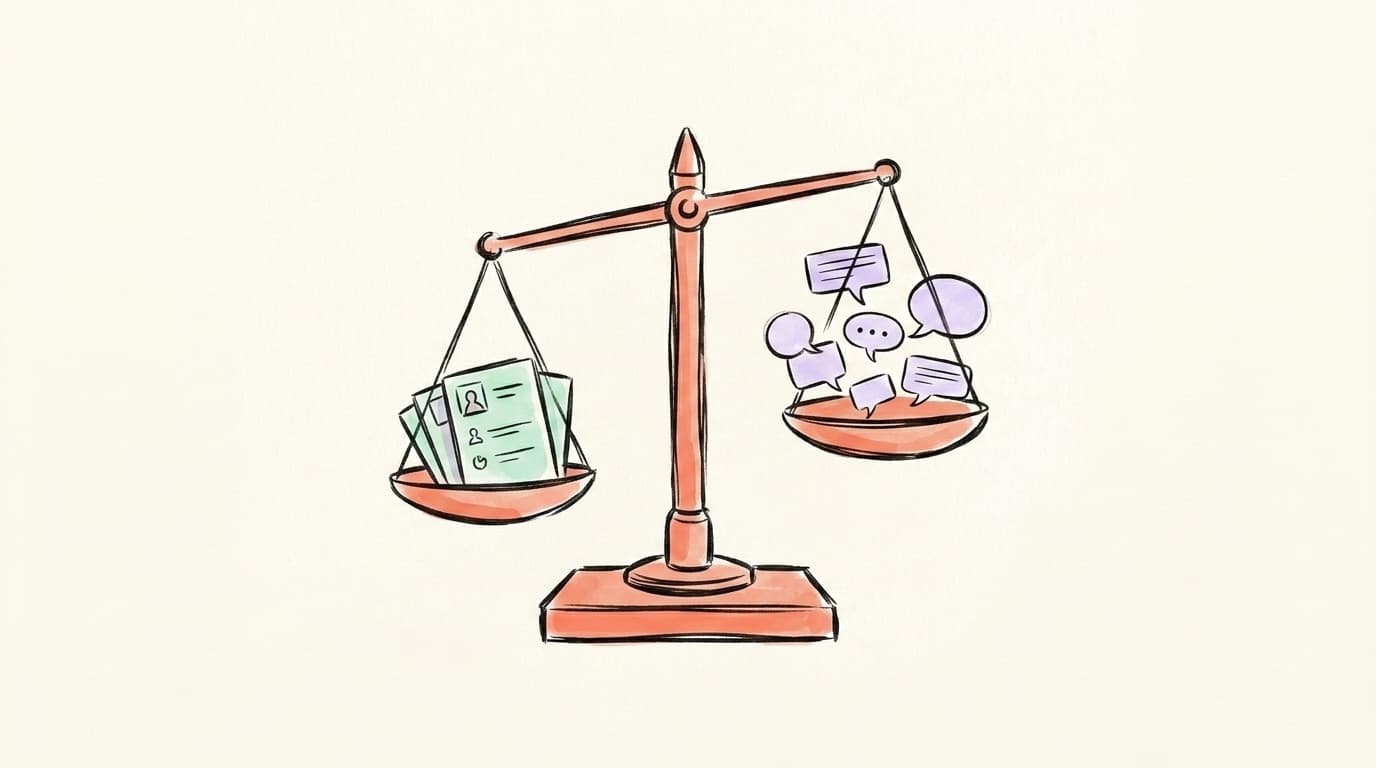
Threads makes sense when three things line up: (1) your buyers are decision-makers under ~45 who already scroll text social, (2) your product or expertise is naturally explainable in short, conversational posts rather than dense pillar content, and (3) you have at least one person inside the company who can post in their own voice — not a brand-account press release. If you're missing any of those, Threads will feel like screaming into a void. Where it doesn't make sense: enterprise sales motions targeting CFOs at Fortune 500s (those buyers live on LinkedIn and email), regulated industries where every public post needs legal review, and pure ecommerce brands without a personality at the helm. The math is simple — Threads rewards consistent posting from a recognizable human, and it punishes accounts that treat it like a Buffer-and-forget broadcast channel. If you can commit one hour a week from a real person inside the company, the math works. If you can't, skip it and invest that hour somewhere with paid distribution.
Grow on autopilot
Grow your account without the guesswork
Postory turns what works into a repeatable posting system across X and Threads — so you grow consistently.
Threads vs. LinkedIn for B2B: Where Does Each Win?
LinkedIn still wins for most B2B use cases on raw metrics — Buffer's analysis of 52M+ posts in 2025 put LinkedIn's median engagement rate at 6.2% versus Threads at 3.6%, and LinkedIn remains the dominant social channel for B2B lead generation in most industry surveys. But the comparison isn't apples-to-apples. LinkedIn engagement is largely "professional intent" — people reading at their desk, often in the middle of a workflow. Threads engagement is "decision-maker downtime" — the same buyers scrolling on the couch, where your competitors aren't fighting for attention with sponsored InMails. The practical breakdown: use LinkedIn for case studies, hiring posts, long-form thought leadership, and pipeline-building posts that tag specific accounts. Use Threads for the unfiltered behind-the-scenes that LinkedIn would feel weird hosting — the build-in-public posts, the spicy hot takes, the off-script founder notes. The accounts winning at B2B in 2026 don't pick one — they post the same insight twice, polished for LinkedIn and stripped down for Threads, and let each platform serve a different stage of the funnel. Want a deeper take? Read our breakdown of what works on Threads in 2026.
Threads vs. X for B2B: Which One Pays Off Faster?
Threads pays off faster than X for almost every B2B account starting from zero in 2026 — and the reason is organic reach math. Buffer's data shows median Threads engagement at 3.6% versus X at 2.5%, but the bigger gap is what happens on small accounts. For small accounts, Threads tends to deliver meaningfully higher reach per post than X because the algorithm leans heavily on recommendations rather than the follower graph — a brand-new account can land hundreds to thousands of views on its first post if the content lands. X, by contrast, gates reach behind the follower graph and Premium subscriptions; a new B2B account with 200 followers will struggle to break double-digit view counts on an organic post. The trade-off: X still has more concentrated B2B niches (VC Twitter, dev Twitter, founder Twitter) where deals actually happen. So the practical rule for 2026: if you're building from scratch, Threads gets you to "discoverable" in 8–12 weeks; X takes 12–24 months. If you already have a 10K+ X audience, don't abandon it — but stop pretending it's still 2022 and start cross-posting to Threads with platform-native edits. We covered the full side-by-side in Threads vs. Twitter for B2B.

4 B2B Archetypes Where Threads Drove ROI
These aren't named accounts — they're representative archetypes drawn from patterns we see again and again across founder communities and build-in-public posts on Threads in 2025–2026. Numbers are directional, not audited. The shapes repeat.
SaaS: A bootstrapped tool that found its niche
A solo-founder analytics tool, ~$30K MRR before Threads, struggled to break out of niche dev Twitter. The founder started posting Threads three times a week — half-jokes about debugging, half-screenshots of the product mid-build. Within four months they hit 8,500 followers, and Stripe events showed Threads-attributed signups (via UTM on the bio link) drove 11% of new trials. Threads didn't replace SEO — it gave a quiet bootstrapped tool a voice.
Agency: A freelancer turned inbound machine
A B2B copywriter posting micro-case-studies — "this email got 47% open rate, here's why" — went from cold-pitching 30 leads a month to fielding 4–6 inbound inquiries a week from Threads. The mechanism: every post was a teardown of a real piece of client work (anonymized), which doubled as a portfolio piece. By month six, Threads was the agency's top inbound channel.
Coach: A consultant who built waitlist demand
An executive coach who couldn't crack LinkedIn (too saturated, too sponsored) found Threads gave honest, unpolished career advice a much larger audience. By posting one "controversial-but-true" career take per day, they built a 12K following and now run a waitlisted cohort program — Threads is the entire top-of-funnel.
eCom: A DTC brand that cracked product-led posts
A small DTC skincare brand stopped posting product shots and started posting founder-voice Threads — "why we don't use [ingredient X]", "here's the email a customer sent us today". Six months in, Threads attributed (last-touch) 7% of revenue, and CAC on Threads-sourced customers ran 40% below their Meta Ads CAC. The post that worked: text-only, no product photo, no link in the post.
What's the Minimum Viable Threads Setup (1 Hour/Week)?
The minimum viable Threads setup for a busy B2B founder is one hour per week, broken into 15-minute blocks: ideation, drafting, scheduling, and engagement. Spend the first 15 minutes brainstorming 5–7 post ideas from your week — questions a customer asked, a mistake you made, a small product update, a hot take on your industry. Spend the next 15 drafting them as short text posts (under 500 characters each, conversational tone, no salesy language, no link in the main post — drop the link in your bio or first reply). Spend 15 minutes scheduling them across the week using a tool that handles Threads natively — Postory's social media planner schedules them into your recurring Threads slots from a single calendar so you're not opening the app daily. The final 15 minutes are for replies — Threads is a conversation app, and Buffer's data shows accounts that reply consistently outperform non-replyers by ~42% on engagement. Skip the "post once, see what happens" approach — Threads punishes inconsistency more than it punishes lower-quality content, and one hour of structured weekly work beats five hours of sporadic posting every time.
For a great B2B walkthrough of this approach, Sendible's team published a written case study of how they grew Threads views 30,000% in three months using their R.E.A.L. framework (Relatable voice, Every day, Anchored content pillars, Led by community). The framework is platform-agnostic and works for any B2B brand running the 1-hour/week setup above.

How Do You Measure ROI on a Platform With No Conversion Tracking?
You measure ROI on Threads by tracking three layered signals — direct attribution where possible, assisted attribution as the practical fallback, and qualitative signals as the truth check. For direct attribution, use UTM-tagged links in your Threads bio (Threads added click tracking for up to 5 profile links in May 2025) and ask new signups "how did you hear about us?" — a 1-minute checkbox on your onboarding form will tell you more than any analytics dashboard.
For assisted attribution, watch for traffic spikes on your site that correlate with high-performing Threads posts; a 2x traffic day after a viral Thread is worth chasing down, though a correlation on its own doesn't establish the post caused it. For qualitative signals, count the inbound DMs, the "saw your Thread on X topic" emails, and the partnership pings — these are the leading indicators of Threads working as a top-of-funnel channel. The hardest mindset shift: stop expecting Threads to look like Google Ads in your dashboard. It's a brand and discovery channel. Where it works, it shows up as lower CAC, faster sales cycles and more inbound qualified pipeline — so measure those against what the channel costs you in time, rather than against any timeline. If Meta's expanded ads program suits your stack, our breakdown of Meta Threads Ads covers the new placement and what early CPMs look like.
Start Planning Threads with Postory
If you decide Threads is worth a test, the bottleneck is rarely the writing — it's keeping a consistent posting rhythm without spending an hour a day inside the app.
Postory's planner gives you a 1-hour/week Threads workflow that runs itself. Draft your week of posts in one sitting, schedule them across Threads, X, and Bluesky from a single calendar, and let the queue handle distribution while you focus on replies and customer work.
Try Postory's social media planner — built for founders who want a real Threads presence without becoming a full-time content manager.
FAQ
Q: Is Threads owned by Meta?
Yes. Threads is owned and operated by Meta Platforms, the same company behind Facebook, Instagram, and WhatsApp. It launched in July 2023 as a text-based companion app to Instagram, runs on Instagram's infrastructure, and shares its login and trust-and-safety systems with the Instagram ecosystem.
Q: How many users does Meta Threads have in 2026?
Meta Threads has 500 million monthly active users as of June 2026, with 143.2 million daily active users worldwide as of February 2026. That makes it larger than X by mobile DAUs and roughly tied with X by total monthly users, depending on the source.
Q: Is Meta Threads good for B2B marketing?
Threads can be effective for B2B marketing if your buyers are under 45 and you have a real person inside the company willing to post in their own voice. It works best for SaaS, agencies, coaches, and consultants who can share opinionated, founder-led content. It's a poor fit for enterprise sales targeting Fortune 500 CFOs, regulated industries, or brand-only accounts without a recognizable human voice.
Q: Can businesses run ads on Threads?
Yes. Meta rolled out Threads ads globally in January 2026 after a year-long testing phase. CPMs are currently running 30–40% below Instagram CPMs because of the land-grab pricing dynamic, and ad formats now include single-image, carousel, and Advantage+ catalog ads.
Q: How often should a business post on Threads?
Aim for 3–5 posts per week as a minimum, ideally spread across the week rather than batched on one day. The Threads algorithm rewards consistency and conversation more than volume — accounts that reply to their own threads' comments outperform non-replyers by roughly 42% on engagement, according to Buffer's 2025 analysis. One hour of focused weekly work usually beats five hours of sporadic posting.
Q: Should I post the same content on Threads, LinkedIn, and X?
No — cross-post the same insight, but rewrite for each platform. LinkedIn rewards polished, professional framing with a clear takeaway. Threads rewards stripped-down, conversational, slightly unpolished posts. X sits somewhere in between but rewards punchier hooks and reply-driven engagement. Reposting LinkedIn copy verbatim to Threads is the single most common mistake B2B founders make in 2026.
Q: How long until I see ROI from Threads for my business?
Plan for 3–6 months before Threads becomes a measurable channel for most B2B businesses. Bootstrapped SaaS and solo agencies tend to see inbound DMs within 8–12 weeks; brand awareness compounding into pipeline usually takes 4–6 months. If you're on a short timeline, Threads ads put your message in front of people without waiting for an audience to build — measure the attributable visits and leads against what you spend, and let that decide whether they earn a place beside the organic effort.
Q: Does Threads count as a separate platform or is it just part of Instagram?
Threads is a separate app and platform, though it shares Meta's account graph with Instagram. You log in with your Instagram account, your followers can carry over if you choose, and the same Meta business tools (Insights, ad placements) apply. But the content, algorithm, and culture are distinct — treat it as a separate platform with its own posting strategy, not as an Instagram add-on.
Related articles
Threads Ads in 2026: Availability, Specs, Costs, How to Run Them
Threads ads are live globally. What formats exist, the current ad specs, what they cost, and how to set one up in Ads Manager.
May 17, 2026
Threads Post Ideas: 40 Hooks for Founders and Creators
40 Threads post ideas tested on the platform — personal stories, low-stakes hot takes, questions, and reply-chain carousels. Steal them today.
May 17, 2026
LinkedIn Carousels: Specs, Templates, and Writing Tips
Create LinkedIn document posts with the 2026 specs, six templates, and practical tips for hooks, slide structure, and calls to action.
May 31, 2026