
LinkedIn for Agencies: How Top Agencies Use LinkedIn to Win Clients

A working LinkedIn content strategy for agencies = post from the founder's profile, cover four content pillars, show real case-study proof, and route engaged readers into DMs and calls — all on a 3-hour-per-week cadence.
Most agency owners treat LinkedIn like a digital business card. The ones winning clients treat it like a sales channel. The difference isn't budget or follower count — it's having a real linkedin content strategy that consistently turns content into conversations, and conversations into contracts.
This post breaks down exactly how top agencies do it: the pillars they post on, the case-study formats that convert, the posts-to-calls pipeline, what to never post, and a weekly workflow you can run in three hours.
Why Is LinkedIn the Best Channel for Agencies in 2026?
LinkedIn is the best client-acquisition channel for agencies in 2026 because it concentrates buyers, intent, and organic reach in one place — and rewards the personal voice agencies already have. Roughly 80% of B2B leads sourced from social media come from LinkedIn (Cognism, 2026), and 84% of B2B marketers say LinkedIn delivers the best value of any platform. For an agency, that means your ideal client — a founder, marketing lead, or operations director — is already there, reading the feed, and making buying decisions. The platform also still gives organic content meaningful distribution, unlike paid-search channels where every lead has a price tag. Consistency compounds fast: businesses that post weekly see roughly 2x more engagement than inconsistent ones. So a small agency with sharp content can out-reach a bigger competitor who only posts when they remember to.
The catch is that LinkedIn rewards people, not logos. Posts from individual profiles consistently outperform company-page posts, and employee posts earn about 2x the engagement of corporate posts while reshares reach far further than the page itself (LinkedIn Statistics 2026). That's great news for agencies — your founder is the brand.
LinkedIn creator Tommy Clark, who has spent four years working with over 100 top founders on the platform, breaks down what the algorithm actually rewards heading into 2026:
Here's his rundown of the new rules:
If you want the deeper mechanics of cadence, formatting, and reach, we cover them in our LinkedIn content strategy guide.

What Content Pillars Should Your LinkedIn Content Strategy Cover?
A LinkedIn content strategy for an agency owner should rest on four pillars: insight, proof, story, and how-to. Insight posts share a sharp point of view about your niche — what most clients get wrong, where the industry is heading, a contrarian take you can defend. Proof posts show results: a client outcome, a before/after, a number you moved. Story posts make you human — a hard lesson, a hiring mistake, why you started the agency. How-to posts teach a small, usable thing your buyer can apply today, which positions you as the expert without giving away the whole engagement. Rotating these four keeps your feed from becoming an endless highlight reel (boring) or an endless pitch (annoying). A simple weekly mix is one of each, with proof and insight carrying the most weight because they do the actual selling.
Content planner
Plan a month of content in an afternoon
Map out your posts on a visual calendar, batch your ideas, and never stare at a blank page again.
The mistake most agencies make is posting only how-to content. Tactics are useful, but they don't differentiate you — every competitor knows the same tactics. Insight and proof are what make a buyer think "this is the agency I want." Tie each pillar back to one specific client type so your whole feed speaks to the person you actually want to hire you.
For weaving these pillars into a repeatable plan, see how we structure pillars in the LinkedIn content strategy guide.
How Do You Write Case-Study Posts That Convert?
Case-study posts convert when they read like a story with a number, not a brag with a logo. The structure that works: open with the client's problem in their words, name the stakes (what it was costing them), show the move you made, then land the result with a concrete figure. Buyers don't connect with "we increased engagement" — they connect with "their demos were flat for six months; we changed one thing and bookings doubled in eight weeks." The proof pillar is where agencies win or lose on LinkedIn, because it's the only content that directly answers the reader's real question: can you do for me what you did for them? Keep the client anonymous if you must ("a B2B SaaS client"), but never fake the numbers. Specificity is the credibility — "bookings doubled in eight weeks" lands; "great results" gets scrolled past.
Here are five case-study templates you can copy:
- The Problem → Result. "They came to us with [problem]. 60 days later, [result]. Here's what we changed."
- The Single Lever. "We didn't rebuild everything. We changed one thing — [lever] — and [result]."
- The Failure-First. "Their last agency [mistake]. Here's the opposite approach that worked."
- The Day-One vs Day-90. A simple before/after timeline with the key milestones.
- The Quote. Lead with a real one-line client quote, then unpack the story behind it.
End each one with a soft invitation, not a hard CTA: "If you're dealing with the same thing, my DMs are open." That single line is what turns a proof post into a pipeline.
How Do Posts Turn Into DMs and Booked Calls?
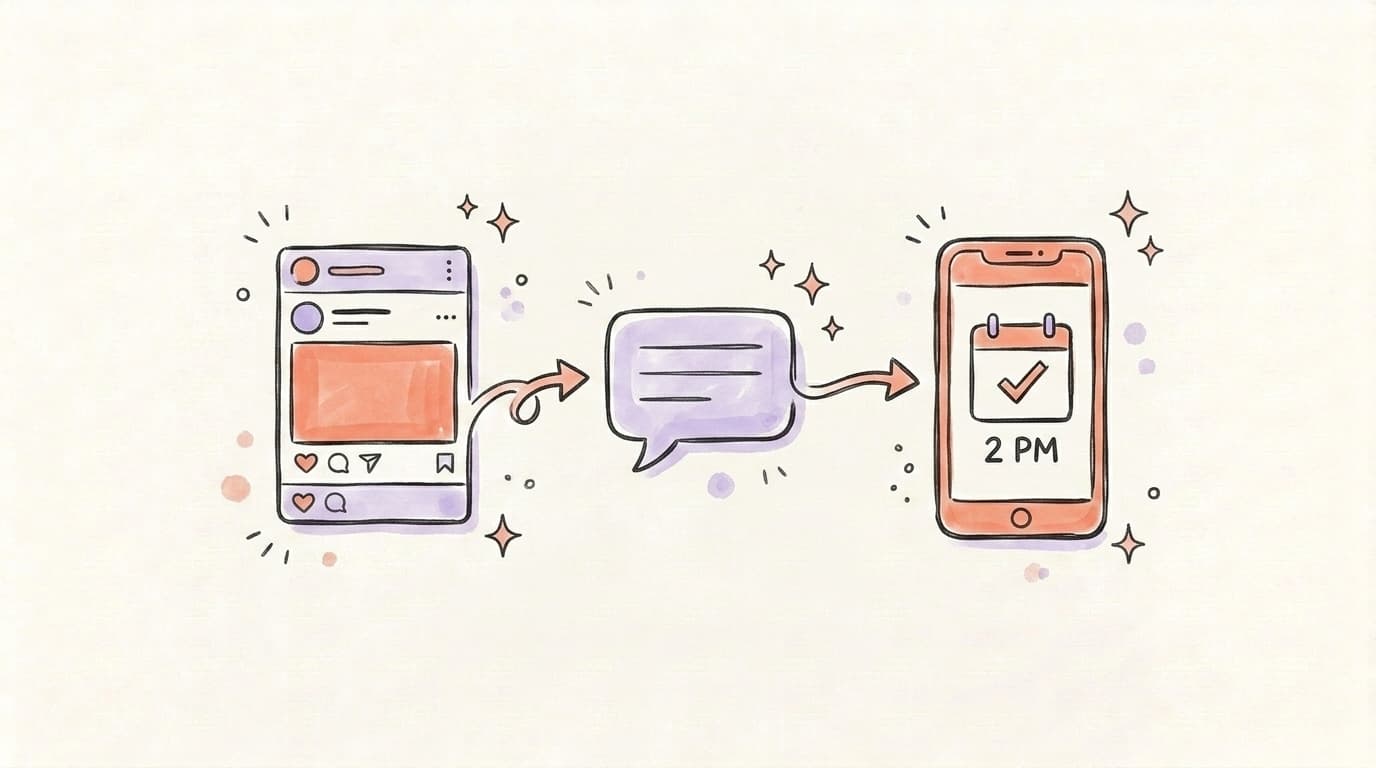
Posts turn into calls through a deliberate pipeline: content earns attention, a clear offer gives readers a first step, and DMs move them toward a booked call. The mistake is expecting a post to sell directly — it doesn't. Its job is to start a conversation. When someone comments thoughtfully or reacts to a proof post, that's a signal. You reply in the comments, then follow up in DMs with a genuine question, not a pitch. The smoothest path is a low-friction front-end offer — a paid audit, a short strategy call, a teardown — that lets a prospect sample your expertise before committing to a retainer. It removes decision paralysis and gives the conversation a natural next step. Done consistently, this is how agencies book calls every week without sending a single cold message.
Pierre Herubel, who says he closed over $700,000 in LinkedIn inbound leads in a year, walks through the exact posts-to-DMs-to-calls system that makes this work:
The takeaway: your profile and offer have to give one obvious first step. If a prospect lands on your profile and sees five services, three price points, and no clear entry point, the conversation dies before it starts.

What Should Agencies Never Post? (The "Hire-Me" Trap)
Agencies should never fall into the "hire-me" trap: posting content whose only real message is please hire us. Constant availability posts ("DM me to work together"), thinly veiled brags, and recycled motivational filler all signal one thing — you need clients — which is exactly the energy that repels them. The buyer you want is looking for an expert who's clearly busy and good, not one broadcasting desperation. Other things to avoid: vague engagement bait ("Agree? 👇"), generic AI-written posts with no point of view, and pure self-promotion with no value for the reader. The fix is the ratio: for every post that mentions working together, publish several that simply teach, show proof, or share a genuine take. A rough guide is roughly four value posts for every one that invites a conversation. Earn the right to pitch by being useful first.
A quick gut check before you post: would this be worth reading even if the reader never hired anyone? If yes, post it. If it only makes sense as an ad for your agency, rewrite it as insight or proof. The best agency content sells precisely because it isn't trying to.
Should You Build a Founder Profile or an Agency Page?
You should build both, but lead with the founder profile — it does the heavy lifting, and the agency page provides backup credibility. Because individual profiles consistently out-engage company pages on LinkedIn, the founder's profile is where your reach, conversations, and inbound DMs will come from. That's your content engine. The agency page is the trust layer: when a prospect who found you through the founder's posts wants to vet the business, they check the page for services, case studies, and team. Think of it as a hybrid — the founder builds the audience, the page closes the credibility gap. You can extend this with other team members posting from their own profiles too, since reshares and employee posts multiply reach far beyond what the page alone achieves. A five-person agency where everyone posts is five audiences working at once, not one.
Practically, that means 80% of your effort goes into the founder's content, and the agency page gets lighter, less-frequent updates — reshares of founder posts, milestones, and case studies. If you run a LinkedIn newsletter, publish it from the profile or page that best fits your goal, but keep the founder as the face. One human voice beats a faceless brand every time.
What Does the Weekly Agency LinkedIn Workflow Look Like?
The weekly agency LinkedIn workflow takes about three hours and breaks into three blocks: plan, write, and engage. Block one (45 minutes): plan. Pick your week's posts across the four pillars — say two insight, two proof, one story — and jot the core idea for each. Block two (90 minutes): write and schedule. Draft all five posts in one sitting while you're in flow, then queue them into recurring slots so they go out on a steady cadence instead of whenever you remember. Block three (45 minutes, split across the week): engage. Spend 10–15 minutes a day replying to comments, following up in DMs, and commenting thoughtfully on your ideal clients' posts so you stay on their radar. That last block is where the pipeline actually moves — content without engagement is just broadcasting, and broadcasting doesn't book calls.
Batching is the unlock. Writing five posts at once is far faster than writing one per day, and scheduling them removes the daily "what do I post?" decision that kills consistency. The agencies who keep this up for a few months are the ones who stop chasing clients and start fielding inbound. The workflow is simple — the discipline is the hard part, which is exactly why a planner and a schedule beat willpower.
Start Winning Clients on LinkedIn with Postory
Running this for one founder is doable by hand. Running it across a whole agency — multiple team members, recurring slots, reply batches — is where it breaks down without a system. That's the gap Postory's social media planner fills: recurring post slots so every pillar has a home each week, reply-batch sessions so engagement actually happens, and one-off tasks so nothing slips. You set the cadence once and run it every week, across X, Threads, and LinkedIn.
Run agency-wide LinkedIn workflows for every team member inside Postory — plan the pillars, batch the writing, schedule the slots, and keep the whole team's content moving from one place.
Try Postory free — plan and run a real LinkedIn content strategy for your whole agency, not just one profile.
FAQ
Q: How often should an agency post on LinkedIn?
Aim for three to five posts per week from the founder's profile. Consistency matters more than volume — businesses that post weekly see roughly 2x more engagement than inconsistent ones. Pick a cadence you can sustain for months, not a sprint you'll abandon in two weeks.
Q: Should agency content come from the founder or the company page?
Lead with the founder's personal profile. Individual profiles consistently out-engage company pages, and employee posts earn about 2x the engagement of corporate posts. Use the company page as a credibility layer for prospects who want to vet the business, but build your audience through people.
Q: How do you write LinkedIn posts that get clients?
Open with a hook in the first two lines, since that's all readers see before deciding to keep scrolling. Build the post on proof and insight rather than self-promotion, and end with a soft invitation like "my DMs are open" instead of a hard pitch. Posts earn the conversation; DMs and calls close it.
Q: What's the best type of post for agency lead generation?
Case-study proof posts. They directly answer the buyer's real question — can you do for me what you did for them — using a real client problem, the move you made, and a concrete result. Pair them with insight posts that show your point of view.
Q: How long does it take to get clients from LinkedIn?
Most agencies see meaningful inbound after a few consistent months, not days. Early weeks build reach and recognition; conversations and booked calls follow once readers trust your proof. The compounding is the point — the founders who stick with the cadence stop chasing clients and start fielding them.
Q: Do agency posts need images or video to perform?
They help but aren't required. Carousels and native video tend to earn higher engagement than plain text, but a sharp text post with a real result still converts. Match the format to the message — use a carousel for a step-by-step, a text post for a strong take.
Q: Can a small agency compete with bigger ones on LinkedIn?
Yes. LinkedIn rewards content quality and consistency, not company size. A small agency with a clear niche, real proof, and a steady cadence regularly out-reaches larger competitors who post sporadically from a faceless company page.
Related articles

How to Get Your First 100 Followers on X/Twitter
I started a brand new X account with zero followers and had my first 100 real followers a few days later. Here's the exact playbook.
Jul 19, 2026
LinkedIn Premium: Worth It for Creators and Founders in 2026?
A candid tier-by-tier review of LinkedIn Premium in 2026 — who actually needs Career, Business, Sales Navigator, or Recruiter Lite, and who should stay free.
Jun 12, 2026

LinkedIn Analytics: The 6 Metrics That Actually Matter
Your LinkedIn dashboard shows dozens of numbers. Here are the six that actually predict growth — plus a 10-minute weekly review.
Jun 8, 2026