How to Fix a Shadow Ban (X, Instagram, Threads, LinkedIn)

Find out if you're actually shadowbanned
Before you change anything, confirm it from a logged-out viewer's perspective — the only view where reduced distribution shows.
A shadow ban is when a platform quietly reduces who sees your content — your account still works, but reach to non-followers crashes. To fix it, identify the trigger (banned hashtags, automation tools, policy-adjacent content, sudden behavior bursts), stop it, and wait 7–30 days for visibility to return. The recovery sequence is the same across every platform; the diagnosis differs.
You post like normal. Likes drop, replies dry up, search doesn't surface your handle. Nothing in the app tells you anything is wrong — but your reach is gone. That's a shadow ban — and the pattern repeats on every major platform. This hub article covers the universal definition, the diagnostic test that works almost everywhere, and the recovery checklist. For platform-specific fixes, the deep guides are linked below each section.
What Is a Shadow Ban? (Universal Definition)
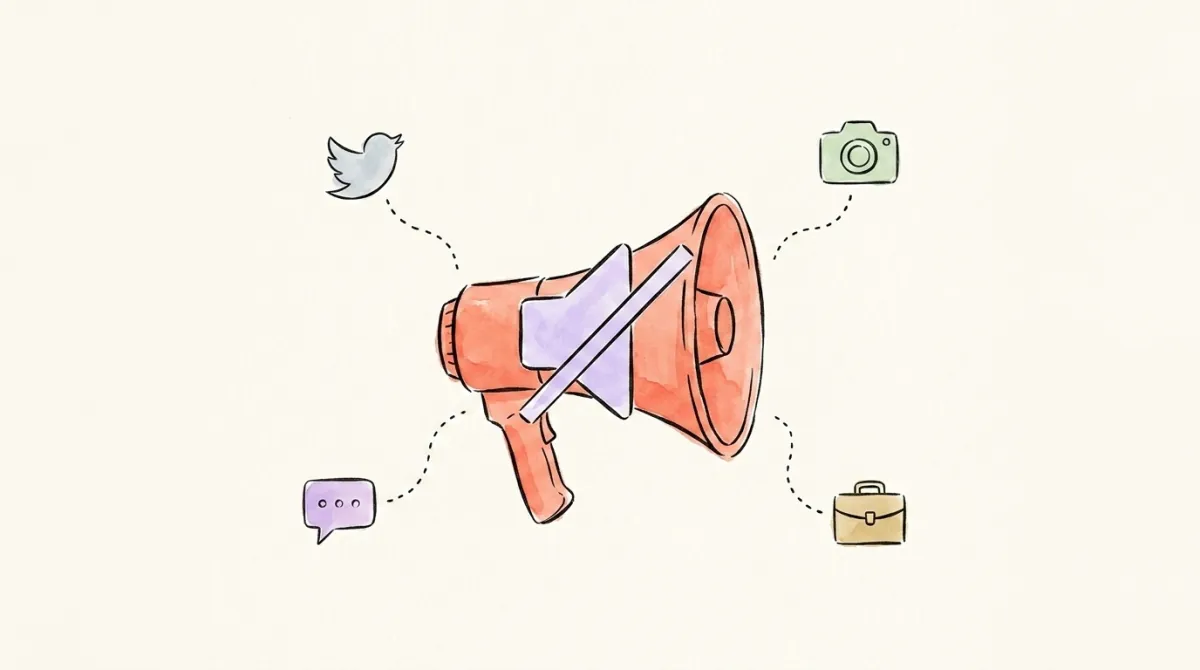
A shadow ban is when a social media platform reduces the reach of your content — without notifying you and without removing the posts. Your account still works: you can post, comment, follow, DM. But the algorithm stops surfacing your content to people who don't already follow you, which on a discovery-driven platform kills most of your impressions overnight. The term is informal slang. Platforms call it different things internally — Meta calls it "reduced distribution", X calls it "visibility filtering", LinkedIn calls it "limited reach" or "restricted account." All three describe the same mechanic: your content is technically live, but the recommendation system has been told not to show it. Buffer's social-media glossary puts it plainly: "Being shadow banned means your content's visibility is reduced on social without you even knowing it." That's the working definition.
Shadow Ban vs. Account Suspension: What's the Difference?
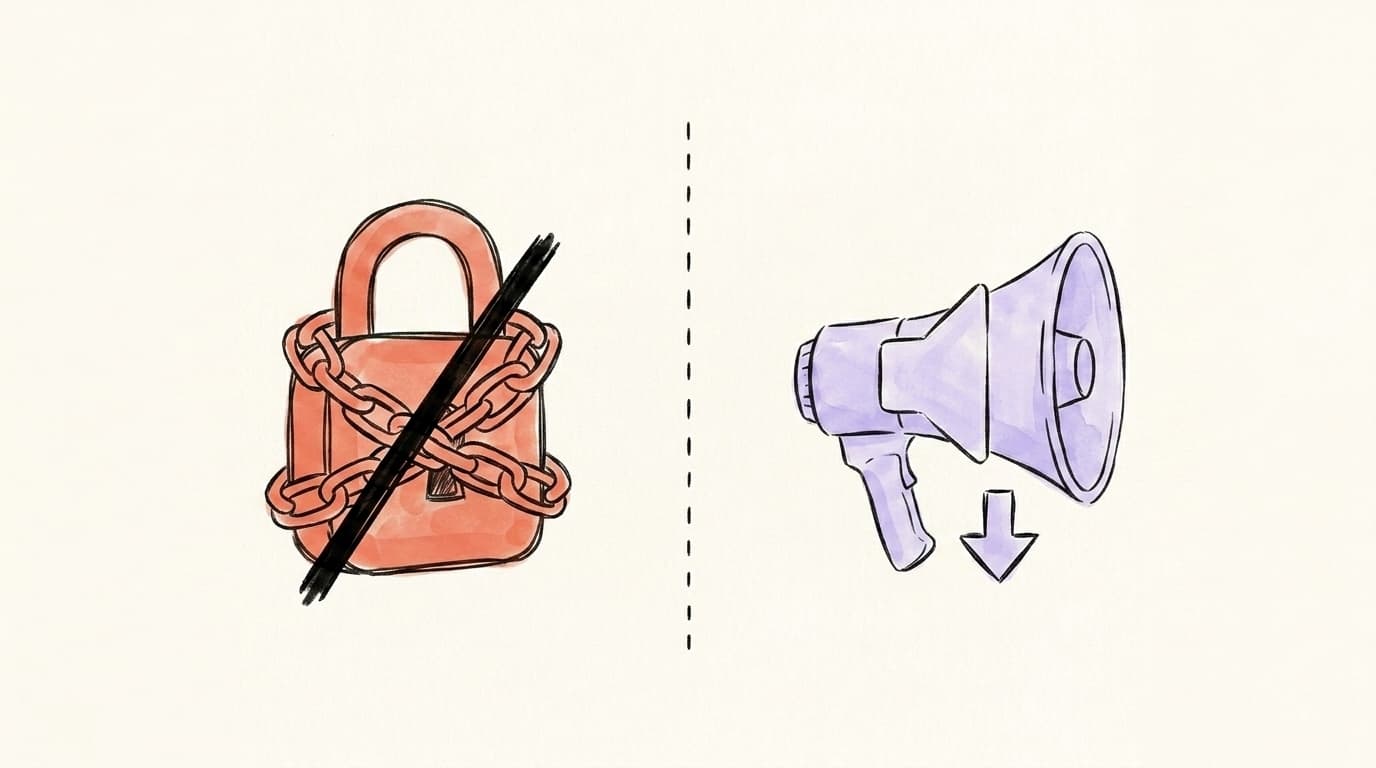
A shadow ban hides your content; a suspension locks your account. Suspended accounts can't post, log in normally, or be found at all — there's a banner explaining what happened, and usually an appeal path. Shadow bans are the opposite: nothing in the app tells you anything is wrong. You log in, you post, you scroll, the dashboard looks normal — but your impressions to non-followers crater. Suspensions are loud and binary; shadow bans are quiet and graduated. Platforms use shadow bans because they're cheaper to enforce (no appeals, no PR), and because they handle "borderline" content — material that's close to but not quite over the line of an outright policy violation. According to Meta's Content Distribution Guidelines, reduced distribution targets borderline-but-not-banned material: clickbait, engagement bait, low-quality reposts, mild misinformation. Suspensions target the actual violations.
How Do Shadow Bans Work on Each Platform?
Every major platform runs the same play with different names and different triggers. The mechanic is centralized: a moderation system flags an account or a piece of content as "non-recommendable," and the recommendation engine downstream stops feeding that content into discovery surfaces — search, hashtag pages, the For You feed, Explore, Reels recs, suggested replies. Your followers can still see your posts in their following feed. Everyone else doesn't. This is why people often diagnose it from the same symptom: follower-only reach looks normal, but non-follower reach falls off a cliff. The triggers vary by platform — banned hashtags on Instagram, low-quality replies on X, automation tools on LinkedIn, engagement bait on Threads — but the recovery path is the same: stop the trigger behavior, give the algorithm a clean window, and post like a human until the suppression lifts.
Profile analysis
See how your profile really scores
Postory analyzes your X, Threads or Bluesky profile and shows exactly what to fix to get more reach. Audits run on credits, bought in packs.
How Do You Fix a Twitter/X Shadow Ban?
X shadow bans typically come in four flavors: search suggestion ban, search ban, ghost ban (replies hidden inside threads), and reply deboosting. The mechanism behind all four is "visibility filtering," documented inside X's open-sourced algorithm repo, which describes the system as a "centralized rule engine that instructs clients how to alter the display of certain Twitter content on read time." Triggers include rapid-fire low-quality replies under big accounts, repeated identical posts, link-stuffing every tweet, follow-unfollow cycles, and behavior X's spam classifier reads as automated. Diagnosis is easier on X than anywhere else — our free Twitter shadowban test checks all four ban types in a single pass from a logged-out viewer's perspective (the only angle where a shadowban is actually visible) and shows the evidence behind each verdict, no login needed. Older third-party checkers like hisubway.online still exist, but many degraded after X removed logged-out API access in 2023 — so double-check whatever they report. Most X shadow bans clear in 2–14 days once you stop the triggering behavior; the search suggestion ban lifts fastest, the ghost ban tends to be stickiest.
For the full diagnostic walkthrough and the four ban types in detail, see the deep guide: What Is a Twitter/X Shadow Ban? (How to Check & Fix). And once you've confirmed it, the X shadowban recovery playbook walks the exact order of operations — revoke apps, clean up in small batches, freeze five days, then warm up slow.
How Do You Fix an Instagram Shadow Ban?
Instagram shadow bans almost always trace back to one of three triggers: a banned hashtag in your caption, a third-party automation app connected to your account, or content flagged as "non-recommendable" under Meta's Recommendation Guidelines. The fastest signal is Instagram's Account Status dashboard — Settings → Account → Account Status — which literally tells creators when their content is ineligible for recommendation. The diagnostic test is a unique-hashtag check from a non-follower's phone: post with an invented hashtag like #postorytest9482, ask a friend who doesn't follow you to search it from "Recent" view. If your post doesn't appear, hashtag distribution is suppressed. Most Instagram shadow bans clear within 14–30 days once you remove the trigger and post normally — but they can drag past 30 days if a connected bot app or a banned hashtag stays in rotation.
For the seven-step recovery sequence, the hashtag audit, and how to read Account Status flags, see the deep guide: What Is an Instagram Shadow Ban? (Signs, Check, Fix & Duration).
Does LinkedIn Have a Shadow Ban?
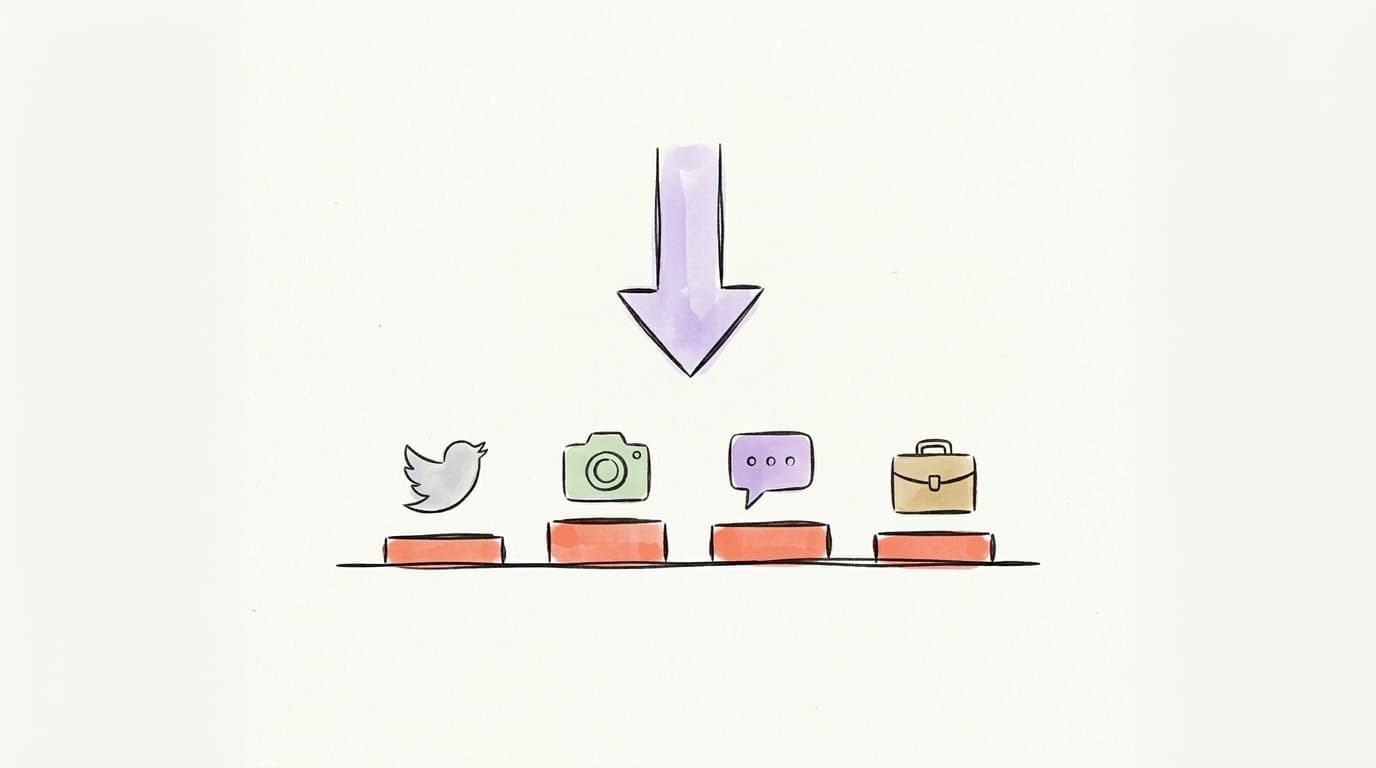
LinkedIn doesn't use the term "shadow ban," but it does throttle reach in ways that look identical from a user perspective. The more common LinkedIn outcome is an explicit account restriction — a red banner saying your account is restricted, with a path to verify your identity or appeal. These restrictions usually fire after one of seven triggers: too many connection requests too fast, low connection-acceptance rate, automation tools (extensions, scrapers, bots), fake or mismatched profile details, policy violations in posts or messages, suspicious login activity (new device, VPN), or accumulated member reports. Most automated restrictions clear within a few hours to 24 hours; identity-verification restrictions typically lift within 1–3 days. Permanent restrictions are tied to repeat or serious violations of LinkedIn's User Agreement, and per LinkedIn's help center, restoring access typically requires contacting support — in practice, many of these accounts don't come back, and people start over with a new one. Quiet reach throttling (no banner, just a sudden engagement drop) does happen too, usually after the same triggers that cause restrictions.
For the seven triggers in detail, the appeal flow, and how to tell temporary from permanent restrictions, see the deep guide: LinkedIn Account Restricted: Why It Happens & How to Fix It.
What's a Threads Shadow Ban?
Threads inherits Instagram's moderation stack — same Meta classifiers, same Community Guidelines, same recommendation logic. So "Threads shadow ban" is shorthand for the same "reduced distribution" mechanic Meta runs on Instagram, applied to Threads' For You feed, search, and topic tags. Triggers skew toward Threads' specific weaknesses: engagement bait ("agree?", "say yes if…"), unoriginal reposts, political content (Meta deprioritizes political content on Threads by default), and anything the spam classifier reads as bot-like. Symptom pattern: a post that would normally get 50 likes gets 2; replies stop getting impressions; search for your exact post text returns nothing when you're logged out. Most user reports suggest 7–14 days to clear once the triggering behavior stops, with a long tail for accounts that keep tripping the same filters. Threads now surfaces an Account Status screen (Settings → Account Status, shared with Instagram), and a "Content lowered in feed" notice there is Meta confirming throttled distribution in its own words — beyond that you're diagnosing against symptoms and Meta's general Recommendation Guidelines.
You can also automate the outsider half of the diagnosis: our free Threads shadowban test checks whether your profile loads and whether your handle comes back in people search for someone who isn't logged in. It stops there on purpose — Meta's logged-out client serves only a ranked subset of replies to anyone, so no tool can honestly tell you whether your replies are being hidden. For the symptom checklist, the manual checks, and the recovery moves, see the deep guide: Threads Shadow Ban: Does It Exist? (What We Know).
What's the Universal Anti-Shadow-Ban Checklist?
If you only learn one thing from this post, it's that the moves that prevent and recover from a shadow ban are the same on every platform — because the underlying classifiers are all looking for the same patterns: spam-shaped behavior, recycled content, and signals of automation. The checklist below works on X, Instagram, LinkedIn, and Threads. Run it once when you suspect a shadow ban, and run the prevention half once a quarter to keep your account out of the suppression bucket. The single biggest lever is the third one: disconnect every third-party tool that engages, follows, comments, or DMs on your behalf. Connected automation tools are the most reliable way to get throttled on every platform that has a shadow ban mechanic — and they're the easiest fix to actually apply on a Tuesday afternoon.
Diagnose:
- Run the platform's logged-out search test (your handle, your exact post text)
- Compare follower vs non-follower reach in analytics — if the latter is near zero, that's the signature
- Open the platform's account-status dashboard if it has one (Instagram, LinkedIn do)
Recover:
- Disconnect every third-party automation app from your account
- Stop posting for 24–72 hours to give the algorithm a clean reset window
- Audit your last 5–10 posts for banned hashtags, recycled captions, and policy-adjacent content; delete the worst offenders
- Resume with original, native-format content (no cross-platform watermarks, no copy-pasted captions)
- If suppression persists past 14 days with the trigger removed, file a manual review
Prevent:
- Vary your captions per platform — same content, different hooks
- Cap engagement bursts (no "follow 100 accounts in an hour" sprees)
- Re-check your hashtag list monthly — banned-list changes silently
Eleven items is a lot to audit by hand, and most of them are invisible from your own logged-in view. If you'd rather see which ones you're actually failing, a Shadowban Deep Scan runs the checklist against your connected X, Threads, or Bluesky account and ranks the findings into a what-to-fix-first list — so you spend the recovery window on the one thing that's costing you reach instead of all eleven at once.
Avoid Shadow Bans by Posting Like a Human
Most shadow ban triggers come down to the same thing: posting fast, recycling content, or pasting the same caption across every platform. Postory's AI post writing drafts genuinely platform-native posts — different hook for X, conversational for Threads, community-native for Bluesky — instead of one block of text duplicated everywhere. Pair it with multi-platform publishing so each version goes to the right place without you copy-pasting your way into a duplicate-content flag.
Try Postory free — original, platform-native posts that don't trip spam filters.
FAQ
Q: What does it mean to be shadow banned on social media?
Being shadow banned means a platform has quietly reduced who sees your content without notifying you. Your account still works — you can post, comment, follow — but the algorithm stops showing your content to non-followers in search, recommended feeds, and discovery surfaces. The hallmark symptom is a sudden cliff in reach to non-followers while followers still see your posts normally.
Q: How do I know if I'm shadow banned?
The cleanest test is comparing follower vs non-follower reach in your analytics. If non-follower reach drops near zero overnight while follower reach stays steady, you're likely shadow banned. Other signals: search returns nothing when you log out and search your exact post text, hashtag pages don't show your posts under "Recent," and platforms with status dashboards (Instagram's Account Status, LinkedIn's restriction notice) flag the issue directly. On X specifically you can skip the manual math — run your handle through a free Twitter shadowban test and it checks search ban, ghost ban, reply deboost, and suggestion ban against the logged-out view in one go.
Q: How long does a shadow ban last?
Most shadow bans clear in 7–30 days once the triggering behavior stops. X shadow bans tend to lift fastest (2–14 days), Instagram and Threads usually take 7–30 days, and LinkedIn restrictions resolve in hours to a few days for automated flags. The clock resets every time you re-trip a filter, so consistency on the prevention side matters more than the initial diagnosis.
Q: Can you remove a shadow ban yourself?
In most cases, yes — without contacting support. Disconnect third-party automation apps, stop posting for 24–72 hours, audit your recent posts for banned hashtags or recycled content, and resume with original, native-format content. This sequence resolves the majority of shadow bans on its own. If suppression persists past two weeks with the trigger removed, file a manual review through the platform's support flow.
Q: What causes shadow bans across platforms?
The common triggers are similar everywhere: third-party automation tools, sudden behavior bursts (mass following, mass commenting), duplicate or recycled content posted in tight windows, banned hashtags, policy-adjacent content (engagement bait, mild misinformation, watermarked reposts), and accumulated user reports. Each platform weights these differently, but the classifiers are looking for the same pattern: behavior that doesn't look like a real human.
Q: Do shadow bans affect every post or just some?
It depends on the trigger. Content-level shadow bans affect a single post — usually because it contained a banned hashtag or policy-adjacent content. Account-level shadow bans suppress every post you publish until the flag clears. The diagnostic difference: if only one post tanked while your earlier posts kept performing, it's content-level; if every post since a specific date underperforms, it's account-level.
Q: Is a shadow ban the same as a suspension?
No. A suspension locks your account — you can't log in normally, can't post, can't be found, and there's an explicit banner explaining what happened. A shadow ban leaves your account fully functional but throttles your reach to non-followers. Suspensions are loud and binary; shadow bans are quiet and graduated. Suspensions usually have a formal appeal path; shadow bans usually don't.
Q: Why do platforms use shadow bans instead of just removing content?
Shadow bans handle "borderline" content — material that's close to but not quite over a policy line. Engagement bait, mild misinformation, low-quality reposts, repeated link-stuffing. Removing this content would generate appeals and PR backlash; banning the accounts that post it would feel disproportionate. Shadow bans are the cheap, quiet middle ground: the platform reduces the reach without escalating to enforcement, and most users never notice they tripped a filter.
Related articles
Instagram Shadow Ban: Signs, Check, Fix & How Long It Lasts
Reach tanked overnight? Here's what an Instagram shadowban actually is, how to check, what fixes it, and how long it really lasts.
Apr 26, 2026
X Account Locked vs Restricted vs Suspended: How to Unlock
Is your Twitter account restricted, locked or suspended on X? Tell which one from the screen you're seeing — and how to unlock yours.
Sep 8, 2026
X Account Suspended for "Inauthentic Behavior": What to Do
Your X account suspended for inauthentic behavior? What the label covers, why the filter misfires, and what this suspension needs.
Sep 8, 2026