

Twitter (X) Bot Purge 2026: When It Hit, What to Do

See which accounts you follow are dead
X shows no last-posted date, so the dead ones hide in plain sight. This checks the accounts you follow one by one — silent, never posted, suspended, bot-shaped — and hands back the named list, worst first.
X cleans your followers for you. Nobody cleans your following list — and that's where the liability sits: dead accounts, follow farms, and the churn X's spam policy calls a violation.
Most recent confirmed removal: 24 July 2026, when X's head of product, Nikita Bier, said the platform had found and removed 42,000 accounts automating replies with chatbots. The last sweep big enough to move follower counts noticeably was April 2026: Bier put the rate at 208 bot suspensions per minute on 9 April, after roughly a week of removals. Nothing newer has been announced as of September 2026 — but X never pre-announces these, and removals run continuously between the headline waves, so people keep seeing small follower dips with no news attached. If your count moved this week, treat it as ordinary churn unless X says otherwise.
A Twitter bot purge sweeps the platform, follower counts dip, and timelines fill with people asking what they did wrong. Nothing — X removed accounts that were never real. But while everyone stares at who follows them, almost nobody audits the other list: the accounts they follow. That one is public, it's governed by enforceable rules, and X will never clean it up for you.
What is a Twitter bot purge, and which one should you care about?
A Twitter bot purge is X removing inauthentic accounts in bulk — spam bots, bulk-registered follow farms and automated reply spam. The sweeps are real and ongoing. In October 2025, X's head of product Nikita Bier said the company had removed 1.7 million bots participating in reply spam in a single week. In April 2026, during another sweep, Bier said X was suspending 208 bots per minute. In July 2026 he said another 42,000 accounts automating replies with chatbots had been removed. That's the purge people notice, because it shows up as a shrinking follower count. It's also the one you have zero control over and no reason to worry about — losing fake followers costs you nothing real. The purge that matters is the one X doesn't run: the cleanup of the accounts you follow. X suspends the bot, but the follow edge stays in your list, still counted, still shaping your feed.
Why did your follower count drop overnight?
Because the accounts that disappeared were removed by X, not lost by you. During a purge, every suspended bot vanishes from every follower list it sat in at the same moment, so thousands of unrelated accounts all dip within the same hour — which is why it feels personal when it isn't. Two things this is not. A purge-driven follower drop is not a shadowban: nothing about your reach, your search visibility or your replies has changed, and the drop is on the other side of the relationship. It is also not a suspension: your account was never actioned, never restricted and never notified, because the enforcement landed on the bots that followed you. The tell is the shape of the fall — a purge is a single vertical step down that then flattens, while a real restriction shows up as impressions declining across your posts while your follower count sits still. If the number keeps falling day after day, that's ordinary unfollowing, not a purge.
Two follow-ups worth separating out. If your posts genuinely stopped reaching people, that's a reach problem, not a follower-count problem — start with our X shadowban guide. And if you're seeing the same panic on another network, note that enforcement doesn't travel: a Threads action is governed by Meta's rules and looks nothing like this — what a Threads account ban actually is covers that side.
Profile analysis
See how your profile really scores
Postory analyzes your X, Threads or Bluesky profile and shows exactly what to fix to get more reach. Audits run on credits, bought in packs.
Why do the accounts you follow affect your account, not just your feed?
Your following list isn't a private bookmark folder. It's a public, directed edge in X's social graph, and that graph is a documented input to how content gets distributed. X open-sourced its recommendation algorithm, and the repo describes components built directly on user-to-user relationships: RealGraph is a "Model to predict the likelihood of an X User interacting with another User," SimClusters performs "community detection and sparse embeddings into those communities," and a graph-feature service "serves graph features for a directed pair of users." Your For You feed is built from in-network candidates — posts from accounts you follow — plus out-of-network candidates chosen by predicted engagement. So every follow does two jobs: it fills your feed, and it tells X's clustering systems which community you belong in. A list stuffed with follow farms is a noisier signal than one built from your actual niche.
Jacob C. Edmunds walks the same open-source repo, pool by pool:
Be precise about what's documented, though: X publishes no "following quality score," and there's no public evidence that following bots lowers a hidden rating. The clustering effect above is inference. What follows is not.
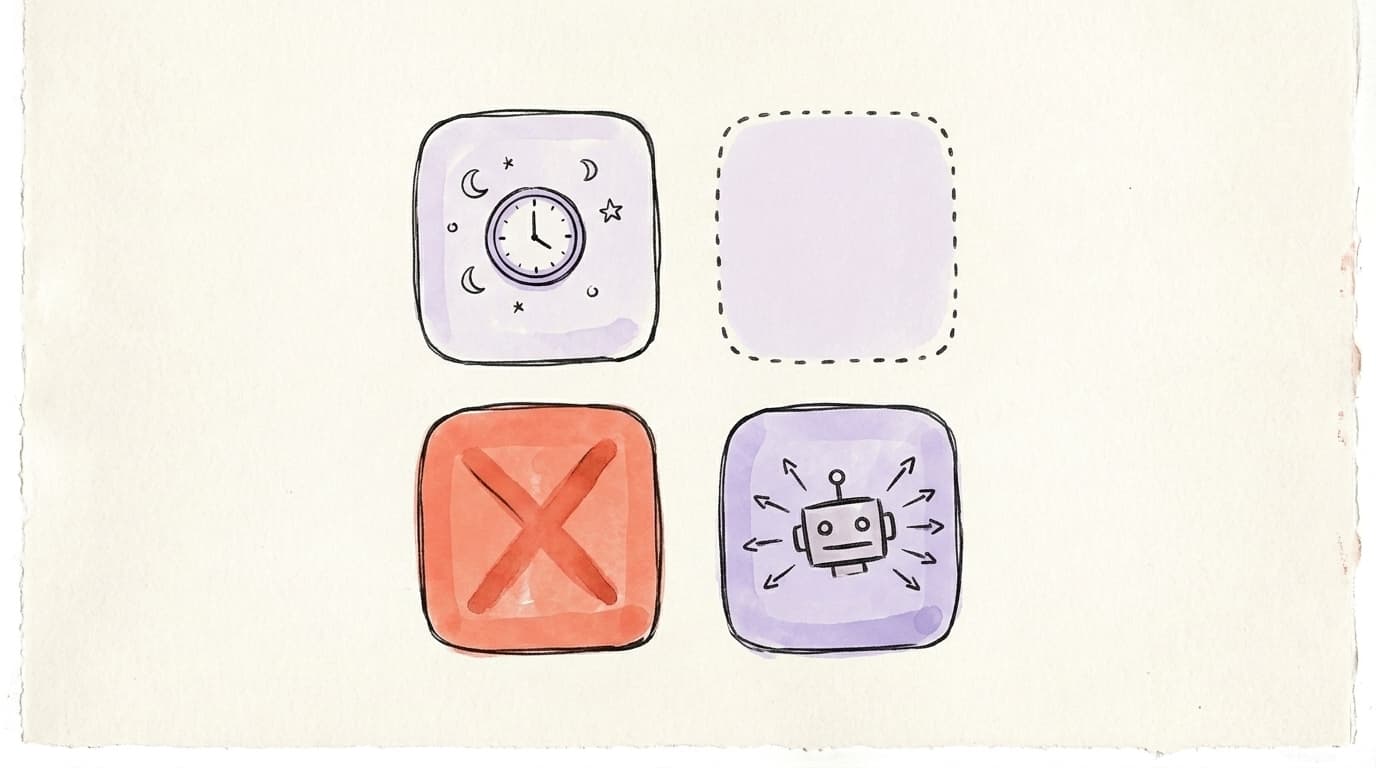
What are the four kinds of dead weight in your following list?
Dead weight in your following list sorts into four types: gone quiet, never posted, suspended or deleted, and bot-shaped. That's the breakdown used by the classifier behind our X Following Cleaner — all four come out of the same run, each labelled with the reason it landed on your list. Each type has a different reason to go and a different level of certainty attached. Three are objectively dead: the account has stopped producing anything at all, so there is nothing to weigh up and no judgment to make. The fourth is a genuine judgment call about who your profile is publicly associated with. Knowing which type you're looking at matters, because the first three are safe to clear without thinking, while the fourth deserves about ten seconds of attention per account before you decide.
- Gone quiet. An inactive account with nothing posted in 30+ days. Not malicious, just absent — and still using up one of the 5,000 follow slots X gives you — see X's follow limits explained.
- Never posted. Zero posts on record — usually a bulk-registered follow-farm account.
- Suspended or deleted. X already removed it, but it still sits in your following list inflating your count against nothing.
- Bot-shaped. Follows thousands, is followed by almost nobody. That ratio is the signature of a follow farm — and it's the one type that says something about you to anyone scrolling your following tab.
A fifth group — accounts that don't follow you back — is worth seeing, but isn't a reason to unfollow. Context, not a hit list.
Why is follow/unfollow churn the part that actually gets accounts actioned?
Follow/unfollow churn gets accounts actioned because X names the behavior in written policy, unlike the algorithm effects above. X's platform manipulation and spam policy lists the patterns plainly. It prohibits "follow churn" — following and then unfollowing large numbers of accounts to inflate your own follower count. It prohibits "indiscriminate following" — following and/or unfollowing a large number of unrelated accounts in a short time period, particularly by automated means. It also prohibits reciprocal engagement schemes, the polite name for engagement pods. Note what all three have in common: the violation is the pattern of following and unfollowing, not the accounts on the other end of it, so a clean-up done badly breaks the rule just as surely as a growth hack does. The consequences are published in the same place: X's range of enforcement options includes limiting the visibility of your posts, locking your account until you complete a challenge, and suspending it outright.
The uncomfortable part: a panicked mass cleanup can look identical to churn. Unfollowing 800 accounts in an afternoon is, from the outside, exactly that — a large volume of unfollows of unrelated accounts in a short window. And under X's "Freedom of Speech, Not Reach" philosophy, restricted reach comes before removal, so the likely consequence isn't a dramatic ban — it's a quiet, unannounced drop in distribution. Diagnosing that is a separate job: see our guide to X shadowbans and what to do when your X account is suspended.
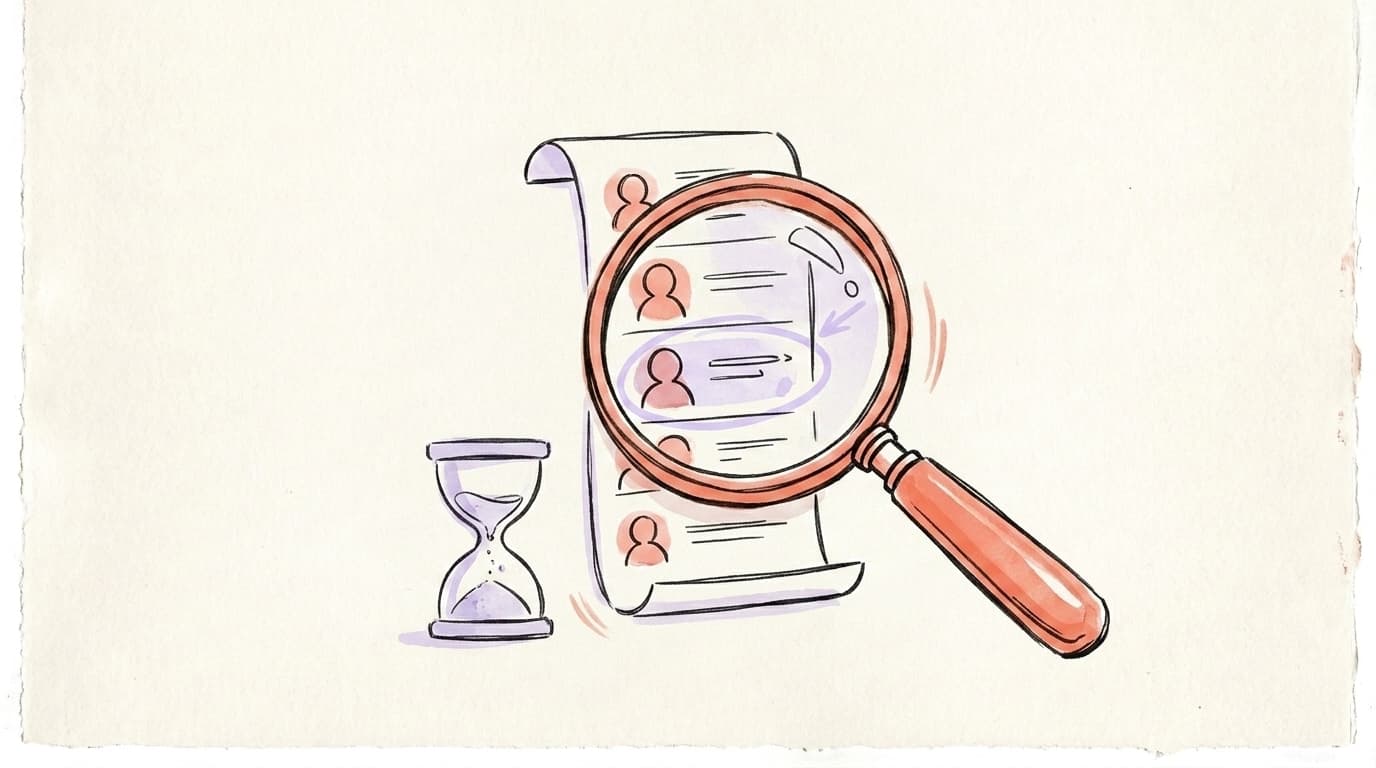
How do you audit your Twitter following list?
There are two honest options, and the manual one is worse than people expect. X gives you no native filter for inactivity: your following list shows a name, an avatar and a bio — never "last posted 14 months ago." So a manual Twitter follower audit means opening every profile one at a time and reading the date on its most recent post. At a generous fifteen seconds per account, a 900-account list runs to several hours of clicking, which is why most people abandon it halfway — and why lists people call "basically fine" are usually just unaudited. The faster path is to have something read the list for you and return a ranked shortlist, so your time goes on the decision, not the lookup. The steps below apply either way; only who does the reading changes.
The manual method:
- Open your following list on x.com, starting from your oldest follows — that's where dead accounts cluster.
- Check each account's most recent post date. Nothing in 30+ days goes on the list.
- Check the ratio: following in the thousands with a few dozen followers is follow-farm shaped.
- Collect handles in a text file. Don't unfollow as you go — pace that separately.
The fast method: run your handle through the X Following Cleaner. It reads the accounts you follow from X's public data — no login, nothing installed — and names the ones that stopped posting or never posted, with how long each has been silent. It's a one-off scan from $4.99, and one thing rival tools won't say plainly: X gives third-party apps no bulk-unfollow endpoint, and this check needs no login and no account permissions at all. We build the list. You tap unfollow, on X, at your own pace.
What are X's follow and unfollow limits?
X publishes hard numbers for following, and they're a good deal more generous than the pace that's actually safe. Per X's follow limit documentation, every account can follow up to 400 accounts per day, and X Premium subscribers up to 1,000 per day. Once you're following 5,000 accounts, further follows are capped by an account-specific ratio calculated from your own followers-to-following balance — which is why people get stuck at exactly 5,000 and can't understand why. X does not publish a separate numeric unfollow limit, and that's the trap: because there's no stated cap, people assume unfollowing is unlimited. It isn't governed by a number but by the aggressive-behavior rules above, and X's documentation is explicit that the daily figure is a technical limit only — abusive following behavior can get you suspended regardless of whether you stayed under it.
A safe cleanup pace, in practice:
- Spread unfollows across days, not hours. A few dozen a day for a week beats 500 in one sitting.
- Never run a script or extension that unfollows in bulk for you — that's named in the policy.
- Clear the objectively dead first (suspended, never posted, silent for months). If your reach is already suppressed, go slower.
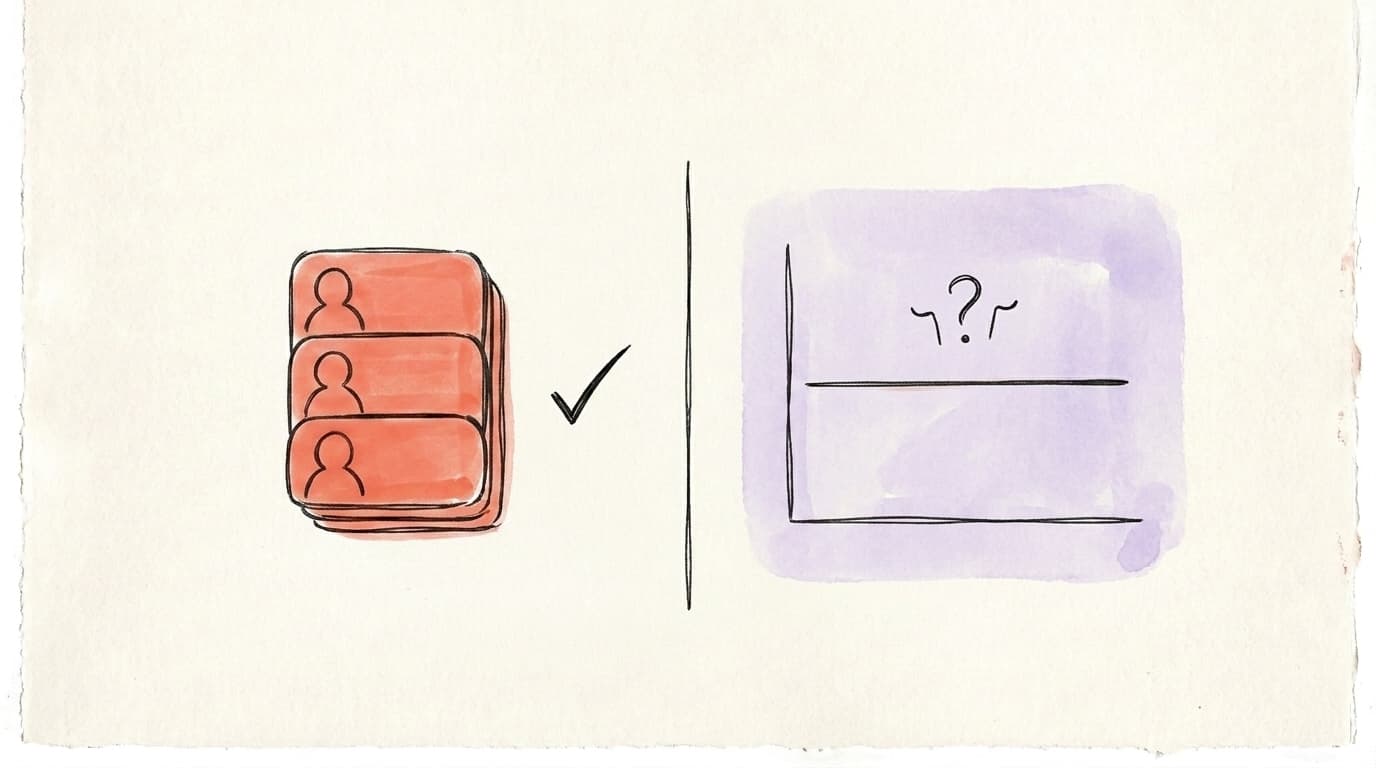
What does cleaning up your following list fix — and what doesn't it fix?
Cleaning your following list fixes three things and fixes nothing else. It gives you a following count that describes something real. It clears any ongoing pattern that could read as follow churn, which is the only part of this with a written policy attached. And it stops your public following tab from advertising a wall of follow farms to every person deciding whether you're worth a follow back. Be honest about the rest, because tools in this space badly oversell it: cleanup does not undo an existing restriction, restore reach that was lost for content reasons, or generate followers on its own. There is no documented mechanism by which unfollowing 300 dead accounts causes X to boost you, and any tool promising that is guessing on your behalf. Treat the cleanup as removing a liability, not as a growth tactic.
If your reach was already suppressed before the cleanup, that's a separate diagnosis — start with our X shadowban guide. And if you're here because growth stalled, the fix sits upstream of your following list entirely: how to get your first 100 followers on X covers what actually moves that number — following a handful of accounts in your niche at a human pace is a different thing from the bulk churn X's policy names.
Start your own bot purge with Postory
X will keep purging bots from your followers. Nobody is coming to purge them from your following list — that part is on you, and doing it badly is riskier than not doing it at all.
The X Following Cleaner checks the accounts you follow and names exactly which ones stopped posting or never posted — no login, no write access, no extension. $4.99 resolves the 100 most suspicious of your last 1,000 follows; the full run reads your whole following list, up to 5,000 accounts, quoted from your following count before you pay, and ranks them worst-first, including suspended accounts, follow-farm ratios and non-followers.
Try Postory free — 100 credits on signup, no card, to draft your X, Threads and Bluesky posts once the dead weight is gone.
FAQ
Q: When was the last Twitter (X) bot purge?
The most recent confirmed removal was 24 July 2026, when X's head of product said 42,000 accounts automating replies with chatbots had been taken off the platform. The last sweep large enough to visibly dent follower counts was April 2026, peaking around 9 April at a cited 208 bot suspensions per minute. Nothing newer has been announced as of September 2026 — but X doesn't pre-announce these, and removals run continuously between the headline waves, so there's no schedule to plan around.
Q: Is a bot purge follower drop a shadowban or a suspension?
Neither. A purge removes the accounts that followed you; nothing happened to your account. A shadowban shows up as falling impressions and reduced visibility on your own posts, and a suspension comes with a notice and a locked account. If your follower count stepped down once and then held steady, that's a purge.
Q: Why did I lose followers during the Twitter bot purge?
Because those followers weren't people. X removes spam bots, bulk-registered accounts and reply-spam networks in waves, and they drop out of everyone's counts at once. Losing ghost followers costs you nothing — they never saw, clicked or bought anything. It's the same reason there's no point paying to delete inactive Twitter followers: X does that part for free.
Q: Does following bots on Twitter hurt my account?
There's no published X mechanism that penalizes you for following a bot, and X discloses no following-quality score. What is documented: your follow graph feeds recommendation systems, your following list is public, and bulk or indiscriminate following is a policy violation. The risk lives in the behavior, not the individual follow.
Q: How many accounts can I unfollow per day on X?
X doesn't publish an unfollow-specific number. It publishes a 400-follow daily limit (1,000 for X Premium subscribers) and separately prohibits following or unfollowing in a bulk, aggressive, or indiscriminate manner. Practically, spread unfollows over several days rather than clearing hundreds in one session.
Q: Can I get banned for mass unfollowing on Twitter?
You can be actioned for it. X's platform manipulation and spam policy names follow churn and indiscriminate following as violations, and enforcement ranges from reduced visibility to a lock to suspension. A slow, targeted cleanup of clearly dead accounts is very different from an automated purge of 1,000 follows in an hour.
Q: Why am I stuck at 5,000 following on X?
That's the documented ratio threshold. Per X's follow limit page, once you follow 5,000 accounts, additional follows are limited by an account-specific ratio based on your followers-to-following balance. Unfollowing dead accounts is the only way to get room back.
Q: Should I unfollow people who don't follow me back?
Not automatically. Plenty of accounts worth following — journalists, founders, researchers — will never follow back, and unfollowing them costs you real signal. Use non-followers as context alongside inactivity and bot-ratio data, never as the deciding factor.
Related articles
Does X Delete Inactive Accounts? What the Policy Says
Does Twitter delete inactive accounts? X's policy says accounts may be removed for prolonged inactivity — but it names no deadline. Here's what it says.
Sep 9, 2026
X Account Locked vs Restricted vs Suspended: How to Unlock
Is your Twitter account restricted, locked or suspended on X? Tell which one from the screen you're seeing — and how to unlock yours.
Sep 8, 2026
How to See Who Unfollowed You on X (X Won't Tell You)
How to see who unfollowed you on Twitter: X sends no alert and keeps no history, so here's the snapshot method trackers run on — and how to run it yourself.
Sep 8, 2026