
Content Repurposing: How to Turn One Piece of Content Into 10
 Vadym Petryshyn·Apr 10, 2026·7 min read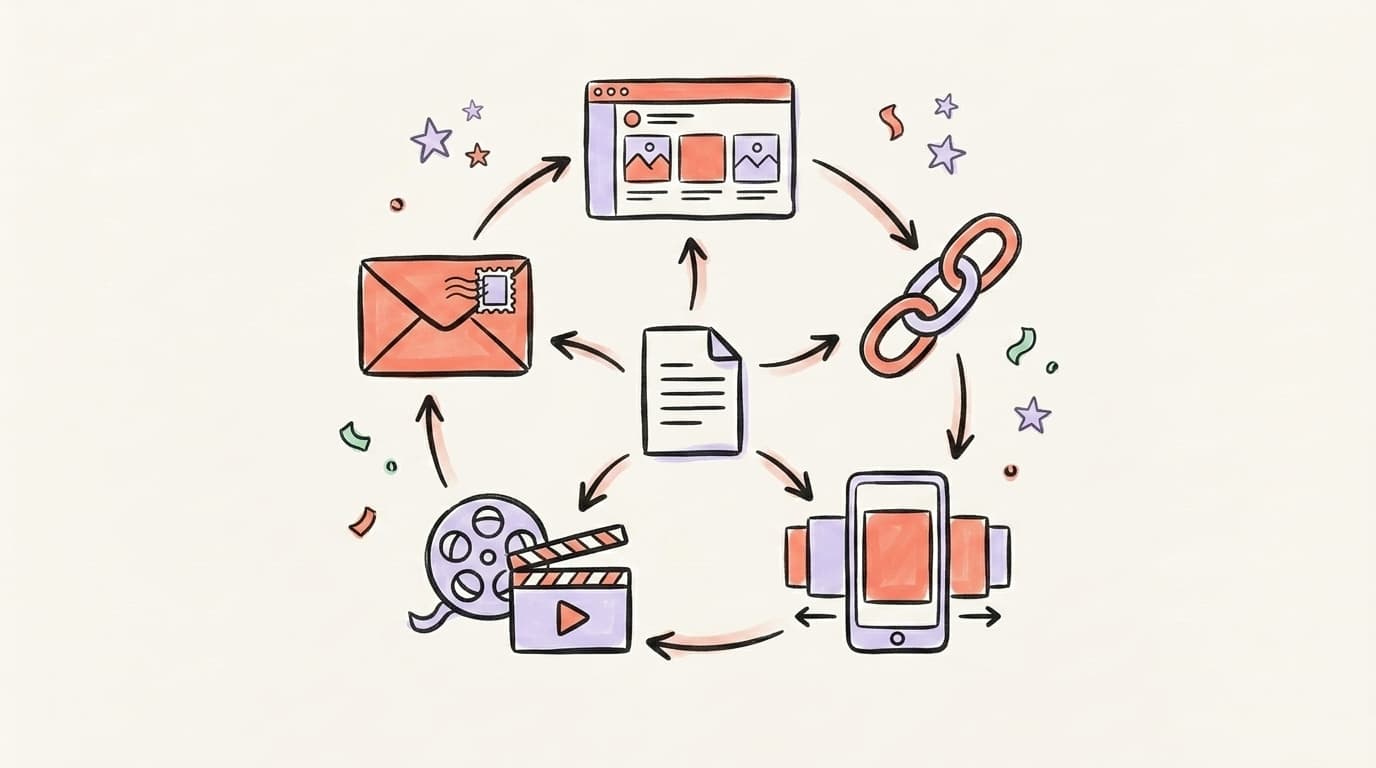
TL;DR: Content repurposing means adapting one piece of content for multiple platforms and formats. It saves 60-80% of creation time, drives 75% more results, and 46% of marketers rank it as their single best strategy. Here's a step-by-step framework to do it right.
You spent 8 hours on a blog post. It got decent traffic. Then it sat there — one URL, one format, one audience.
Meanwhile, that same post could have become 5 LinkedIn posts, a Twitter thread, 3 Threads conversations, and a newsletter issue. Same ideas, 10x the reach.
That's content repurposing — and it's the single highest-ROI activity most marketers and creators are leaving on the table.
Why Repurposing Beats Creating from Scratch
Content repurposing isn't copy-pasting your blog post into a LinkedIn text box. It's extracting the core ideas from existing content and reshaping them to fit how each platform's audience actually consumes information.
The numbers speak for themselves:
- 75% more results without a proportional increase in effort (Content Marketing Institute, 2025)
- 60-80% time savings compared to creating original content for every platform
- 60% of marketers say repurposed content generates more leads than original content
- 2x engagement rates for companies actively repurposing vs. those relying only on original content
The math is simple: if you're creating good content somewhere, you're leaving massive value on the table by not adapting it for other channels.
And here's what most people get wrong — repurposing isn't lazy. A LinkedIn post needs a different hook, structure, and tone than a tweet or a Threads conversation. The idea stays the same. The packaging changes completely.
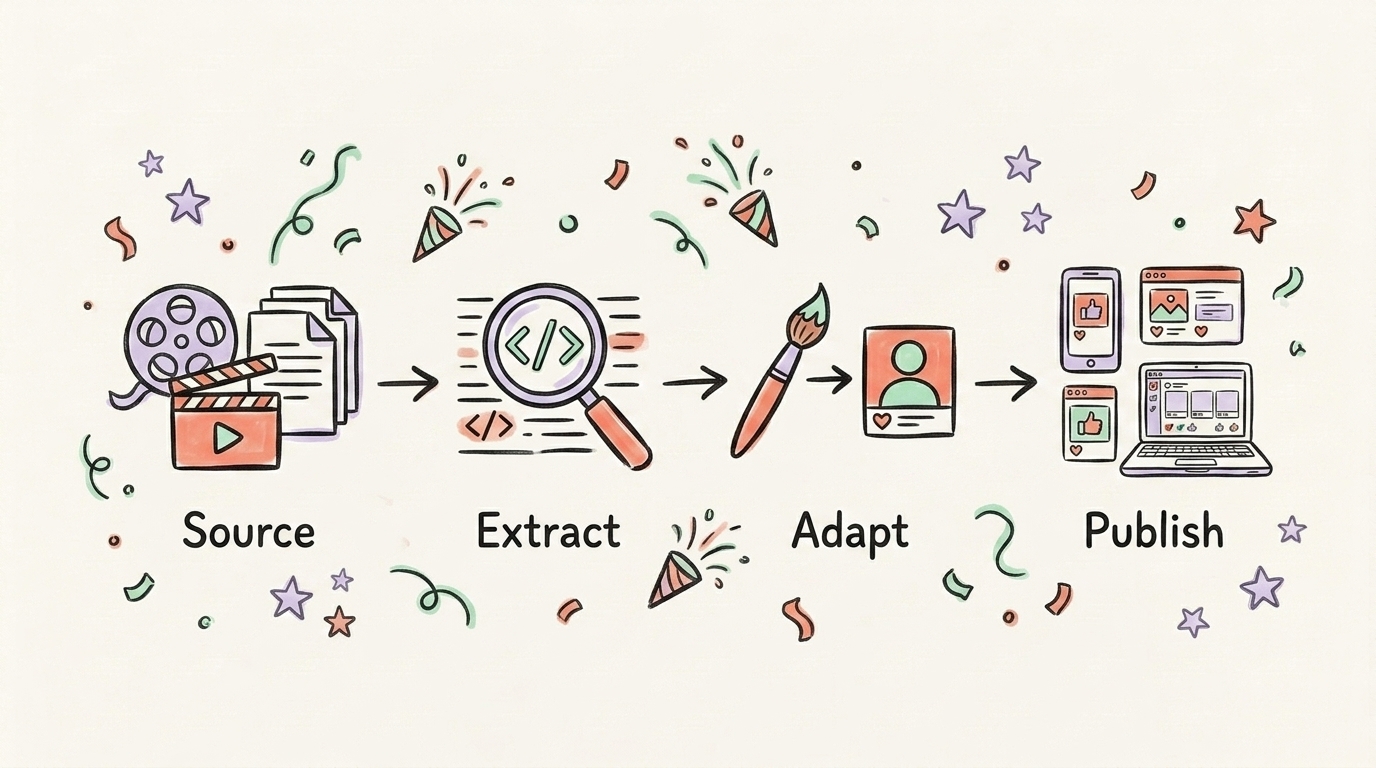
The SEAP Framework: Source, Extract, Adapt, Publish
Instead of randomly turning content into other content, use a repeatable system. We call it SEAP — four steps that work for any source content type.
1. Source — Pick Your Best Content
Not everything is worth repurposing. Start with content that already performed well: a blog post with above-average traffic, a video with strong engagement, a newsletter that got replies.
Your top 20% of content should be your first repurposing candidates. Check your analytics — if it resonated in one format, it'll likely resonate in others.
The richest source types:
- Blog posts — structured, easy to break into standalone insights
- YouTube videos and webinars — packed with quotable moments and off-the-cuff insights you'd never write
- Podcast episodes — conversational tone translates naturally to social
- Newsletters with strong reader replies — already validated by your audience
- Customer conversations that surface insights worth sharing publicly
2. Extract — Pull Out the Reusable Pieces
A single 2,000-word blog post typically contains:
- 3-5 standalone insights — each works as its own social post
- 1-2 data points or statistics — perfect for quote-style posts
- A step-by-step process — becomes a thread or carousel
- A contrarian take — sparks debate and engagement
- A personal story or example — works as a narrative post
The mistake most people make: trying to compress the whole piece into one post. Don't. Break it apart. Each insight gets its own moment.
3. Adapt — Reshape for Each Platform
This is where most people fail. They copy-paste instead of adapting. Each platform rewards different things:
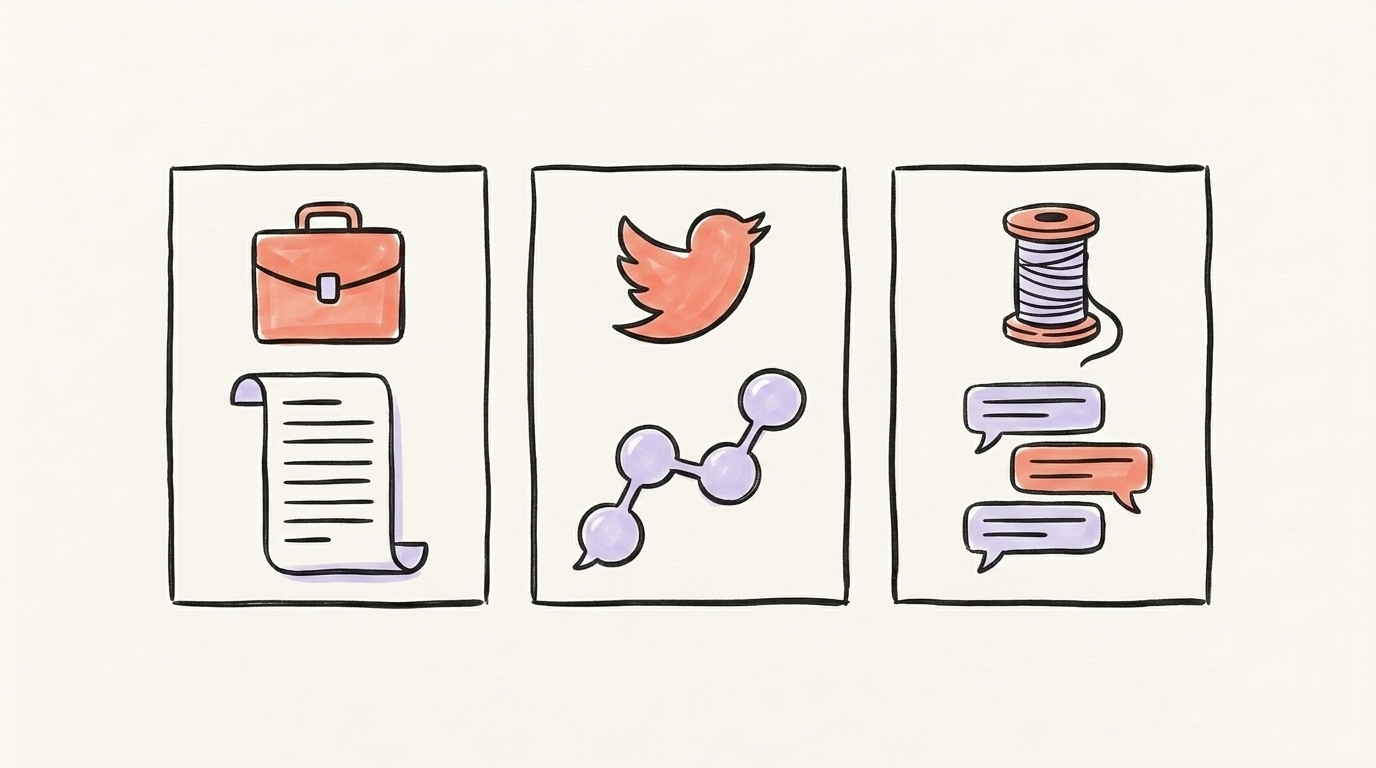
LinkedIn wants depth and professionalism. Lead with a strong hook line that stops the scroll — a surprising stat, a bold claim, or a personal confession. Use short paragraphs (1-2 sentences) with line breaks between them. End with a question to drive comments. Long-form text posts (1,200-1,500 characters) and document carousels consistently outperform other formats.
X/Twitter rewards brevity and edge. Tighter, punchier. Use threads for step-by-step content — but make each tweet stand alone. Don't just chop a blog post into 280-character chunks. Single tweets work best for hot takes, data points, and contrarian opinions. Skip the hashtags unless they're genuinely relevant.
Threads sits between LinkedIn and X in tone — more conversational and casual than LinkedIn, less performative than X. It works great for "here's what I learned" narratives, behind-the-scenes content, and authentic takes. The algorithm currently favors replies and conversation, so posts that invite responses do well.
Instagram and Facebook are visual-first. Carousels work for educational content (turn each step into a slide), Reels for quick tips under 60 seconds. The text supports the visual, not the other way around.
4. Publish — Stagger, Don't Dump
Don't publish everything at once. Space repurposed posts out over 1-2 weeks so each one feels fresh to your audience, even though the core idea came from the same source.
Mix up the formats too. If you posted a data-driven insight on Monday, follow with a personal story angle on Thursday. Same source content, different packaging — your audience won't notice the overlap, they'll just see consistently good posts.
What This Looks Like in Practice
Say you published a blog post called "5 Mistakes New LinkedIn Creators Make." Here's what your repurposing output looks like:
| # | Content Piece | Platform | Format |
|---|---|---|---|
| 1 | Full blog post | Website/SEO | Long-form article |
| 2 | Each mistake as a standalone post (x5) | Text posts | |
| 3 | All 5 mistakes as a thread | X/Twitter | Thread |
| 4 | "Which mistake do you see most?" | Threads | Discussion post |
| 5 | Quick-tips carousel | Carousel | |
| 6 | "I made all 5 of these mistakes" narrative | Personal story | |
| 7 | Key takeaway summary | Newsletter | Email section |
7+ content pieces from one blog post. The original took 4 hours to write. The repurposed posts take 30-45 minutes total — or under 10 minutes with AI assistance.
That's the real power of repurposing: you're not working harder, you're extracting more value from work you've already done.
The 3 Mistakes That Kill Most Repurposing Efforts
Before you start, know what to avoid:
Mistake #1: Copy-pasting across platforms. Dumping the same text into LinkedIn, X, and Threads isn't repurposing — it's spamming. Each platform has its own norms, character limits, and audience expectations. A LinkedIn post that opens with "I've been thinking about..." works there. On X, you'd lose people by the second word.
Mistake #2: Repurposing your worst content. If a blog post got zero traction, repurposing it won't magically fix the core problem — the idea didn't resonate. Start with your winners. Content that already proved itself in one format has the best chance of performing in others.
Mistake #3: Posting everything at once. If you publish 7 repurposed pieces on the same day, your followers see the same idea repeated across every feed. Stagger over 1-2 weeks. By the time the last piece goes out, your audience has forgotten the first one.
How AI Changes the Game
AI has fundamentally shifted what's possible with content repurposing. What used to take a content team hours now takes minutes.
What AI handles well:
- Format conversion — reshaping a blog post into platform-specific formats instantly
- Tone adjustment — shifting from formal blog voice to casual social voice
- Generating variations — creating 5 different hooks for the same insight
- Transcription — turning video and audio into text you can repurpose
Teams using AI for repurposing report 200% faster content creation and 7x productivity gains. That's not hype — the mechanical work of reformatting and adapting genuinely is what AI does best.
What still needs a human:
- Choosing which content to repurpose (AI can't judge what resonated with your specific audience)
- Adding personal stories and opinions (the stuff that makes content feel real)
- Platform nuance (understanding what's trending, what's overdone, what your audience is tired of)
- Quality control (catching when AI output sounds generic or off-brand)
The sweet spot: use AI for the mechanical work (format conversion, drafting variations, scheduling) and spend your time on the creative layer (choosing angles, adding personality, engaging with responses).
Start Repurposing Your Content with Postory
If this sounds like a lot of manual reformatting — it doesn't have to be.
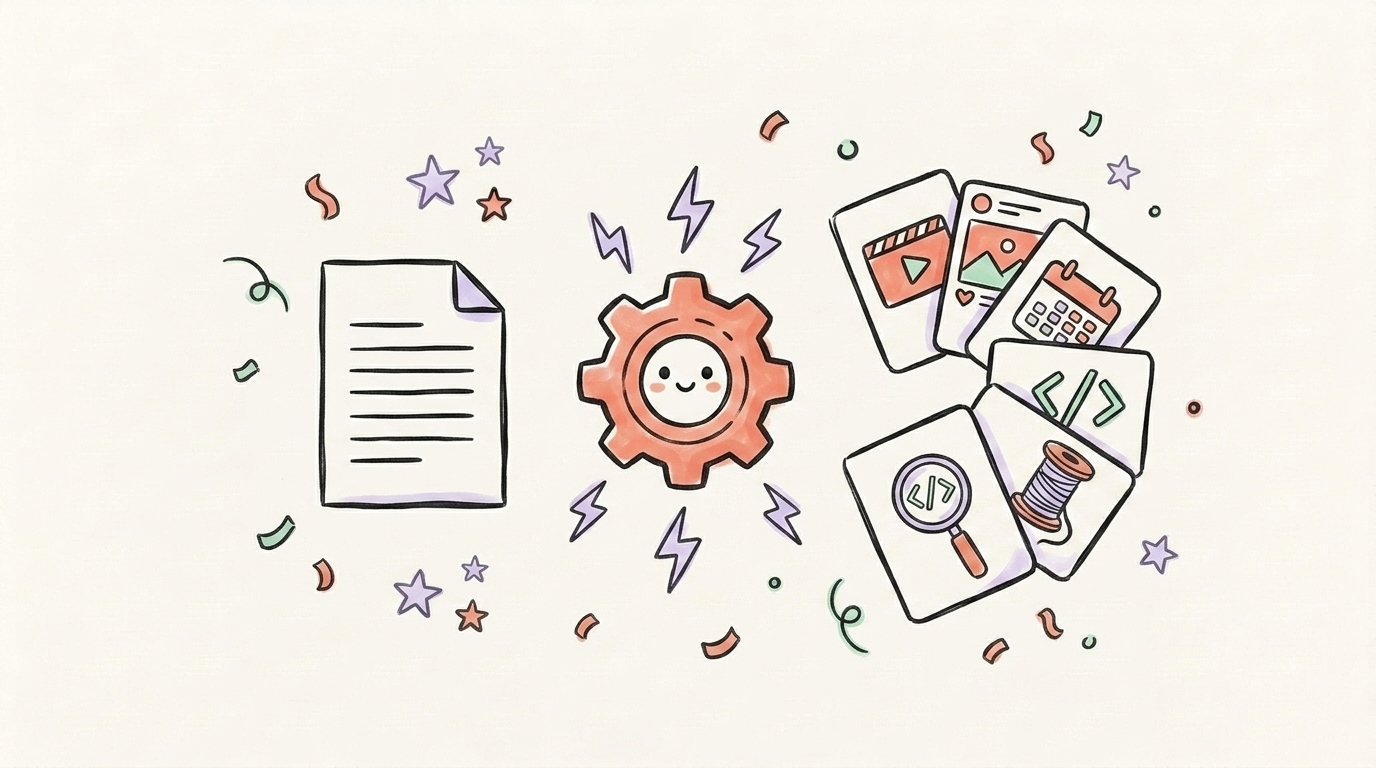
Postory is built for exactly this workflow. Drop in a blog post, YouTube video, or any source content, and the AI writing engine generates platform-perfect posts for LinkedIn, X, and Threads — each with the right tone, length, and format for that platform.
No copy-pasting. No manual reformatting. No guessing what works where.
Once your posts are ready, schedule them across all platforms from one dashboard, or publish instantly to every channel at once.
One piece of content. Every platform. Zero wasted effort.
Try Postory free — repurpose your first piece of content in under 2 minutes.